A New Benchmark for De-Aging Comes From Slowly Turning Back Cells’ Clocks
Bonn University researchers have reversed human blood cells' biological age by decades without resetting them fully, in a study published in Aging Cell.
By Dillip Chowdary • Nov 11, 2026 • Source: Wired
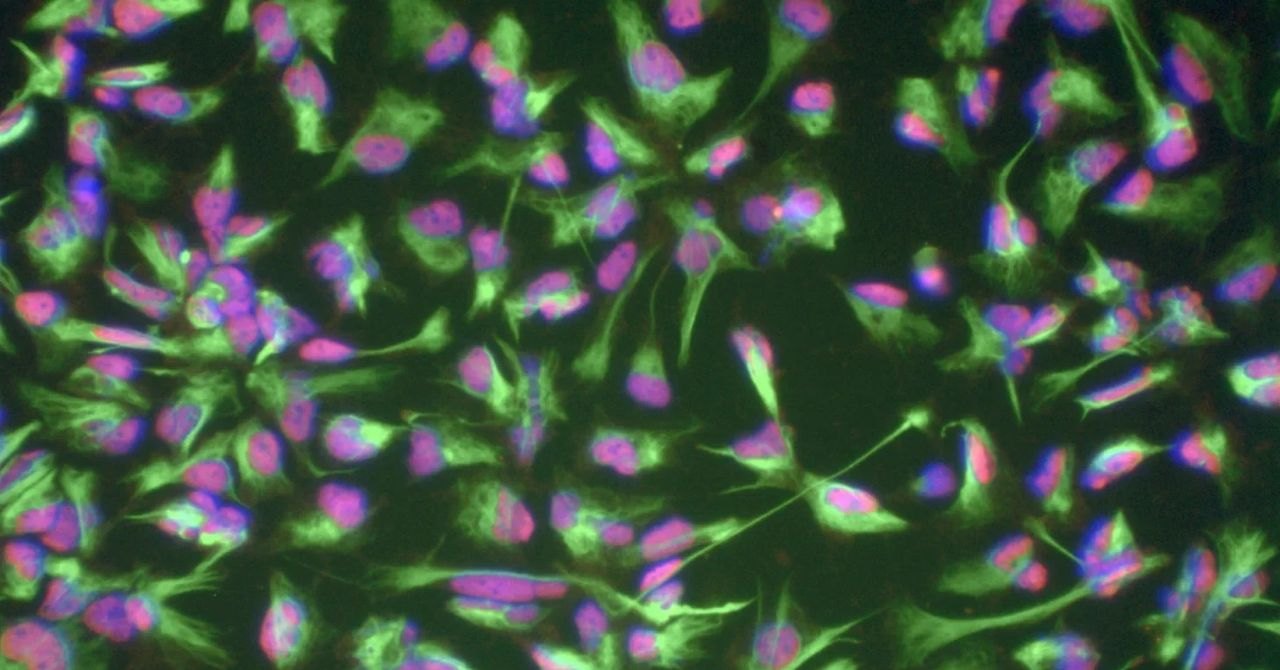
Researchers at Germany's Bonn University have found a way to slowly reverse the biological age of human blood cells by decades — without pushing them all the way back to an embryonic state. The work, published in the journal Aging Cell, marks a significant shift in how scientists can study cellular rejuvenation, offering a step-by-step view of a process that has until now happened too fast to observe closely.
This article covers the team's methodology, the specific biomarkers they tracked, the limits they acknowledge, and what the research means for regenerative medicine and anti-aging science. It is for anyone following longevity research, stem cell biology, or the broader effort to develop therapies for age-related conditions.
01Blood Cells from an Infant and a 101-Year-Old
The Bonn University team, led by professor Oliver Brüstle, began with blood cells donated by people across a wide age range — including an infant and a 101-year-old donor. Rather than converting those cells fully into pluripotent stem cells, the researchers guided them into a younger intermediate state, stopping short of the embryonic-like endpoint that prior reprogramming methods have targeted.
Scientists have known for two decades that adult cells can be converted back toward a stem-cell state. The problem is that this process has historically been fast, leaving no opportunity to study what happens to age markers along the way. Brüstle's team deliberately slowed it down.
02One Biomarker Reset Back 60 Years
As the cells moved toward the younger state over less than two months of reprogramming, the chemical signals in the DNA — biomarkers used to estimate a cell's biological age — changed measurably. One specific biomarker was reversed by as much as 60 years.
Crucially, the reversal continued even when the researchers drastically reduced the cells' ability to divide and multiply. That rules out the simplest explanation — that the apparent rejuvenation was just a side effect of rapid cell division producing fresh copies. The actual mechanism behind the erasure of these aging signals remains unknown.
"The hope is that you actually can do this systemically in the entire animal," Brüstle said. "But if you think about applying it in a patient, then you want to be sure this is not a lab experiment, so it's about finding the mechanism."
03Why Full Pluripotency Remains Off the Table
Advertisement
Tech Pulse Daily
Get tomorrow's pulse first
Join engineers who read Tech Pulse before stand-up. Free, weekday mornings.
Standard stem cell reprogramming carries risks that make it unsuitable for therapeutic use. Pluripotent cells can differentiate into any cell type in the body, which is precisely the problem. "You don't want to have a pluripotent cell in your body, because it can become all types of cells," Brüstle said.
The handful of genes that drive standard stem cell conversion can also promote cancer formation if they stay active. Those twin risks — uncontrolled differentiation and cancer — are why the Bonn team sought a path to cellular rejuvenation that bypasses the pluripotent state entirely.
Their approach threads that needle by stopping the reprogramming process at an intermediate point, achieving measurable age reversal while avoiding the endpoint that makes existing methods clinically unusable.
04Blood Cells Steered Toward Neurons
The team also demonstrated that the blood cells could be directed specifically into a cell type that produces neurons — a step that illustrates the technique's potential for regenerative medicine beyond anti-aging alone. That particular application, however, comes with a caveat the authors address directly in their paper.
Blood cells and neurons age on different timelines, which means using neuron-based aging markers as the measuring stick for blood cells could exaggerate how much reversal actually occurred. The researchers acknowledge this discrepancy but note it cannot account for all of the age-associated biomarkers that reversed.
A patient given a de-aging drug would not want their blood cells turning neuron-like. The researchers frame that specific outcome as a limitation in this context — but one that could have value for other regenerative applications.
05A Slow Process Becomes a Research Tool
The most significant outcome Brüstle highlights is not any single biomarker result — it is the model itself. Because the team slowed down the reprogramming process, they were able to track de-aging step by step in a way that instantaneous stem cell conversion never allowed.
For clinical researchers testing interventions for age-related conditions, the absence of a reliable, granular benchmark has been a persistent problem. This work provides one.
"Now we have a model," Brüstle said. "You can work along this, and now you can probe a zillion things.
What impacts the process? This will lead you to the mechanisms."
The team's next goal is to understand the biological mechanism behind the age-marker erasure well enough to replicate the effect across a whole animal system — and eventually to identify what could translate safely into patients.
A New Benchmark for De-Aging Comes FAQ
What did the Bonn University researchers achieve with blood cells?
They reversed the biological age of human blood cells by up to 60 years on one specific biomarker, without converting the cells fully into pluripotent stem cells, over less than two months of reprogramming.
Why can't existing stem cell reprogramming be used for anti-aging therapies?
Pluripotent stem cells can differentiate into any cell type, posing risks inside the body, and the genes driving reprogramming can promote cancer if left active.
Did the cells need to keep dividing for the age reversal to work?
No. The reversal continued even after the researchers dramatically reduced the cells' ability to multiply, ruling out cell division as the primary explanation.
What is the main limitation the researchers acknowledged?
Blood cells and neurons age on different timelines, so using neuron markers to measure blood cell de-aging could overstate the reversal — though the authors say this discrepancy does not account for all reversed biomarkers.
What is the broader significance of slowing the reprogramming process?
It created a step-by-step model of de-aging that researchers can use to probe what drives the process, giving clinical scientists a benchmark they have lacked when testing interventions for age-related conditions.
Sources

Author
Dillip Chowdary
Writes Tech Bytes coverage of AI, engineering, and the tools that actually ship. Editor of Tech Pulse Daily.
Related on Tech Bytes
Advertisement