Adapting to AI penetration testing orchestrators: The Modern Security Model
Cloudflare reported that traffic from autonomous AI penetration testing frameworks jumped 30x following the October 8 takedown of the open-source ARTEX tool.
By Dillip Chowdary • Nov 14, 2026 • Source: Cloudflare Blog (Eng)
Cloudflare tracked an explosive surge in autonomous security exploitation tools following the takedown of an open-source framework, detailing defensive measurements and real-world intrusion findings in Cloudflare Blog (Eng)'s report on modern adversarial orchestration. Over fifty distinct tool families now scan target environments across thousands of internet protocol addresses, driving daily request volumes for agentic offensive utilities up thirtyfold within six weeks. The rapid spread of autonomous testing software has enabled malicious actors to automate the traditional cyber kill chain at machine speed.
This analysis details the operational architectures of leading autonomous frameworks, active credential abuse observed by threat responders, and specific controls required to withstand machine-speed reconnaissance. The breakdown serves security architects, platform engineering teams, and systems administrators responsible for shielding exposed cloud endpoints from relentless autonomous agents. Readers will learn how modern orchestrators chain stolen integration tokens to penetrate internal assets and how layered perimeter controls neutralize parallel algorithmic probes.
01Autumn-27 takedown and the hydra effect
The original framework ARTEX emerged as an open-source agentic penetration testing system designed to automate offensive workflows across target infrastructure. On October 8, project creator Autumn-27 took the repository offline, stating that the malicious exploitation of the software ran entirely counter to its original intent. The takedown immediately triggered an intense hydra effect across the development community, multiplying independent variations rather than curbing adversarial adoption.
In the month following the repository removal, developers generated over 12,000 public repositories connected to the codebase, including several hundred unique forks with active modifications. Hundreds of competing agentic orchestration frameworks surfaced simultaneously, causing daily requests from autonomous exploitation tools to jump 30x compared to levels recorded on October 1. The resulting sprawl created fragmented variants that defenders now encounter daily across global networks.
02Autonomous planners and specialist subagent frameworks
Adversarial systems now deploy autonomous harnesses that manage observation, orientation, decision, and action without requiring active human direction. Frameworks like ARTEX link target asset graphs to dynamic trees of goals, leads, and findings, executing commands directly on host systems or root containers. LuaN1aoAgent maintains three distinct graphs tracking tasks, hypotheses, and target topologies while bundling native SSH and Chisel tunnels to re-establish broken connections during active engagements.
Specialized tools assign modular responsibilities to distinct worker components running inside containerized environments. Decepticon coordinates specialized sub-agents from a root Kali container against prerequisite objective graphs, incorporating targeted skills for Active Directory manipulation and cloud infrastructure pivoting. Similarly, Cairn routes facts and operational leads through existing coding harnesses including Codex, Claude Code, and Pi to generate custom attack tooling on demand.
Simpler tools such as PentestGPT-Agent deploy supervisor agents over single generic executors to navigate structured task dependency lists. While PentestGPT-Agent and base ARTEX releases require explicit operator commands for post-exploitation steps, both platforms autonomously construct and execute bespoke scripts directly on target hosts. By distributing reconnaissance tasks across parallel agents, these platforms systematically discover configuration errors that manual penetration testers routinely overlook.
Advertisement
Tech Pulse Daily
Get tomorrow's pulse first
Join engineers who read Tech Pulse before stand-up. Free, weekday mornings.
03Network traffic spikes and attributed probe instances
Network telemetry recorded through November 12 indicates that ARTEX and its direct lineage account for more than 60 percent of observed autonomous penetration frameworks. Overall request traffic originating from these orchestration engines grew more than tenfold after the October 8 repository takedown. Daily telemetry reveals thousands of unique internet protocol addresses launching coordinated probing campaigns against enterprise infrastructure.
Defenders face unprecedented operational pressure because single threat actors now operate multiple parallel orchestrators against independent corporate targets simultaneously. The resulting traffic volume compresses attack lifecycles, enabling autonomous agents to enumerate, verify, and exploit vulnerabilities at the direct speed of model inference. Because individual network addresses often run multiple orchestrator families concurrently, blocking static source origins fails to suppress incoming automated scans.
04Compromised CI tokens and lateral hyperscaler movement
Incident investigations conducted by the Cloudforce One response team uncovered widespread credential abuse linked to automated scanning frameworks. Threat actors repeatedly gained initial footholds within enterprise hyperscaler accounts before using stolen access keys to pivot directly into edge environments. Analysis showed that these compromises originated from poor credential hygiene rather than zero-day software vulnerabilities.
Attackers systematically harvested static, non-expiring credentials stored insecurely within continuous integration and continuous deployment pipelines. Because development teams granted these CI/CD tokens broad cross-environment permissions, automated exploitation frameworks leveraged them to breach multiple connected tenant systems. Autonomous engines readily ingest discovered application programming interface keys, chaining authentication privileges across environments to escalate administrative control.
05Malicious worker scripts and modern defensive controls
During one live incident response, analysts discovered ARTEX abusing a compromised account token that lacked IP restrictions and rate limits. The framework automatically spun up custom Worker scripts carrying prefixes such as artex-pgrecon, artex-pgw, and artex-do followed by unique alphanumeric tags. The automated attack generated over 69 requests per minute across edge infrastructure, attempted 400 database dump requests within one hour, and tested persistent session tokens.
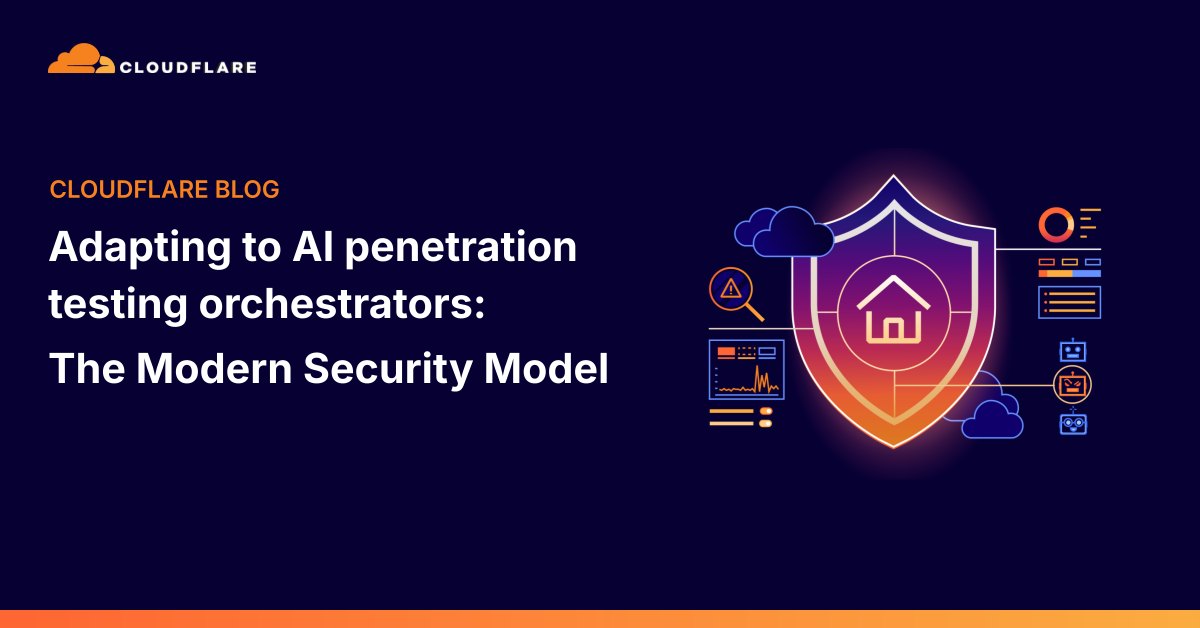
To counter autonomous frameworks, organizations must implement a multi-layered security model spanning six specific architectural pillars. Teams must deploy front-gate web application firewalls with strict rate limits, install anomaly detection across customer entry points, and enable robust bot defenses. Crucially, engineering teams must eliminate unauthenticated back doors by enforcing identity-gated access for all internal management interfaces.
The defensive model also mandates strict schema validation for incoming application deliveries to block unexpected payloads. Organizations must pair these boundary restrictions with active threat intelligence feeds to monitor emerging adversary orchestration families before attacks commence. Implementing mandatory expiration intervals and network boundaries on integration tokens prevents autonomous agents from turning exposed credentials into wide-scale infrastructure compromise.
Adapting to AI penetration testing FAQ
What happened to the original ARTEX penetration testing framework?
Project creator Autumn-27 took ARTEX offline on October 8 after observing malicious exploitation that ran counter to the tool's intended purpose. However, the removal triggered over 12,000 related repositories and hundreds of active forks.
How fast has traffic from AI penetration testing orchestrators grown?
Daily request volumes generated by autonomous testing and exploitation engines increased by 30x since October 1. Traffic grew more than tenfold in the weeks following the October 8 takedown of ARTEX.
How do autonomous frameworks breach cloud environments?
Threat actors compromise non-expiring, static API tokens stored inside CI/CD pipelines across hyperscaler environments. Autonomous frameworks then ingest these credentials to pivot across connected tenants, spin up unauthorized scripts, and extract databases.
What are the six pillars of Cloudflare's Modern Security Model?
The framework comprises web application firewalls with rate limits, application anomaly detection, bot defense, identity-gated access for all web applications, schema validation, and integrated threat intelligence.
Sources

Author
Dillip Chowdary
Writes Tech Bytes coverage of AI, engineering, and the tools that actually ship. Editor of Tech Pulse Daily.
Related on Tech Bytes
Advertisement