Adobe unveils new AI tools for Photoshop, Premiere, and more, with MCP
Adobe unveiled generative editing tools across Creative Cloud at Adobe MAX, adding multi-model Premiere generation and local MCP support arriving in 2027.
By Dillip Chowdary • Nov 10, 2026 • Source: 9to5Mac
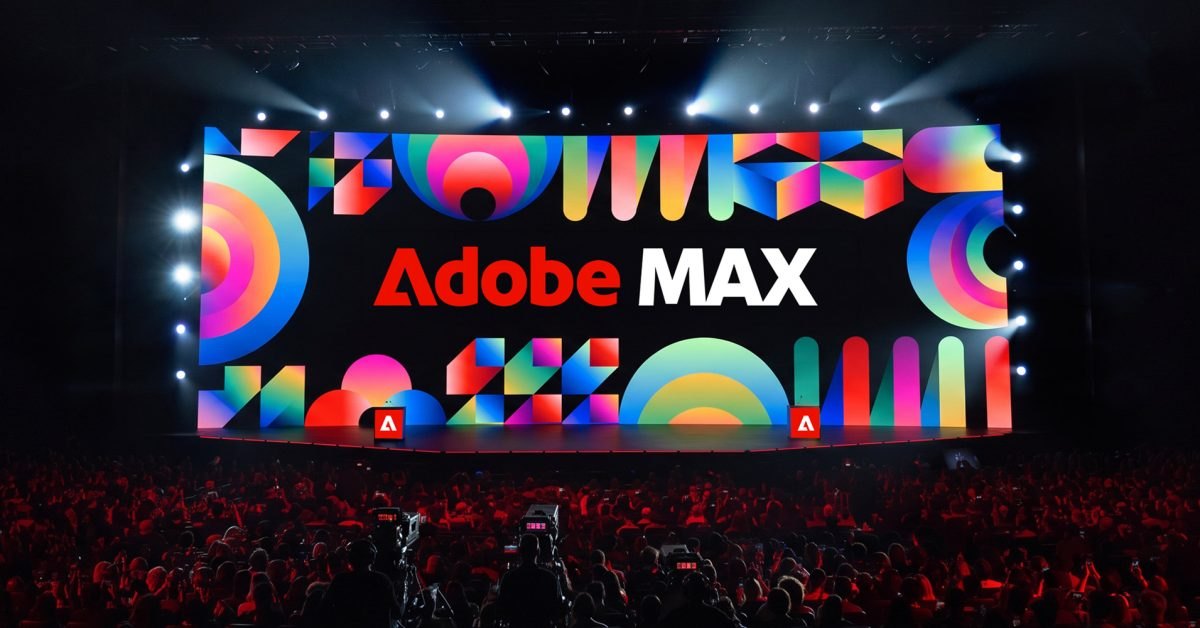
Adobe unveiled an extensive suite of generative creative tools, automated workflow features, and upcoming agent integrations at its annual Adobe MAX conference. As detailed in 9to5Mac's report, updates roll out across Creative Cloud desktop and mobile applications starting today. The release adds timeline media synthesis, non-destructive lighting adjustments, and licensed audio libraries.
This report details the newly launched production features, beta tools, and upcoming system capabilities across Photoshop, Premiere Pro, Lightroom, Illustrator, and Firefly. Creative professionals and multimedia editors will find exact technical details regarding partner model access, desktop tethering, and agent-driven timeline automation.
01Relight adjustments and Topaz enhancement models
Photoshop is introducing a non-destructive Relight tool that allows designers to dynamically place, resize, and reposition illumination sources within a composition. Alongside that feature, Generative Restyle enables creators to alter an image style using text prompts and fine-tune output variations with adjustable sliders. Designers can compare changes in real time with an integrated Quick Compare slider.
Several capabilities are entering the Photoshop beta app, including Mockups for compositing graphics onto surfaces and Camera Angles for exploring alternative viewpoints on canvas. Beta users also receive Generative Recompose to adapt compositions across aspect ratios without manual editing, Convert to Text Layers to extract editable type, and Timelapse recording. Distracting atmospheric haze, lens flares, and stray reflections can be cleared using Remove Ambient Effect Only.
Following its acquisition of Topaz Labs, Adobe added two dedicated enhancement models into its image toolkit. The Wonder 4 engine consolidates upscaling, denoising, deblurring, and sharpening into a single automated operation. The Image HDR model converts standard images into high-dynamic-range files with improved brightness and shadow detail.
02Premiere timeline generation and Lightroom controls
Premiere Pro gained generative audio tools including Enhance Audio, Separate Crosstalk, and Separate Sound Source to isolate overlapping dialogue. Editors working in the timeline can test a beta Generative Remove tool built to eliminate unwanted boom microphones, visible logos, and background distractions. A refreshed Color Mode interface also launches today to support quick corrections alongside advanced multi-point grading.
The timeline now incorporates the Generative Media Tool, allowing video producers to synthesize missing b-roll clips, ambient soundscapes, sound effects, and background music using scene context. The feature routes generation through Adobe Firefly alongside partner models from Google, Kling, Runway, and Luma. Editors can choose external foundation models directly inside active sequences to generate contextual media assets.
Premiere Mobile adds licensed non-commercial music from Universal Music Group and Warner Music Group featuring artists like Olivia Dean and Noah Kahan. The mobile app will also introduce automated Quick Cuts generation and an assistant for natural-language sequence editing. Meanwhile, Lightroom gained cinematic Glow lighting, automated Blemish Removal, beta Open Eyes correction, and expanded iPad camera tethering.
Advertisement
Tech Pulse Daily
Get tomorrow's pulse first
Join engineers who read Tech Pulse before stand-up. Free, weekday mornings.
03Persistent vector panels and document rewrite
Illustrator updated its vector styling toolkit with fresh patterns, gradients, brushes, and graphic appearance presets. A redesigned Blend control panel provides a persistent adjustment interface that maintains a live on-canvas preview while designers refine transitions and intermediate geometry steps. These persistent panels allow illustrators to adjust paths without repeatedly opening modal dialogs during layout generation.
InDesign launched an experimental Co-editing workspace in beta to streamline simultaneous multi-user document revisions across distributed publishing teams. Layout designers also gain Flex Layout, an adaptive engine that dynamically redistributes multi-column assets and typography when canvas dimensions change. The system preserves visual balance across mixed media assets during rapid reformatting for diverse print and digital distribution standards.
Editorial review within InDesign now relies on integrated Check Document and Rewrite utilities to accelerate pre-flight verifications during production. These monitoring utilities actively scan working layouts to detect formatting irregularities, common editorial oversights, and accessibility issues. The integrated Rewrite assistant offers immediate phrasing revisions directly inside the layout environment to maintain readability standards and editorial compliance.
04Local Model Context Protocol desktop integration
Adobe outlined a standardized Model Context Protocol integration scheduled to launch into private beta testing in early 2027. The protocol connects Photoshop, Illustrator, Premiere Pro, and After Effects directly with external artificial intelligence interfaces like ChatGPT. Because communication operates locally on the user machine, external assistants read native project files directly without requiring cloud ingestion.
In practice, an operator can command an external desktop assistant to adapt a complete advertising campaign across several creative applications using newly generated design assets. The connected assistant coordinates cross-application edits, organizes newly saved deliverables into cloud storage directories like Google Drive, and posts milestone summaries directly to team channels on Slack. Project layers, vector groupings, media bins, and edit sequences remain completely editable throughout the automated chain.
Local execution ensures that proprietary assets and working source media never leave the creator workstation during multi-tool execution pipelines. Designers retain granular control over every generated adjustment because the connected agent interacts directly with native project hierarchies rather than exporting flattened bitmaps. Adobe opened preview registration for creative teams seeking early access ahead of broader availability.
05Firefly multi-model canvas and background agents
Adobe upgraded Firefly with dedicated production environments designed to assemble raw assets into complete visual campaigns, social media packages, and video vlogs. The newly introduced Firefly Video system arranges scene sequencing, inserts transitions, embeds captions, and generates b-roll clips from storyboard outlines. Simultaneously, Firefly Design merges vector illustration, image editing, animation, and three-dimensional object management into a single canvas.
The Firefly web environment is also gaining Quick Actions for standard edits, Firefly Graph for architecting reusable automated pipelines, and Firefly Builder in private beta for prototyping applications with text prompts. Inside the central assistant, a new Plan Mode enables creators to inspect and authorize scheduled actions before automated execution begins. A Model Selector toggle lets users assign specific foundation models to individual generative production tasks.
Creative Cloud expanded its Creative Agent across Illustrator, Premiere Pro, InDesign, After Effects, Frame.io, and the Photoshop beta application. Users can instruct the agent to track visual subjects across frames, apply stylistic grading across sequences, and balance lighting levels across multiple footage clips using natural language commands. Adobe is also previewing always-on background agents capable of sorting project bins, checking asset quality, and preparing platform variations while users are away.
Adobe new AI tools for Photoshop FAQ
When will Model Context Protocol integration launch in Adobe Creative Cloud?
Model Context Protocol integration enters private beta in early 2027, allowing local artificial intelligence agents to communicate directly with native project files in Photoshop, Illustrator, Premiere Pro, and After Effects.
Which third-party video models are available in Adobe Premiere Pro?
Premiere Pro users can generate timeline media using Adobe Firefly alongside partner models from Google, Kling, Runway, and Luma.
What image enhancement engines did Adobe add after acquiring Topaz Labs?
Adobe introduced the Wonder 4 model, which combines upscaling, denoising, deblurring, and sharpening into one pass, and Image HDR, which converts standard dynamic range images into high-dynamic-range deliverables.
What audio licensing additions arrived in Premiere Mobile?
Premiere Mobile integrated hundreds of thousands of non-commercial licensed tracks through partnerships with Universal Music Group and Warner Music Group, including music from Olivia Dean and Noah Kahan.
Sources

Author
Dillip Chowdary
Writes Tech Bytes coverage of AI, engineering, and the tools that actually ship. Editor of Tech Pulse Daily.
Related on Tech Bytes
Advertisement