Agent-Based Modeling: Worlds Within Worlds
The Santa Fe Institute traces agent-based modeling from Conway's 1970 Game of Life and 3.4 MFLOPS machines to big-data models of crises and pandemics.
By Dillip Chowdary • Nov 06, 2026 • Source: santafe.edu
The Santa Fe Institute published santafe.edu's report, "Agent-Based Modeling: Worlds Within Worlds," a history of agent-based modeling for social science. In the 21st century, surging computational power and dataset availability have made the method increasingly useful to decision-makers. The rise appears as the implied volume of an approaching "processing" sphere, drawn at 25 percent of the increase because of display limits. The feature says that sphere will grow immensely as the story goes on.
Decision-makers and social scientists who need the origins are the audience. To imagine where agent-based modeling might go next, the Institute looks at history and limits the story to SFI contributions. It describes a new kind of looking-glass, through which worlds parallel to our own take shape, from checkerboard games and Manhattan Project mathematics to later desktop models.
Agent-Based Modeling: what actually changed
In the late 1980s, economists, physicists, and computer scientists gathered in a former convent adapted for the fledgling Santa Fe Institute. Sun through stained glass fell on a blackboard where an altar used to be. They pondered biological evolution in economic theory, and classic mathematics versus games on boxy desktop computers. They discussed models that could put the economy under glass. Were it to work, the machinations of economic systems would become much clearer. They did not fully realize a coherent method was forming.
Intellectual flexibility and a yearning to tackle complexity incubated the approach. It took the name agent-based modeling, drew interest first within economics, and became a radically different way to study the science of human society. Over several decades, researchers at SFI and elsewhere improved it, opening a window on complex phenomena in economics and many other fields. Its real-world impact grew, yet it lingered on the fringes of economic scholarship. The first lens, checkerboards and bombs, begins in the late 1960s and early 1970s.
Agent-Based Modeling: how it works
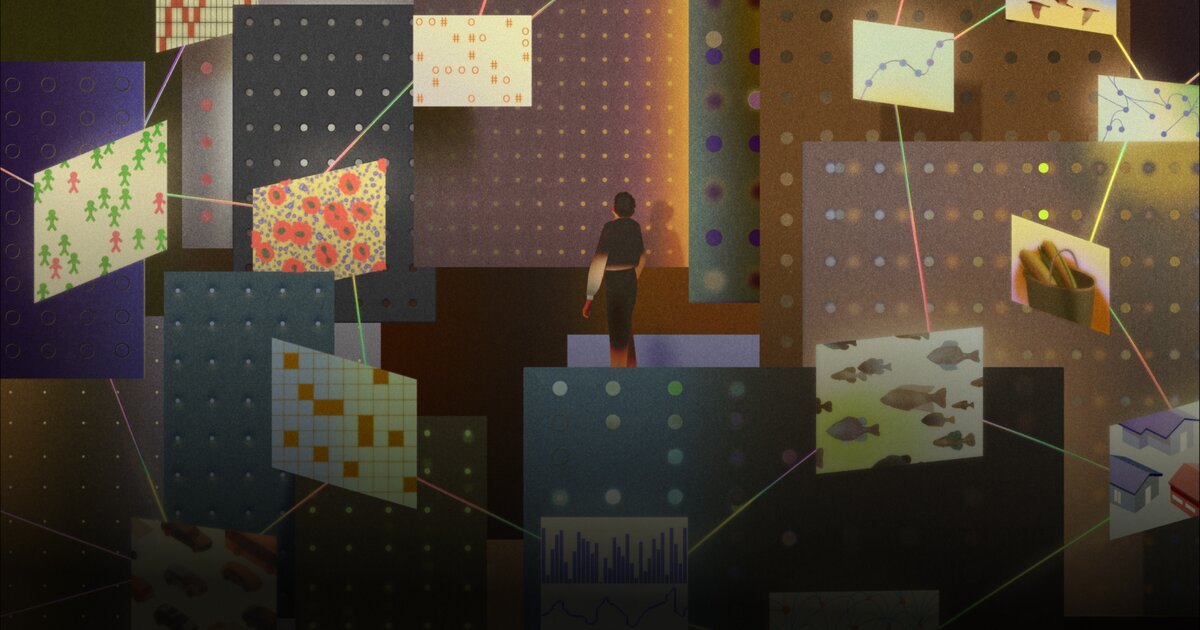
In 1970, Scientific American looked like conceptual checkerboard art. The black-and-white squares stand for living and dead organisms. John Conway, a mathematician and habitual game-maker, wrote Game of Life rules for how these 2D creatures are born, survive, and die, depending on the exact number of adjacent living and dead cells. The feature quotes the magazine: "Because of its analogies with the rise, fall and alternations of a society of living organisms, it belongs to a growing class of what are called 'simulation games' — games that resemble real-life processes."
In 1971, social scientists took up another game of adjacent squares. Thomas Schelling, a RAND economist and Doctor Strangelove consultant, proposed it. Social scientist James Sakoda, based in part on his experience of incarceration in a Japanese internment camp, had built a checkerboard model of social interaction, but Schelling's version got the credit. The Schelling segregation game asks whether racially segregated neighborhoods can form from only a slight preference to live near similar people. The answer is yes, even without racist policies such as redlining that mandate segregation.
Advertisement
Tech Pulse Daily
Get tomorrow's pulse first
Join engineers who read Tech Pulse before stand-up. Free, weekday mornings.
Agent-Based Modeling: why it matters
Stanisław Ulam developed cellular automata, where an agent's fate depends on its neighbors, presaging Conway and Schelling. His personal book collection formed the early core of the Santa Fe Institute library. John von Neumann, a child-prodigy mathematician, theorized about self-replicating machines and helped define game theory, including agents who acted rationally to maximize value, a crucial idea for economics. Physicist Nicholas Metropolis became an evangelist for computation, built pioneering electronic computers and algorithms critical for modern computing, and was a Santa Fe Institute founder.
Ulam, von Neumann, and Metropolis built adaptive methods for the Manhattan Project that could help split atoms and understand chain reactions. To escape the innate bounds of mathematics, they imagined computation as a modeling tool, groundwork for agent-based modeling and artificial intelligence. Their Monte Carlo methods used the computer to explore systems governed by random events. In the 1980s, desktop computers let social scientists revisit problems where mathematical solutions had fallen short. Many skeptical social scientists said computers were no good for modeling. But others found an unprecedented opportunity to model the true complexity of human social life.
Agent-Based Modeling: who is affected
Schelling saw minimal research value in computers then: room-sized beasts that pumped out reams of paper and had no display for watching dynamic change. Ideas from Schelling, Sakoda, and others intertwined with the computational revolution. In 1977 the world's most powerful computer processed an estimated 3.4 million floating-point operations per second, 3.4 MFLOPS. The feature compares that pace to a seahorse, called the Earth's slowest-moving fish, against the speed of light. Social-science data lived on paper punch-cards, perhaps floppy disks for the very advanced.
Researchers requested 6,772 datasets, or 120,457,248 card images, from the Inter-university Consortium for Political and Social Research. Robert Axtell, an SFI External Faculty Fellow, said, "At the beginning, we weren't sure what to call our work." He remembered Chris Langton, who was big in ALife, saying something like, "the acronym for individual-based modeling is IBM, same as the corporation. There's no way I'm calling my life's work that." Bob Axelrod at the University of Michigan suggested "actor-based modeling." Sociology already used a different concept called the actor model.
Agent-Based Modeling: what to watch
Axtell said they had a natural affinity for actor-based modeling, because "what you're doing is building little creatures that take to the stage and act." In the 1980s, small groups used desktop computers to model interactions between individuals. Distributed AI sought networks of intelligent agents that can solve problems a single computer cannot. Individual-based models in biology represented schools of fish or animals in herds. At Los Alamos National Laboratory, descendant of the Manhattan Project, researchers worked to synthesize Artificial Life, or ALife, that can self-reproduce and evolve.
In the social sciences, particularly economics, those lines converged into agent-based modeling. The feature calls the idea deceptively simple and a potent tool for complexity and hard social problems. Well into the 21st century, the method has reached a critical juncture. With big data, it is poised to help predict financial crises, manage pandemics, and uncover truths about the past. Next come the Santa Fe Artificial Stock Market, Sugarscape, public health, archaeology, and macroeconomics, then a view to the future.
Developer Action Items
- ☐ Verify the claim on the official Agent-Based Modeling Worlds Within page (or HN AI Agents), not from this recap alone.
- ☐ Name the surface that moved — API, policy, model, hardware, or commercial terms — before you Slack the thread.
- ☐ Assign one owner a day to read the primary material and decide: this-sprint, this-quarter, or noise.
- ☐ Do not change production on day-one coverage. Watch the vendor changelog and one independent write-up first.
Agent-Based Modeling FAQ
What did the Santa Fe Institute publish about agent-based modeling?
It published "Agent-Based Modeling: Worlds Within Worlds," a history of the method for social science, limited to SFI contributions. Surging computing power and dataset availability have made the method more useful to decision-makers, and the opening graphic draws that rise as a processing sphere at 25 percent of the increase.
How does John Conway's Game of Life decide whether a cell lives?
In the 1970 Scientific American version, black-and-white squares stand for living and dead organisms. A 2D cell is born, survives, or dies based on the exact number of adjacent living and dead cells. The magazine grouped the game with simulation games that resemble real-life processes.
What does the Schelling segregation game conclude?
Thomas Schelling's model finds that racially segregated neighborhoods can form from only a slight preference to live near similar people, even without racist policies such as redlining. James Sakoda had built an earlier checkerboard model, based in part on incarceration in a Japanese internment camp, but Schelling's version got the credit.
How powerful was the world's fastest computer in 1977?
It processed an estimated 3.4 million floating-point operations per second, or 3.4 MFLOPS. Social-science data lived on paper punch-cards, or on floppy disks for the very advanced. Researchers had requested 6,772 datasets, or 120,457,248 card images, from the Inter-university Consortium for Political and Social Research.
Which names lost out to agent-based modeling?
Robert Axtell said the group was not sure what to call the work. Chris Langton rejected individual-based modeling because the acronym is IBM, the same as the corporation. Bob Axelrod at the University of Michigan suggested actor-based modeling, but sociology already used a different concept called the actor model.
Sources

Author
Dillip Chowdary
Writes Tech Bytes coverage of AI, engineering, and the tools that actually ship. Editor of Tech Pulse Daily.
Related on Tech Bytes
Advertisement