AI Day Seoul Brings Together Korea’s Industry Leaders, Startups
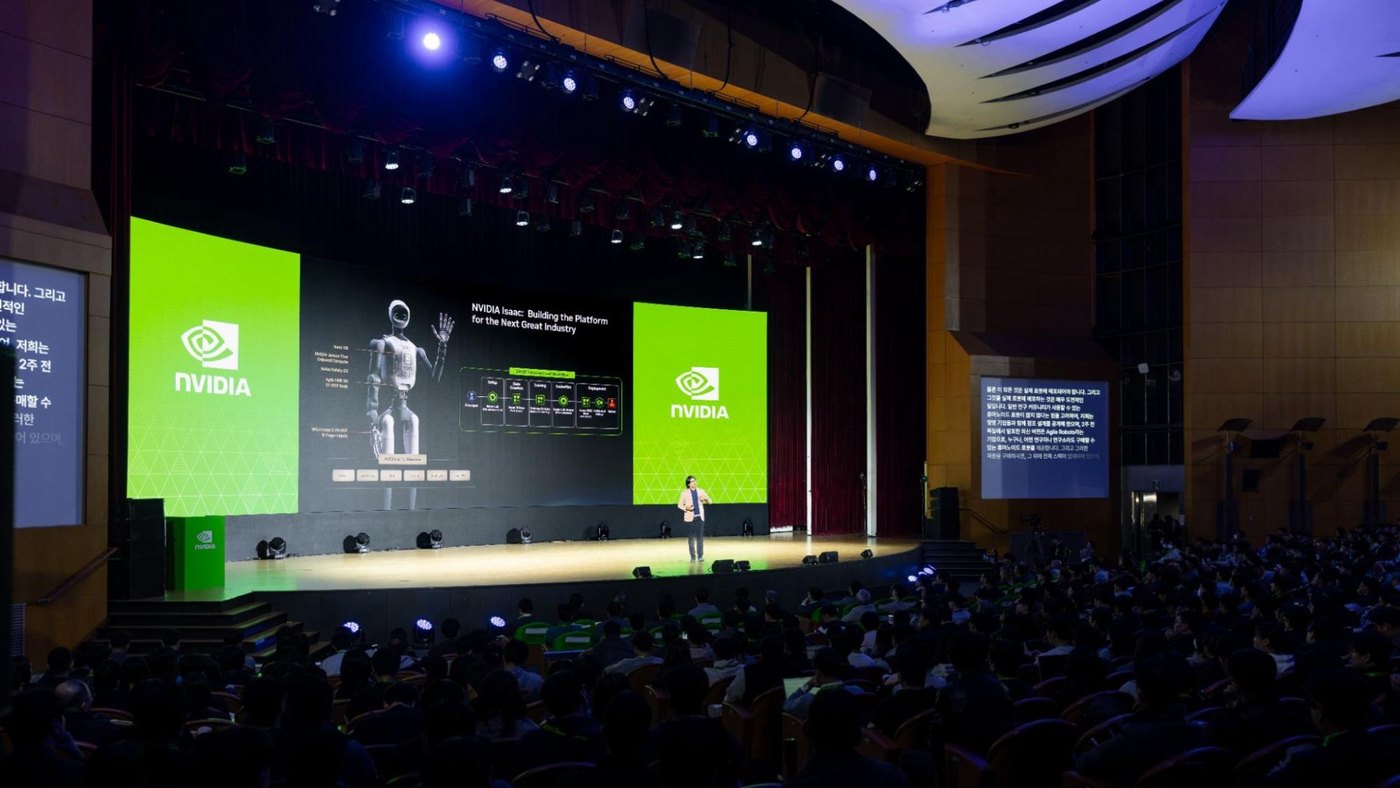
NVIDIA gathered over 2,000 developers at COEX for AI Day Seoul to showcase physical robotics deployments and autonomous enterprise agents across South Korea.
By Dillip Chowdary • Nov 16, 2026 • Source: NVIDIA Blog
At a glance
- Event
- AI Day Seoul
- Venue
- COEX Convention Center
- Attendance
- Over 2,000 attendees
- Workshop participation
- Over 500 developers
- Hackathon grand prize
- NVIDIA DGX Spark system
- Session distribution
- NVIDIA On-Demand platform
NVIDIA hosted AI Day Seoul at the COEX convention center, gathering over 2,000 attendees across two days to advance physical robotics and autonomous software agents. According to NVIDIA Blog's report, the conference brought together South Korean industrial leaders, startup founders, and developer communities. Plenary and technical sessions focused on deploying accelerated hardware platforms alongside production robotics pipelines and domestic foundation model runtimes.
This technical report details the robotics platforms, enterprise agent frameworks, developer hackathons, and edge computing workflows showcased across the Seoul conference. It is written for engineering leaders, robotics researchers, and software architects evaluating enterprise agent ownership, physical automation stacks, and localized model training.
01Industrial robotics deployments and corporate platforms
Plenary sessions focused on physical artificial intelligence, with Deepu Talla, vice president of robotics and edge AI at NVIDIA, observing that South Korea is “punching above its weight.” Talla highlighted how domestic industrial manufacturers including Doosan Robotics, Hyundai Motor Group, LG Electronics, and SK Group are implementing NVIDIA platforms. These corporate groups are utilizing accelerated compute architectures to transition general-purpose robotics into real-world operational environments.
Emerging hardware ventures are deploying identical computing architectures to scale autonomous physical machinery outside laboratory spaces. Startups including Real World and Luda Robotics demonstrated physical systems built directly on NVIDIA platforms to deliver general-purpose operational capabilities. These deployments establish how shared computational hardware enables both industrial conglomerates and early-stage engineering teams to deploy physical robots into practical production environments.
02Enterprise agent architecture and cloud breakouts
Enterprise software sessions addressed internal control over autonomous software systems, led by Jonathan Cohen, vice president of applied research at NVIDIA. Cohen demonstrated architectural frameworks showing how commercial enterprises can build, deploy, and manage autonomous software agents that they directly own and control. The presented methodologies emphasize internal system governance, data privacy, and organizational ownership across sensitive corporate software environments.
Specialized breakout sessions detailed operational deployments across leading South Korean cloud and artificial intelligence infrastructure providers. Technical presentations featured engineering speakers representing Coupang Intelligent Cloud, Doosan Robotics, LG AI Research, LG Electronics, NAVER Cloud, SK Telecom, and Upstage. Hyunho Yang, research engineer for omnimodal foundation models at SK Telecom, noted that “it was a genuinely enjoyable time to have candid conversations,” adding that the passion of fellow developers provided genuine inspiration.
03Community developer bootcamps and cultural agents
Advertisement
Tech Pulse Daily
Get tomorrow's pulse first
Join engineers who read Tech Pulse before stand-up. Free, weekday mornings.
Grassroots developer engagement centered on open foundation models and developer frameworks during the Agentic AI 10x Bootcamp Community Day. Community leaders shared methods for building systems with open models and tools alongside domestic developer organizations. Participating groups included Pseudo Lab, Python Korea, PyTorchKR, HAERAE, Hugging Face KREW, Graph User Group, Womxn Who Code Korea, and Dnol Datayanolja.
Applied development culminated in the Hangul Day hackathon, an applied engineering competition organized jointly with technical education provider Fastcampus. Five finalist teams engineered specialized software agents trained on the Korean language and culture using the OpenShell runtime. Finalists optimized their agent architectures for domestic linguistic workflows, with winning team FlyGate receiving an NVIDIA DGX Spark system to support their ongoing model training.
04Korean language workshops and developer certifications
Practical skills development formed a primary conference track, engaging more than 500 developers in comprehensive technical training sessions. Technical instructors conducted full-day NVIDIA Deep Learning Institute workshops alongside formal NVIDIA Certification examinations administered directly in the Korean language. The localized educational sessions enabled domestic engineers to validate practical development competencies within standardized testing environments.
Workshop curricula addressed three core technical areas required for building and deploying production-grade artificial intelligence systems. Developers completed coursework on deploying and optimizing inference workloads at scale, developing secure autonomous agents, and building end-to-end robotics workflows with the NVIDIA Isaac platform. Professional credentials included developer participation in the newly introduced AI Model and Application Development certification examination.
05Inception startup pitches and research forums
Early-stage technology ventures pitched practical implementations during the Physical AI Startup Connect event, featuring ten startups from the NVIDIA Inception program. The presenting cohort included AIM Intelligence, Avikus, GoLe Robotics, MOVIN, Neubility, ROAI, ROBROS, TESOLLO, TwelveLabs, and XYZ. These ventures showcased systems spanning autonomous maritime navigation, mobile logistics robots, physical manipulation hardware, and multimodal video intelligence.
Advanced computational research convened during the dedicated AI for Science Forum held alongside the commercial tracks. The forum brought together scientific researchers from the Korea Institute of Science and Technology Information, Korean universities, and NVIDIA Research. Discussions focused on applying accelerated computing architectures to complex scientific simulations, national research initiatives, and foundational academic discovery.
Note: NVIDIA confirmed that recorded technical presentations and keynote sessions from AI Day Seoul will soon be released for online viewing through the official NVIDIA On-Demand platform. Registered developers who were unable to attend the conference in person will be able to access the material online.
Frequently asked questions
How many developers attended AI Day Seoul?
Over 2,000 attendees gathered at COEX across two days, including more than 500 developers who participated in Deep Learning Institute workshops.
Which Korean companies are deploying NVIDIA robotics platforms?
Doosan Robotics, Hyundai Motor Group, LG Electronics, and SK Group are deploying NVIDIA platforms, alongside startups Real World and Luda Robotics.
Who won the Hangul Day hackathon and what did they build?
Team FlyGate won an NVIDIA DGX Spark system after building Korean language and culture agents using the OpenShell runtime.
Where can developers watch recorded sessions from AI Day Seoul?
Conference sessions and technical presentations will soon be available for streaming through the NVIDIA On-Demand catalog.
Sources

Author
Dillip Chowdary
Writes Tech Bytes coverage of AI, engineering, and the tools that actually ship. Editor of Tech Pulse Daily.
Related on Tech Bytes
Advertisement