Amazon is taking its biggest shot at Nvidia yet with new TorchNeuron dev
Amazon Web Services released TorchNeuron on Monday so PyTorch apps can run on its Trainium chip after one configuration change, with no code rewrite.
By Dillip Chowdary • Oct 20, 2026 • Source: TechCrunch
Amazon Web Services released TorchNeuron on Monday, a tool that lets AI startups move their AI apps onto Amazon's Trainium chip. TechCrunch's report describes the release as a direct challenge to the software advantage that helped Nvidia become the default hardware choice for AI apps and the AI hardware provider of choice. Amazon says a PyTorch app runs on Trainium after one line of configuration, with no code rewrite required, and that about 85% of AI apps are written with PyTorch.
This piece is for founders and engineers choosing between Nvidia GPUs and Trainium for apps they build, train, and run in PyTorch. It covers the one-line configuration, how one Trainium chip handles training and inference, the Deepgram figure Amazon cites, and the code Amazon says it will contribute to the main PyTorch project. AWS names the Nvidia-tied neoclouds CoreWeave, Nebius, and Firmus.
Amazon is taking its biggest shot at Nvidia: what actually changed
TorchNeuron is adapted from PyTorch, the free open-source toolkit for building, training, and running AI models, so developers who know PyTorch already know how to use it. Amazon says Trainium takes one configuration line and no code rewrite. Nvidia spent years making CUDA, the software infrastructure for Nvidia GPUs and its other hardware, support PyTorch seamlessly. That left Nvidia's hardware deeply embedded in the toolkit, essentially by default. Facebook originally developed PyTorch. Since 2022 it has been part of the Linux Foundation, which maintains open-source projects.
PyTorch users can already move apps to AMD GPUs or Apple's chips with a simple configuration change. Amazon is not the first company to attempt an easy port onto the platform. Amazon argues that porting to Trainium is easy and also gives AI startups access to Amazon's entire cloud. AWS says that is a better choice for startups than neoclouds tied to Nvidia hardware, naming CoreWeave, Nebius, and Firmus. Amazon is pushing PyTorch to be less automatically centered on Nvidia and will contribute that code to the main PyTorch project.
Amazon is taking its biggest shot at Nvidia: how it works
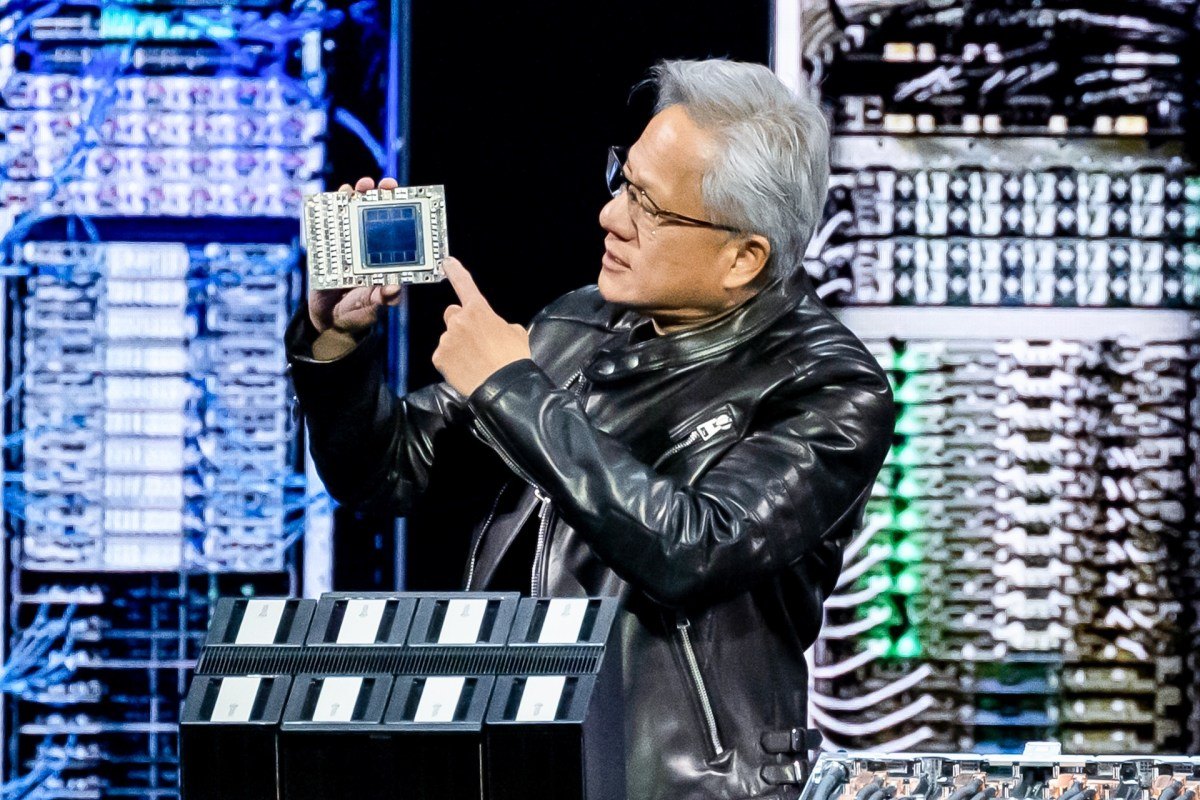
The developer keeps the PyTorch app and changes one configuration line so it runs on Trainium. Amazon says no code rewrite is required. TorchNeuron is adapted from PyTorch, so Amazon says current users already know it, and building, training, and running stay in PyTorch. CUDA is the layer Nvidia spent years tuning so those apps run on Nvidia GPUs and its other hardware. TorchNeuron is the configuration that sends an AI startup's PyTorch app to Trainium instead of that default.
Training teaches the AI model. Inference puts the finished model to work, as when it answers a user's question. The same Trainium chip does both. Colin Brace, VP of Technology Software at AWS Annapurna Labs, the unit that makes Amazon's custom chips, told TechCrunch by email that Trainium's value is "price-performance plus the fact that it's one platform for both training and inference, which improves the economics across a full workload." AWS says tight cloud integration can save startups money even if AWS does not offer the cheapest per-token price.
Advertisement
Tech Pulse Daily
Get tomorrow's pulse first
Join engineers who read Tech Pulse before stand-up. Free, weekday mornings.
Amazon is taking its biggest shot at Nvidia: why it matters now
Amazon is going after the software advantage that left Nvidia hardware inside PyTorch essentially by default. It says about 85% of AI apps are written with PyTorch. TorchNeuron is the one-line route onto Trainium. In the blog post, Amazon wrote that its approach extends beyond its own hardware. It is contributing changes upstream, working with the PyTorch community to remove code that ties the framework to specific chips. The goal is a hardware-agnostic PyTorch for the entire developer community, not just Trainium users.
A deep uncoupling would reach further than chip competitors alone. Brace said, "The real story is removing the lock-in that kept developers from having a real choice at all." One point of PyTorch is to hide the difficulties of getting AI code to run on hardware. Pushing Nvidia out of the default could bring more choice and more affordable options, as Amazon promises, or more configuration headaches. Amazon says the contributed code goes to the main PyTorch project, part of the Linux Foundation since 2022.
Amazon is taking its biggest shot at Nvidia: who is affected
Startup founders are the people Brace addressed by email. "You're building on AWS. You're not betting on a single-purpose compute provider and scrambling to build everything else around it," he told TechCrunch. On AWS, he said, "the infrastructure to go from prototype to production is already there, allowing a founder to move fast and scale when they need to." Deepgram, an AI voice app provider and an ElevenLabs competitor, moved to Trainium using native PyTorch support and is processing 70% more audio per dollar at production-grade accuracy.
Nvidia's CUDA support in PyTorch is the advantage TorchNeuron and the upstream code are built to narrow. AWS says its cloud is a better startup choice than Nvidia-tied neoclouds, and it names CoreWeave, Nebius, and Firmus. AMD GPUs and Apple's chips already accept a simple PyTorch configuration change, and Amazon is offering Trainium the same kind of port. Annapurna Labs, where Brace is VP of Technology Software, makes Amazon's custom chips. Amazon says the upstream edits serve every developer, not only Trainium users.
Amazon is taking its biggest shot at Nvidia: what to watch
Watch whether one configuration line puts PyTorch apps on Trainium with no code rewrite, on a chip that both trains the model and runs inference. AWS says price-performance and one platform for the full workload can still save startups money even if AWS does not offer the cheapest per-token price, and prototype-to-production infrastructure is already on AWS. Deepgram's result is 70% more audio per dollar at production-grade accuracy on native PyTorch support. Founders can set that result against the Nvidia-tied neoclouds CoreWeave, Nebius, and Firmus.
Amazon's blog post says it is working with the PyTorch community to remove code that ties the framework to specific chips, so PyTorch is more hardware-agnostic for every developer, not only Trainium users. If Amazon deeply uncouples PyTorch from Nvidia, the effect on the GPU giant goes beyond competing chips. Brace tied that outcome to removing the lock-in that kept developers from a real choice. If the edits expose hardware difficulties PyTorch has hidden, developers could get more configuration headaches, or the more affordable options Amazon promises.
Developer Action Items
- ☐ Diff the official changelog for Apple / Amazon / AWS before you bump — APIs, defaults, and removed flags only.
- ☐ Install through the vendor's documented channel in staging; keep a one-command rollback and time-box the canary.
- ☐ Grep your repo for old flag names, lockfile pins, and plugin versions that the notes mark as breaking.
- ☐ Prefer the first patch cut over the day-zero tag unless you have a reason to be on the leading edge.
- ☐ If TechCrunch did not name a region, plan, or SKU, screenshot the official availability line before you promise it to users.
Amazon is taking its biggest shot at Nvidia FAQ
What is TorchNeuron, and when did Amazon Web Services release it?
TorchNeuron is a tool Amazon Web Services released on Monday so AI startups can move PyTorch apps onto Amazon's Trainium chip. Amazon says the move takes one line of configuration and no code rewrite.
What share of AI apps does Amazon say use PyTorch?
Amazon says about 85% of AI apps are written with PyTorch, a free open-source toolkit. Facebook originally developed it, and since 2022 it has been part of the Linux Foundation.
What result did Deepgram see after moving to Trainium?
Deepgram, an AI voice app provider and a competitor to ElevenLabs, moved to Trainium using native PyTorch support. AWS says it is processing 70% more audio per dollar at production-grade accuracy.
Who is Colin Brace, and what did he say about building on AWS?
Colin Brace is VP of Technology Software at AWS Annapurna Labs, the unit that makes Amazon's custom chips. He told TechCrunch by email that builders on AWS are not betting on a single-purpose compute provider, and that the infrastructure to go from prototype to production is already there.
What is Amazon contributing to the main PyTorch project?
Amazon says it is contributing code upstream and working with the PyTorch community to remove code that ties the framework to specific chips. The goal is a more hardware-agnostic PyTorch for the entire developer community, not only Trainium users.
Sources

Author
Dillip Chowdary
Writes Tech Bytes coverage of AI, engineering, and the tools that actually ship. Editor of Tech Pulse Daily.
Related on Tech Bytes
Advertisement