America’s air traffic control system couldn’t handle a single bad router
An L3Harris router installation in Arkansas flooded the FAA data backbone, severing radar to 17 centers and grounding 1.5 million flyers on November 13, 2026.
By Dillip Chowdary • Nov 16, 2026 • Source: The Verge
At a glance
- System
- FAA Telecommunications Infrastructure
- Vendor
- L3Harris
- Incident date
- November 13, 2026
- Ground stop duration
- 4.5 hours
- Affected facilities
- 17 of 22 en route centers
- Flight cancellations
- Over 13,000 flights
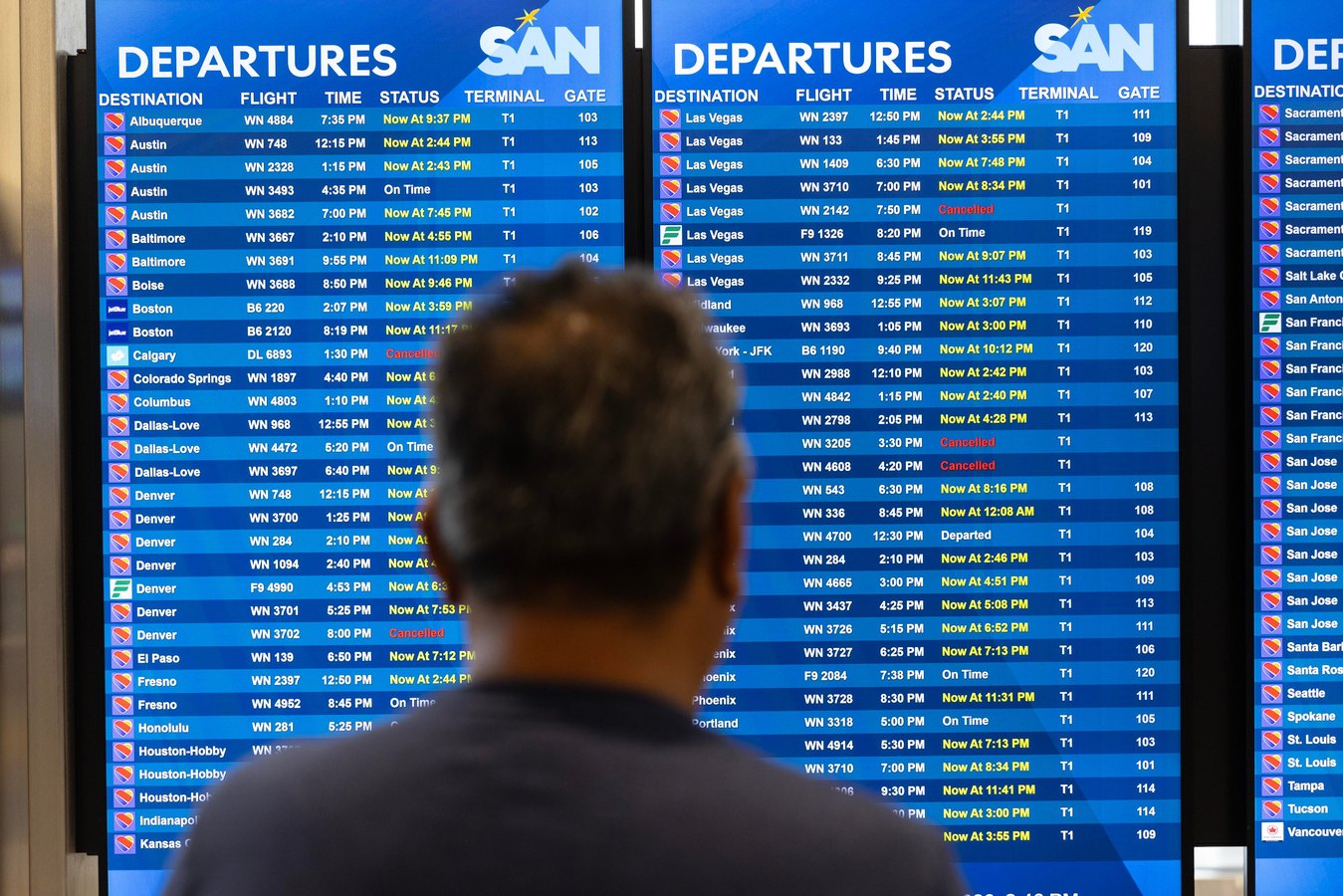
A single wireless data router installed during routine maintenance triggered a nationwide ground stop on November 13, 2026, halting air travel across the United States for four and a half hours, according to The Verge's report. Defense contractor L3Harris activated the unit at an Arkansas radio site, where it flooded the federal data backbone with connection requests and severed communications to critical regional control centers. The outage caused the longest nationwide flight pause since September 11, 2001, leaving passenger networks paralyzed into the weekend.
This breakdown highlights the systemic fragility of the core network that keeps commercial air traffic separated, alongside the cascading risks posed by legacy equipment upgrades. It serves as an essential analysis for airline operators, systems engineers, and enterprise infrastructure teams managing mission-critical telecommunications systems. The incident underscores how small packet losses disrupt real-time aviation feeds that cannot tolerate synchronization delays.
01Midwestern radio drops and grounded departures
The disturbance surfaced around 3:15PM ET when flight crews across the Midwest experienced severed voice contact on standard radio frequencies. Pilots on regional routes, including Allegiant Flight 547 flying at 11,000 feet near Grand Rapids, were unable to establish contact with approach controllers as audio transmissions dissolved. Within minutes, air traffic personnel at Quad Cities Airport in Moline observed that regional centers, including Chicago Approach, were abruptly going ATC zero.
At 3:54PM ET, the Federal Aviation Administration issued an emergency nationwide ground stop citing extraordinary circumstances and safety requirements. The sudden mandate prohibited all aircraft in the United States from departing, leaving crews and travelers stranded mid-journey. In Atlanta alone, where passenger Amanda Khera landed while attempting to return home from Belize to Virginia Beach, more than 600 flights were scrubbed as terminals froze across the country.
02Data backbone architecture and router installation
The collapse originated inside the FAA Telecommunications Infrastructure, known as FTI, which defense company L3Harris built in the early 2000s. FTI functions as the operational backbone linking more than 4,400 aviation facilities across the nation, carrying voice channels and radar feeds that controllers require to manage aircraft separation. The hybrid infrastructure is designed to bridge legacy phone-line transmission circuits with contemporary Internet Protocol systems until a planned replacement arrives in 2028.
To maintain network operations ahead of the replacement date, L3Harris contractors performed an equipment swap at an FAA radio facility in El Dorado, Arkansas. Technicians removed an aging wired telephone switch and installed a modern wireless data router. Immediately after power-up, the replacement hardware malfunctioned and began bombarding the network with hundreds of connection requests per second.
Advertisement
Tech Pulse Daily
Get tomorrow's pulse first
Join engineers who read Tech Pulse before stand-up. Free, weekday mornings.
03Packet loss dynamics and cascading outages
The flood of connection attempts from the El Dorado device introduced severe network congestion that stripped essential data packets from transit feeds. Texas A&M University professor I-Hong Hou noted that critical telecom networks divide radar coordinates and voice transmissions into compact packets that must fully reassemble at the receiving end. While consumer platforms like FaceTime degrade image quality to sustain connections during packet loss, air traffic control applications require exact synchronization and drop feeds entirely when single packets disappear.
Network instability rapidly radiated across the FTI architecture, severing vital radar and voice links to 17 of the agency's 22 Air Route Traffic Control Centers. Several Terminal Radar Approach Controls also went dark as the cascading failure spread through interconnected routing nodes. Technicians stabilized the wider network only after locating the erratic El Dorado router and disconnecting a second unit at an FAA radar facility in Amarillo, Texas.
04Weekend flight cancellations and travel disruptions
The Federal Aviation Administration lifted the nationwide ground stop at 8:15PM ET after telecommunications links normalized, ending a four-and-a-half-hour flight suspension. Flight tracking service FlightAware recorded more than 13,000 canceled flights and over 25,000 delays extending across the weekend as airline scheduling algorithms struggled to recover aircraft and crews. The disruption left more than 1.5 million travelers stranded in hubs ranging from Charlotte Douglas to Miami International Airport.
Note: The FAA Telecommunications Infrastructure remains scheduled for complete modernization and replacement in 2028, requiring ongoing incremental maintenance until the cutover.
Public frustration deepened as federal officials waited six hours to provide context beyond a 31-word press statement and an initial social post. Transportation Secretary Sean Duffy and Homeland Security Secretary Markwayne Mullin addressed the event during a late-night briefing at 11:30PM ET. Officials ruled out hostile cyberattacks while describing the failure as an internal infrastructure issue encountered during routine hardware modernization.
05Network stability requirements across communication tiers
| Communication system | Synchronization tolerance | Failure behavior | Network architecture |
|---|---|---|---|
| FAA Telecommunications Infrastructure | Exceptional stability required | Feed stops on packet drop | Legacy hybrid linking 4,400 facilities |
| Consumer video apps | High jitter and loss tolerance | Dynamic quality degradation | Public Internet Protocol streams |
Frequently asked questions
What caused the nationwide FAA ground stop on November 13, 2026?
A replacement wireless router installed by L3Harris in El Dorado, Arkansas, flooded the FTI network with hundreds of connection attempts per second. This caused packet loss that severed voice and radar feeds to 17 major air traffic control centers.
How long did the flight pause last and how many people were affected?
The ground stop lasted four and a half hours, from 3:54PM ET to 8:15PM ET. The disruption stranded over 1.5 million travelers, prompting airlines to cancel more than 13,000 flights and delay 25,000 more through the weekend.
Was the network disruption caused by an external cyberattack?
Federal officials, including Homeland Security Secretary Markwayne Mullin, confirmed that the incident was not a cyberattack. The outage was traced entirely to hardware instability caused by the new router installation.
Sources

Author
Dillip Chowdary
Writes Tech Bytes coverage of AI, engineering, and the tools that actually ship. Editor of Tech Pulse Daily.
Related on Tech Bytes
Advertisement