An overview of Jensen Huang’s messy days
Jensen Huang resigned as Nvidia chief executive after an intelligence inquiry and workplace affairs sent the chipmaker's stock tumbling to $162.85.
By Dillip Chowdary • Nov 15, 2026 • Source: The Verge
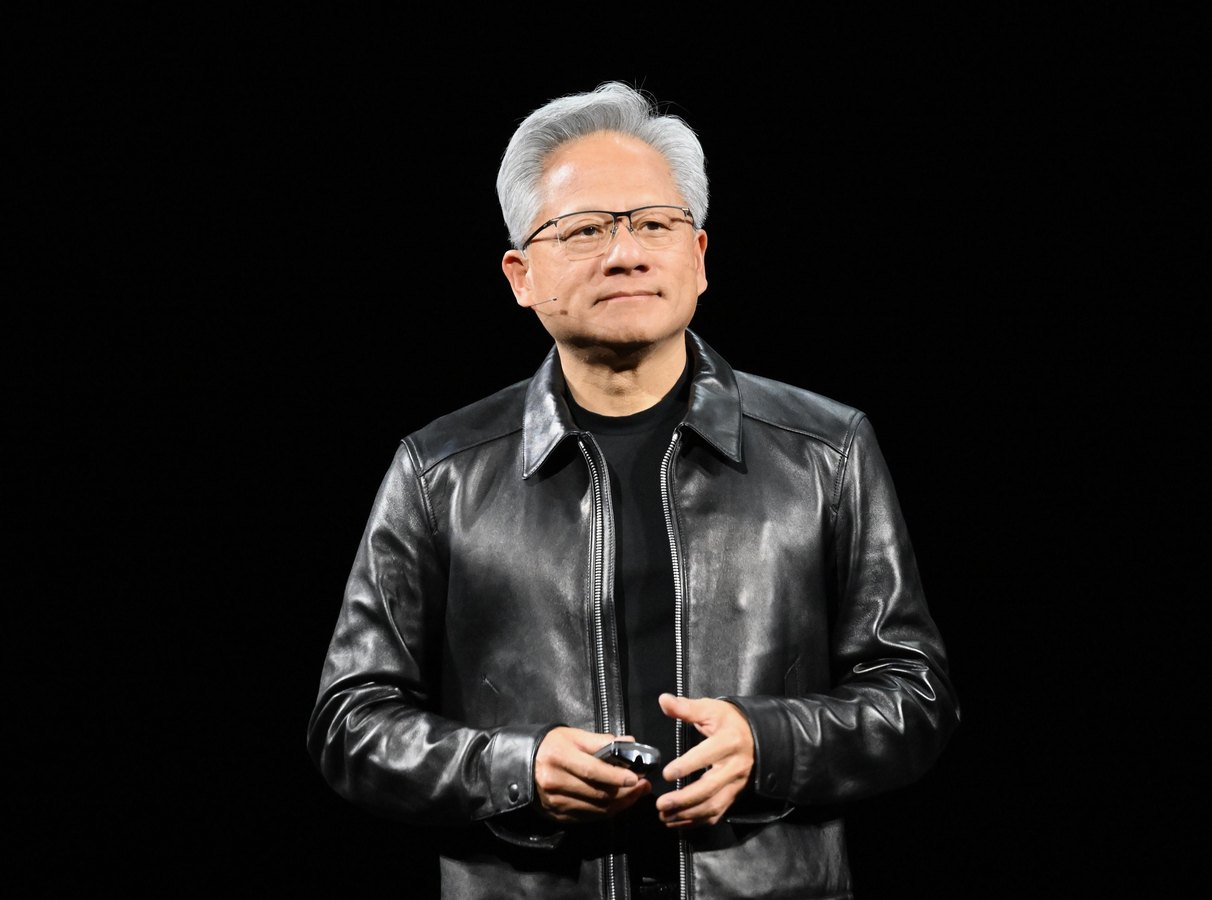
Nvidia co-founder Jensen Huang resigned as chief executive officer on November 12, following an escalating corporate crisis involving an alleged Chinese intelligence recruitment operation and undisclosed workplace affairs. The abrupt departure ended his thirty-three-year tenure as the sole leader of the world's preeminent artificial intelligence semiconductor vendor, according to The Verge's report detailing the sequence of disclosures. His exit arrived as international security officials scrutinized the company's central position in the global hardware supply chain and international chip trade restrictions.
This breakdown analyzes the timeline of allegations, the immediate corporate governance overhaul inside Nvidia, and the broader commercial fallout across the enterprise computing market. The assessment is prepared for technology executives, semiconductor analysts, enterprise data center operators, and hardware investors navigating sudden executive turnover at the industry's primary computing provider.
01Singapore data centers and the intelligence probe
American national security scrutiny centered on Huang's association with Alice Huang, an executive at the Singapore-based infrastructure operator Megaspeed. United States Commerce Department officials had investigated Megaspeed over allegations of illicitly funneling advanced graphic processors into China despite federal trade prohibitions. Singaporean law enforcement seized Alice Huang's passport in June 2025 and subsequently excluded her from the country after she provided inaccurate statements to local investigators.
United States intelligence personnel suspected Alice Huang funneled proprietary technical designs and confidential executive branch trade policy discussions to officials in Beijing. The New York Times reported on November 6 that China's Ministry of State Security recruited her specifically to target Nvidia's chief executive. While intelligence analysts expressed differing assessments regarding the corroborating proof, the revelation amplified federal unease concerning sensitive semiconductor technologies.
Huang had established a close relationship with the Megaspeed executive while concurrently lobbying United States officials to relax export controls on advanced artificial intelligence semiconductors. He maintained prominent political ties in Washington, notably engaging President Donald Trump on stage during the All-In Summit. Federal policymakers consider advanced graphics processors pivotal to American technological dominance, making any covert penetration of semiconductor leadership a critical security liability.
02Undisclosed relationships and a sudden executive resignation
The corporate crisis accelerated on November 8 when Huang admitted to engaging in an undisclosed personal relationship, prompting the board of directors to initiate a formal inquiry. Huang had previously misled senior corporate personnel, including general counsel Tim Teter and chief marketing officer Alison Wagonfeld, regarding his contacts with the Megaspeed executive. Nvidia representatives had previously characterized those external business interactions as routine corporate activity.
Governance concerns multiplied on November 11 after reports revealed a second undisclosed workplace relationship between Huang and Kimberly Powell, Nvidia's vice president of health care. Corporate directors concluded that the executive conflicts compromised internal leadership standards across the business. Huang acknowledged his pending departure to associates that Wednesday evening, describing the personal collapse before submitting his formal resignation the following morning.
The abrupt departure terminated an unusual managerial hierarchy where approximately sixty corporate vice presidents reported directly to Huang without an established successor. Traditional Fortune 500 corporate structures maintain between ten and twenty direct subordinates, with peer executives like Apple chief executive Tim Cook maintaining seventeen direct reports. The sudden leadership vacuum forced the board to abandon its historical operational model overnight.
Advertisement
Tech Pulse Daily
Get tomorrow's pulse first
Join engineers who read Tech Pulse before stand-up. Free, weekday mornings.
03Leadership transitions across the executive boardroom
Nvidia's board of directors designated chief financial officer Colette Kress as interim chief executive officer to stabilize operations during the executive transition. Board member Harvey Jones assumed the role of independent board chair, marking the first time in the company's corporate history that an independent director occupied that supervisory position. Jones distributed an internal employee memorandum confirming the company initiated a comprehensive search evaluating both internal and external candidates.
The board signaled that the forthcoming corporate reorganization would permanently eliminate the legacy management structure of sixty direct executive reports. Operating leaders inside the organization expect the board of directors to assert expanded direct oversight across corporate governance, regulatory compliance, and partner engagements. Enterprise industry observers floating potential external successor candidates noted names such as Apple senior vice president of hardware technologies Johny Srouji.
The internal leadership transition drew divided reactions across the broader technology ecosystem following the formal announcement. Epic Games chief executive Tim Sweeney characterized the executive exit as a severe setback for global developers and technological progress. Conversely, Tesla chief executive Elon Musk declared on social media that employing Huang would represent a distinct honor, while internal employees posted messages advocating for Huang's reinstatement.
04Shareholder lawsuits and steep market valuation losses
The executive crisis triggered immediate turbulence across global capital markets, erasing substantial market capitalization over five trading weeks. Nvidia common stock closed at an all-time record peak of $239.24 on October 6 before plummeting to close at $162.85 on November 13. Institutional investors initiated shareholder class actions alleging corporate leadership issued false representations concerning executive compliance and material relationships with Megaspeed.
The valuation contraction threatened ongoing global capital allocation initiatives across the artificial intelligence computing sector. Nvidia previously allocated $99 billion in venture financing across artificial intelligence laboratories, emerging software startups, and specialized cloud infrastructure operators. Furthermore, the company outlined strategic commitments to mobilize over $500 billion in debt and equity financing to construct hyperscale processing data centers worldwide.
Institutional unease intensified late Thursday evening after wire reports signaled investigators examined a third personal relationship involving an additional Nvidia employee. Corporate spokespersons declined to elaborate on the expanding factual scope of the board's special committee investigation. Financial analysts warned that unresolved governance inquiries could depress enterprise equipment commitments across major cloud service providers through the upcoming fiscal quarters.
05Succession searches and widening congressional scrutiny
Nvidia faces expanding oversight from federal lawmakers and regulatory enforcement divisions regarding historical trade compliance. The incoming Democratic legislative majority in the United States Congress plans aggressive supervisory hearings examining multinational technology corporations and executive conduct. Congressional committees are weighing formal subpoenas requiring Huang to deliver sworn testimony detailing his interactions with Singaporean intermediaries and foreign intelligence targets.
Federal regulators may pursue severe civil penalties or criminal enforcement actions if investigators determine Nvidia ignored export diversion networks managed through entities like Megaspeed. Legal analysts emphasized potential exposure stemming from Huang's public statements in May asserting the company held zero percent market share in China due to trade embargoes. Discrepancies between public compliance claims and private distribution practices could expose previous corporate filings to intense statutory scrutiny.
International trade officials anticipate the White House will implement stricter hardware export controls targeting modified accelerator architectures designed for Asian enterprise markets. Heightened geopolitical friction between Washington and Beijing threatens to disrupt reciprocal semiconductor supply chains and component manufacturing partnerships. Corporate leadership must navigate complex trade restrictions while attempting to recruit a permanent chief executive capable of restoring federal trust.
An overview of Jensen Huang’s messy days FAQ
Why did Jensen Huang resign as CEO of Nvidia?
Huang resigned after admitting to undisclosed workplace affairs, including one with Nvidia vice president Kimberly Powell and a relationship with Megaspeed executive Alice Huang, who was investigated by United States officials over alleged ties to a Chinese intelligence operation.
Who is running Nvidia following Jensen Huang's resignation?
Chief financial officer Colette Kress was named interim chief executive officer, while Harvey Jones was appointed as the first independent board chair in the company's corporate history to lead the permanent executive search.
How much did Nvidia stock drop during the leadership crisis?
Nvidia stock dropped from an all-time high of $239.24 on October 6 to close at $162.85 on November 13 following the disclosure of the intelligence investigation, shareholder lawsuits, and executive departures.
What was Megaspeed's connection to the investigation?
Singapore-based data center firm Megaspeed was investigated by the United States Commerce Department for allegedly smuggling restricted Nvidia artificial intelligence chips into China in violation of federal export bans.
Sources

Author
Dillip Chowdary
Writes Tech Bytes coverage of AI, engineering, and the tools that actually ship. Editor of Tech Pulse Daily.
Related on Tech Bytes
Advertisement