Announcing the Google Gen AI SDK for Kotlin 1.0: Idiomatic
Integrating modern generative AI capabilities into Kotlin applications shouldn't require juggling raw HTTP clients or bridging disparate Java libraries.
By Dillip Chowdary • Sep 03, 2026 • Source: Google Cloud Blog
What happened
Announcing the Google Gen AI SDK for Kotlin 1.0: Idiomatic multiplatform access to Gemini
How it works
Google has officially released the first stable version of its dedicated toolkit designed to streamline how mobile and server developers integrate advanced generative artificial intelligence into their software. The Google Gen AI SDK for Kotlin 1.0 provides software creators with a direct, streamlined way to access the capabilities of the Gemini models without relying on manual web requests. By introducing
Advertisement
Tech Pulse Daily
Get tomorrow's pulse first
Join engineers who read Tech Pulse before stand-up. Free, weekday mornings.
Why it matters
Today, we're excited to announce the 1.0 release of the Google Gen AI SDK for Kotlin (google-genai-kotlin). You can dive right into the code, explore runnable samples, and star the project today on GitHub at googleapis/kotlin-genai.
Who is affected
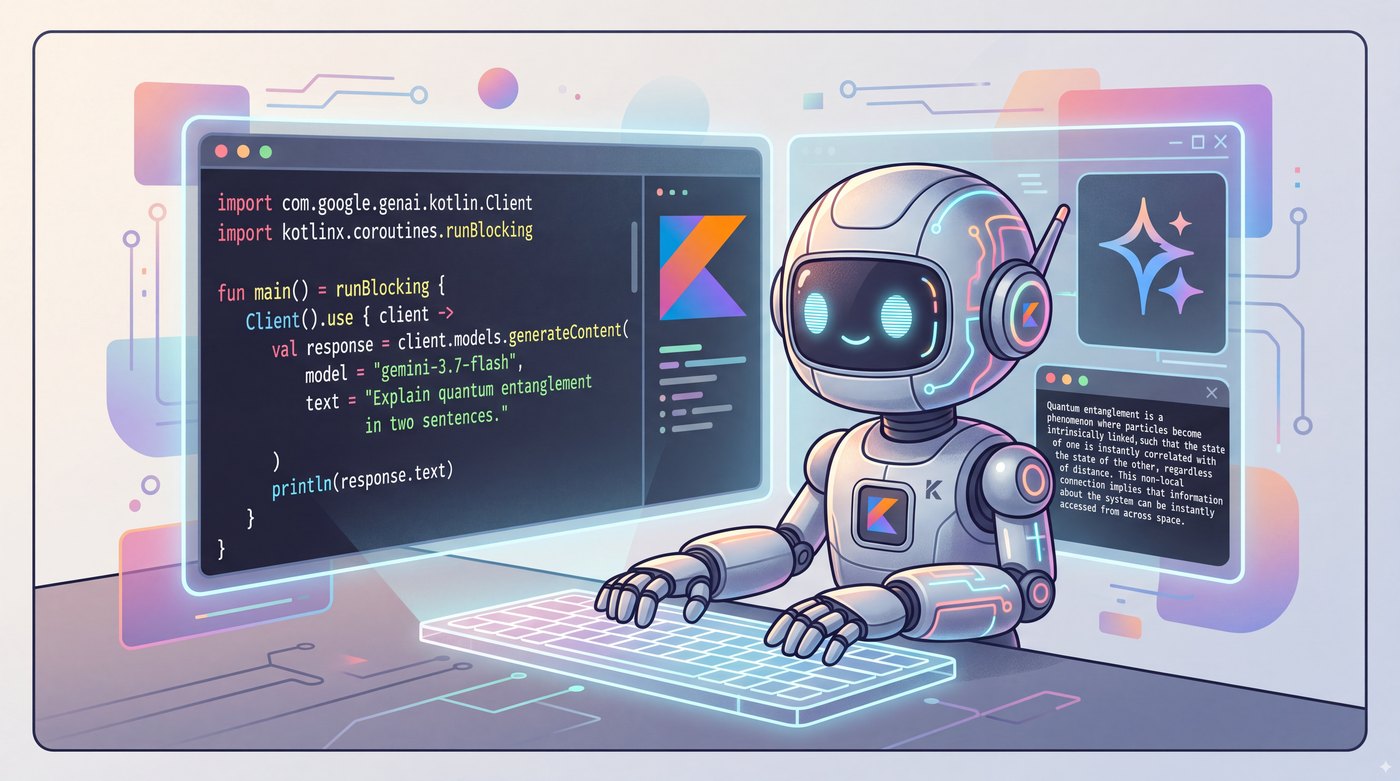
The SDK provides a unified surface to interact with both the Gemini Developer API (Google AI Studio) and the Gemini Enterprise Agent Platform (on Google Cloud) with minimal configuration tweaks. Getting started: Adding the dependency The SDK is published to Maven Central under com.google.genai:google-genai-kotlin.
What to watch next
Unary and streaming text generation and chat The primary entry point is the Client class. See the full write-up from Google Cloud Blog via the source link for quotes and complete context.
Developer Action Items
- ☐ Diff the official changelog for Gemini / Google / GitHub 1.0 before you bump — APIs, defaults, and removed flags only.
- ☐ Install through the vendor's documented channel in staging; keep a one-command rollback and time-box the canary.
- ☐ Grep your repo for old flag names, lockfile pins, and plugin versions that the notes mark as breaking.
- ☐ Prefer the first patch cut over the day-zero tag unless you have a reason to be on the leading edge.
- ☐ If Google Cloud Blog did not name a region, plan, or SKU, screenshot the official availability line before you promise it to users.

Author
Dillip Chowdary
Writes Tech Bytes coverage of AI, engineering, and the tools that actually ship. Editor of Tech Pulse Daily.
Related on Tech Bytes
OpenAI releasing major upgrade to ChatGPT and Codex with GPT-6 Astra, details here
Read →
ChatGPT, Grok, and Claude all went down at the same time
Read →
Anthropic confirms Claude is down, multiple models affected
Read →
Gemini 3.8 Flash is now available in GitHub Copilot
Read →
Today's Tech Pulse briefing
Full briefing →
Advertisement