Anthropic rival says companies can (mostly) skip the pricey models
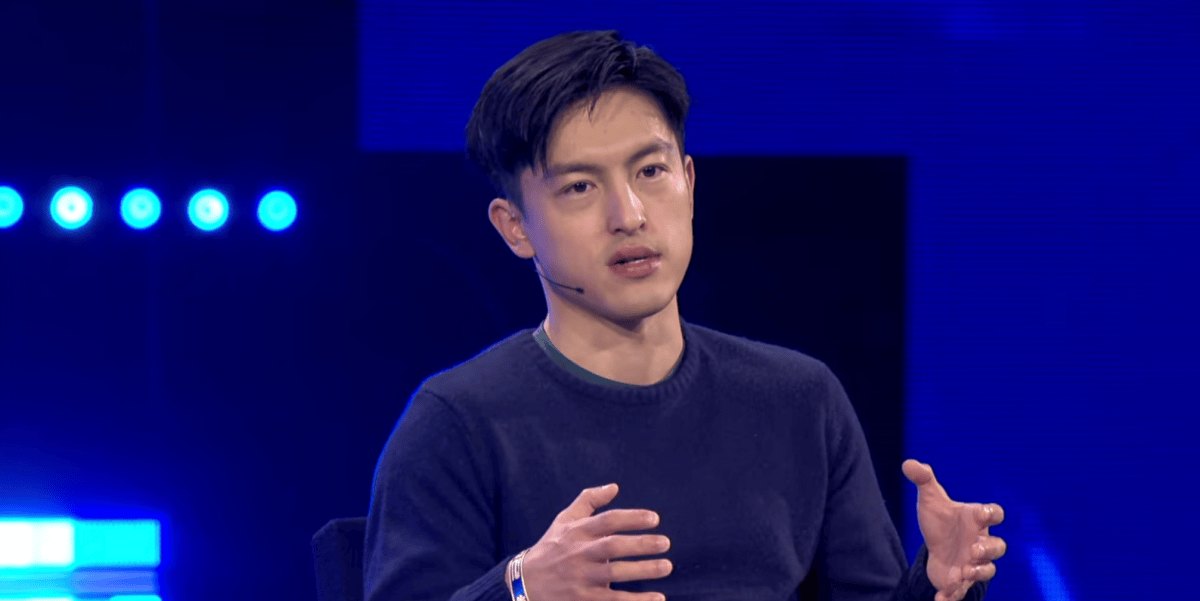
Fireworks AI co-founder Chenyu Zhao pitched open models at Slush as cheaper alternatives to frontier labs despite autumn breaches that exposed customer data.
By Dillip Chowdary • Nov 20, 2026 • Source: TechCrunch
At a glance
- Valuation
- $17.5 billion valuation assigned in summer
- Acquisition
- Applied Compute bought for $4.5 billion in stock
- Breach impact
- 150,000 Uber driver records compromised
- Notion exposure
- Workspaces under 1% affected before disconnection
- Open model lag
- Three to six months behind frontier models
- Token expense scale
- $10,000 to $100,000 monthly spend at scale
Fireworks AI co-founder Chenyu Zhao used an appearance at the Slush startup conference in Helsinki to present a case for enterprises replacing frontier foundation systems with tuned open-weight alternatives, according to TechCrunch's report. The presentation occurred on the exact date of Anthropic's record-setting initial public offering, highlighting an escalating architectural divide between frontier cloud providers and specialized inference platforms. Zhao addressed how companies can avoid frontier prices while also confronting two autumn security breaches that compromised customer data.
This report details the operational economics of running open-weight models, the technical fallout from Fireworks AI's infrastructure breaches, and the shifting venture capital landscape across enterprise artificial intelligence. It is written for engineering leaders, enterprise software architects, and infrastructure managers evaluating model routing architectures, token budgets, and third-party vendor security practices. Readers will find exact figures regarding recent corporate acquisitions, customer breach disclosures, and the financial inflection points governing open-source model adoption.
01Slush Stage Debate on Open Models
At the Slush startup conference in Helsinki, open-source architectures dominated discussions as enterprises sought methods to avoid paying premium frontier prices for artificial intelligence. Fireworks AI focuses on hosting open-weight models that any organization can download publicly. The startup helps enterprise customers tune these weights on proprietary corporate data so workloads run faster and cheaper than proprietary models from Anthropic and OpenAI.
Fireworks was co-founded by Chenyu Zhao alongside Lin Qiao and Dima Dzhulgakov after Zhao spent a decade at Google managing a fifty-person Vertex AI engineering team. Zhao described the company as a specialized intelligence platform rather than a general intelligence developer. The service enables commercial clients, including Shopify, Uber, and Notion, to build defensible proprietary differentiation that competitors cannot easily duplicate.
Enterprises increasingly fear that frontier labs absorb proprietary business know-how through prompt submission. Microsoft chief executive Satya Nadella voiced similar concerns in July, warning that companies relying strictly on closed systems risk paying twice through financial charges and transferred institutional knowledge. Zhao argued that utilizing standard frontier models like Opus or Sonnet provides zero unique technical advantage for commercial software products.
02Fall Security Incidents and Customer Fallout
Fireworks disclosed two separate security compromises during the autumn that damaged enterprise trust. In the first incident, unauthorized actors obtained API keys and operational secrets stored for a limited group of client accounts through credential-hunting campaigns. In the second incident, attackers penetrated the startup cloud provider, accessed internal development systems, and exfiltrated customer billing records alongside select stored training datasets.
The secondary breach caused direct operational disruption across prominent customers, prompting Notion to disconnect entirely from Fireworks services. Notion confirmed that artificial intelligence chat transcripts from fewer than one percent of its workspaces were exposed to external parties. Additionally, ride-hailing provider Uber confirmed that attackers stole personal records, including names, physical addresses, dates of birth, and driver license credentials for approximately 150,000 drivers.
Note: Fireworks maintains a zero data retention guarantee for standard inference traffic, but batch prediction jobs required storing customer datasets at rest on developmental servers. Zhao confirmed the company is transitioning all batch workloads into online streaming flows to prevent persistent customer data storage.
03Venture Valuations and the Applied Compute Acquisition
Advertisement
Tech Pulse Daily
Get tomorrow's pulse first
Join engineers who read Tech Pulse before stand-up. Free, weekday mornings.
Substantial venture capital continues entering the open-weight infrastructure ecosystem as enterprises diversify away from single-vendor reliance. Private investors assigned Fireworks a valuation of 17.5 billion dollars during the summer, and the startup is currently engaged in preliminary discussions regarding another funding round. Specialized competitors Together AI and Baseten also secured massive capital rounds in recent months to expand their managed compute capacity.
Corporate acquirers have similarly escalated spending to capture open-model infrastructure talent and technology. Cybersecurity vendor Palo Alto Networks announced an agreement to purchase artificial intelligence startup Applied Compute for 4.5 billion dollars entirely in equity. Applied Compute was founded twelve months earlier by former OpenAI researchers to help corporate customers train and deploy specialized custom models on private company information.
Zhao declined to comment formally on active fundraising negotiations but noted that broader industry capitalization reflects enormous long-term infrastructure scaling requirements. While observing Anthropic historic public offering, Zhao acknowledged personal plans to purchase public shares through his broker, framing the investment as belief in generational sector expansion that necessitates massive capital expenditure across both closed and open ecosystems.
04Token Spend Thresholds and Capability Gaps
The technical performance gap between open-weight releases and frontier systems has collapsed significantly over the past two years. Zhao noted that open alternatives previously trailed frontier laboratories by twelve to eighteen months before open models like DeepSeek altered delivery timelines. Current evaluations place leading open-source models at three to six months behind frontier milestones, enabling businesses to substitute smaller models without sacrificing core task quality.
Early-stage startups frequently begin with brand-name frontier models to minimize risk prior to finding product-market fit. Once platforms surpass ten thousand or one hundred thousand active users, monthly token expenses routinely escalate between 10,000 dollars and 100,000 dollars, forcing infrastructure teams to evaluate open alternatives. Organizations at this scale shift development priorities toward specialized fine-tuning to protect margins and safeguard sensitive data assets.
| Model Category | Core Focus | Token Expense Profile | Capability Lag | Data Control |
|---|---|---|---|---|
| Frontier Models | General intelligence and complex planning | $10,000 to $100,000 monthly at scale | Baseline benchmark | Prompts risk leaking enterprise know-how |
| Open-Weight Models | Specialized execution and task fine-tuning | Lower cost per task via smaller sizes | Three to six months behind frontier labs | Private weights tuned on internal data |
05Hybrid Routing Workflows and Nvidia Ecosystem Backing
Modern enterprise architecture is transitioning toward a hybrid deployment model where closed and open systems operate concurrently. Engineering teams utilize frontier intelligence engines for high-level semantic planning and complex orchestration, while delegating routine execution and basic arithmetic to specialized open models. This architectural transition has elevated dynamic model routing, allowing companies to optimize systems around cost per task rather than gross token volume.
Hardware partnerships remain critical for open-source inference providers despite executive turnover across the semiconductor sector. Following the sudden departure of chief executive Jensen Huang from Nvidia, Zhao expressed confidence in continued institutional backing from the chipmaker. Nvidia has financially supported Fireworks since 2024 and continues dedicating engineering resources toward open-weight initiatives like the Nemotron model family.
Fireworks plans to deepen collaboration with hardware vendors to maintain accelerated throughput across open-source weights. Industry demand for distributed inference platforms continues to expand as enterprises prioritize vendor independence, custom fine-tuning, and deterministic task costs. Navigating that market requires Fireworks to demonstrate robust security practices alongside competitive runtime performance to reestablish trust among enterprise software buyers.
Frequently asked questions
Why are companies adopting open-weight models over frontier systems?
Open-weight models run faster and cheaper when tuned on proprietary company data. They allow enterprises to avoid paying frontier token fees and prevent proprietary know-how from leaking to closed labs.
What data was exposed during the Fireworks AI security breaches?
Attackers compromised account API keys, billing records, and stored customer datasets. Notion reported transcripts from fewer than one percent of workspaces were exposed, while Uber had personal records for approximately 150,000 drivers stolen.
How far behind frontier artificial intelligence are open models today?
Open-weight models trail frontier laboratories by three to six months, shortened from earlier gaps of eighteen months following releases like DeepSeek.
How does Fireworks AI plan to fix its batch prediction data vulnerability?
Fireworks is transitioning batch prediction workloads to an online streaming flow. This architectural adjustment ensures data is retained only as long as necessary, upholding its zero data retention policy for inference.
Sources

Author
Dillip Chowdary
Writes Tech Bytes coverage of AI, engineering, and the tools that actually ship. Editor of Tech Pulse Daily.
Related on Tech Bytes
Advertisement