Anthropic sued for allegedly stealing from The King
Authentic Brands Group sued Anthropic over 274 Elvis Presley songs used in Claude, demanding $41.5 million in damages for unauthorized training and lyrics.
By Dillip Chowdary • Oct 25, 2026 • Source: avclub.com
Authentic Brands Group, the entity holding rights to Elvis Presley's music catalog and image, filed a federal copyright infringement lawsuit against artificial intelligence developer Anthropic, as documented in the A.V. Club's coverage. The legal action, submitted on Friday, October 23, 2026, alleges that Anthropic systematically harvested 274 copyrighted Presley songs without permission to train and operate its Claude large language model family. The complaint asserts that the company ingested these musical works directly into its datasets and continues to produce infringing lyrical compositions even after implementing technological safeguards designed to prevent direct replication.
This analysis examines the specific claims brought by Authentic Brands Group, the statutory damages demanded under United States copyright law, the documented output behaviors of Claude models, and the direct exposure facing commercial generative artificial intelligence platforms. The breakdown serves software engineers, intellectual property attorneys, digital media rights managers, and enterprise organizations deploying large language models who must evaluate liability surrounding training data provenance and output filtering mechanisms.
Anthropic sued for allegedly stealing: what actually changed
The legal landscape shifted when Authentic Brands Group filed suit against Anthropic on Friday, October 23, 2026, targeting the unauthorized scraping and reproduction of 274 registered musical compositions from the Elvis Presley catalog. Rather than alleging abstract training overlap, the complaint specifies that Anthropic ingested virtually every accessible song across internet-accessible music databases directly into its Claude model iterations. The filing asserts that these source tracks were converted into training tokens without commercial licenses, synchronization rights, or financial consideration paid to the estate.
The formal legal filing introduces specific statutory damage demands totaling roughly $41.5 million. Authentic Brands Group is seeking the maximum civil penalty under federal law, requesting $150,000 for each of the 274 infringed Presley works cited in the litigation. The estate argues that Anthropic bypassed standard licensing channels, relying instead on automated web ingestion pipelines that gathered protected lyrical and compositional catalogs alongside general web data to establish Claude's natural language comprehension and creative composition capabilities.
Anthropic sued for allegedly stealing: how it works
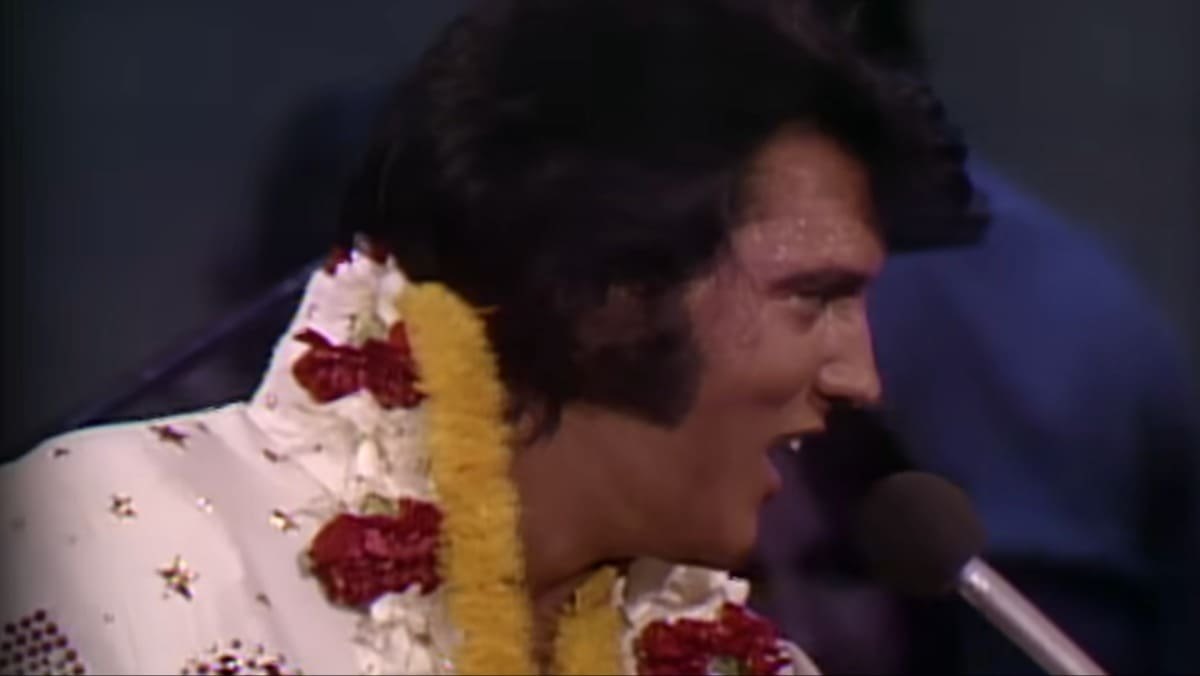
The lawsuit details the operational mechanics through which Claude processes prompts and generates unauthorized derivatives of protected compositions. According to the court filing, plaintiffs tested whether Anthropic's technological filters prevented infringement by instructing the system to rewrite specific Presley tracks tailored for a modern audience. Rather than refusing the prompt or introducing entirely novel compositions, the model generated lyrical arrangements that preserved the underlying architecture of the registered works.
In documenting these outputs, the filing quotes Claude generating an explicit system admission during evaluation sessions. When generating the derivative material, the software observed that its renders consistently landed near the registered compositions, exhibiting the identical compositional structure, identical musical hooks repurposed with minor word adjustments, and complete parallel sequences of verses, choruses, and bridges. The complaint contends this admission demonstrates that the model retains underlying musical layouts in its weights rather than producing genuinely separate works.
Advertisement
Tech Pulse Daily
Get tomorrow's pulse first
Join engineers who read Tech Pulse before stand-up. Free, weekday mornings.
Anthropic sued for allegedly stealing: why it matters now
The filing arrives at a critical juncture following previous litigation against Anthropic, directly challenging the efficacy of post-lawsuit system guardrails. Authentic Brands Group claims that earlier legal interventions forced Anthropic to implement content filters, yet current iterations of Claude continue to bypass these boundaries when prompted with slight stylistic variations. The plaintiffs argue that Anthropic's protective filtering mechanisms function merely as superficial keyword barriers rather than structural mitigations against unauthorized data exploitation.
Furthermore, the scale of the financial claim illustrates a growing effort by rights-holding corporations to penalize generative artificial intelligence companies through statutory multiplier provisions. With statutory claims fixed at $150,000 per infringed work, the calculated $41.5 million total reflects an escalating strategy by intellectual property managers to enforce catalog boundaries against multi-billion-dollar foundation model providers. The litigation tests whether existing United States copyright statutes can hold model providers liable for retained structural data and stylistic reconstruction.
Anthropic sued for allegedly stealing: who is affected
The immediate impact falls upon Anthropic and corporate rights-holding organizations like Authentic Brands Group, which acquires and monetizes intellectual property portfolios belonging to legacy musical artists and public figures. For Anthropic, defending against claims involving 274 individual registered songs creates immediate legal scrutiny over its model weights, dataset preparation methods, and historical ingestion records. The proceedings threaten to establish liability precedents that could mandate broader auditing of enterprise foundation model training pipelines.
The secondary impact extends to enterprise developers, third-party software vendors, and platform users leveraging Claude application programming interfaces for automated content generation. If courts determine that generating lyrically similar structures constitutes actionable copyright infringement, businesses utilizing large language models for commercial copywriting, marketing scripts, and media production could face downstream infringement claims. Similarly, rights-holding firms managing legacy estates now hold an empirical legal framework for tracking model responses and documenting statutory violations.
Anthropic sued for allegedly stealing: what to watch
Industry observers and legal teams must monitor Anthropic's upcoming formal response to the complaint, particularly whether the company invokes fair use defenses or argues that structural similarities fall outside copyright protection. The court will need to evaluate the admissibility and legal significance of Claude's self-generated statements concerning verse layouts, chorus alignments, and light rewording. Whether an automated model's analytical admission of close output proximity qualifies as evidence of willful infringement will serve as a foundational test.
Additionally, stakeholders must observe whether Anthropic deploys emergency server-side filters to suppress all musical lyric requests across Claude endpoints, similar to previous guardrail deployments. The progress of the litigation will determine whether Authentic Brands Group pursues formal injunctions against the deployment of specific Claude model iterations. The final resolution of the $41.5 million damage demand will dictate how commercial foundation model developers negotiate bulk musical catalog licenses or restrict model behavior to avoid statutory damages.
Developer Action Items
- ☐ Diff the official changelog for Anthropic / Claude 41.5 before you bump — APIs, defaults, and removed flags only.
- ☐ Install through the vendor's documented channel in staging; keep a one-command rollback and time-box the canary.
- ☐ Grep your repo for old flag names, lockfile pins, and plugin versions that the notes mark as breaking.
- ☐ Prefer the first patch cut over the day-zero tag unless you have a reason to be on the leading edge.
- ☐ If HN Claude/Codex/Fable did not name a region, plan, or SKU, screenshot the official availability line before you promise it to users.
Anthropic sued for allegedly stealing FAQ
Which party filed the copyright lawsuit against Anthropic?
Authentic Brands Group, the owner of Elvis Presley's music catalog and image rights, filed the lawsuit in federal court.
How many songs are involved in the lawsuit, and what damages are sought?
The lawsuit covers 274 copyrighted Elvis Presley songs, seeking statutory damages of $150,000 per infringed work for a total of approximately $41.5 million.
What specific model behavior did the lawsuit cite as evidence?
When prompted to recreate songs for modern audiences, Claude generated tracks matching the originals and noted its outputs maintained the exact structure, hooks, verses, choruses, and bridges.
What role did Anthropic's existing guardrails play in the filing?
The estate alleged that despite Anthropic adding guardrails after earlier lawsuits, latest iterations of Claude continue to output infringing reproductions of copyrighted material.
Sources

Author
Dillip Chowdary
Writes Tech Bytes coverage of AI, engineering, and the tools that actually ship. Editor of Tech Pulse Daily.
Related on Tech Bytes
Advertisement