Apple aiming to make Siri ‘more like an agent’ as soon as next year: report
Apple is preparing an agentic Siri upgrade as soon as next year while giving iOS 28 engineers a six-week coding window to accelerate development.
By Dillip Chowdary • Nov 08, 2026 • Source: 9to5Mac
Apple delivered its long-promised personalized Siri update alongside the release of iOS 27, completing the initial software milestones the company first outlined in 2024. Despite hitting those multi-year targets, the current voice assistant cannot proactively trigger actions on behalf of users without explicit step-by-step prompts. According to 9to5Mac's report, which cites reporting from Bloomberg journalist Mark Gurman, Apple is targeting an agentic overhaul for Siri as early as next year to bridge this functional gap.
This technical breakdown examines Apple’s strategic pivot toward autonomous assistant behavior, the structural changes inside its iOS 28 software engineering teams, and how existing on-device frameworks alter the cost profile of consumer AI agents. The analysis details how engineering milestones are shifting from rigid integration windows to extended exploration periods, and what Apple device owners should anticipate as the next major software release cycle takes shape.
Apple aiming to make Siri ‘more like: what actually changed
Apple fulfilled its original 2024 commitments when it rolled out personalized Siri inside iOS 27, giving the assistant deeper contextual understanding across the operating system. However, the software remains constrained to single-turn requests, waiting for direct human instruction before executing any task. In contrast, competing systems across the technology sector have shifted toward agentic paradigms that track multi-step objectives independently.
To correct this disparity, Apple is adjusting its engineering schedules to develop a proactive version of Siri capable of operating autonomously. The plan calls for turning Siri from a reactive interface into an agent that tracks long-term goals and carries out chained tasks in the background without requiring continuous user confirmations. This product direction aligns the platform with evolving expectations driven by recent breakthroughs across consumer software.
Apple aiming to make Siri ‘more like: how it works
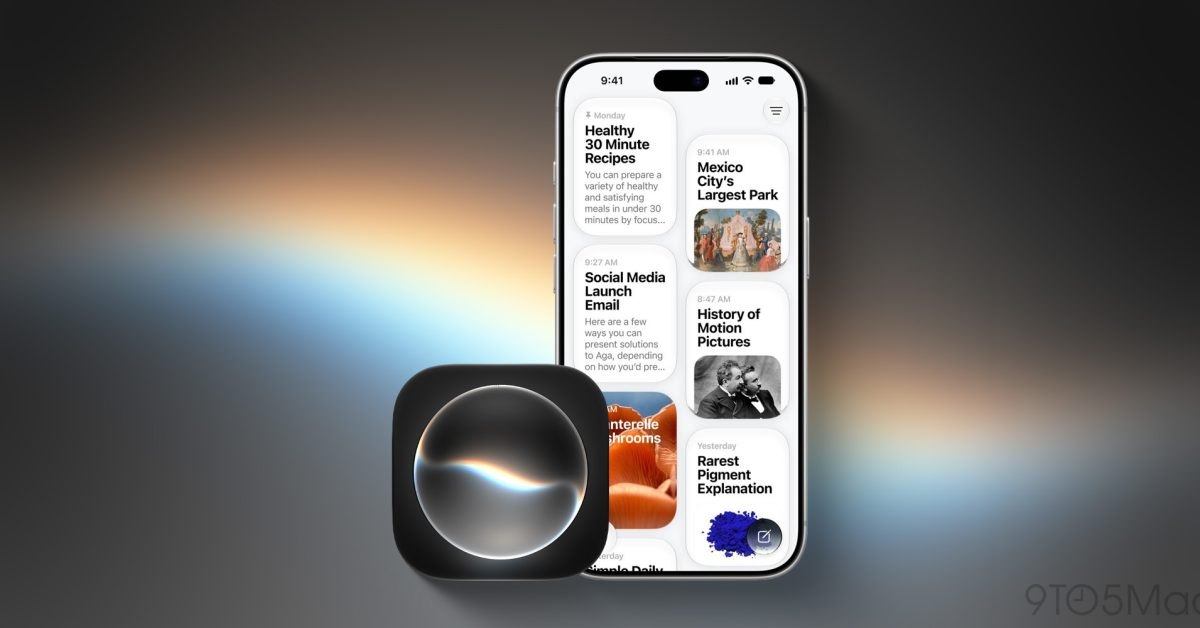
Apple plans to anchor its proactive agent inside native system architectures rather than relying entirely on remote desktop automation. While third-party autonomous agents like Meta’s Muse and SpaceXSI’s Grok Bot deploy dedicated virtual machines to execute computer-use actions, Apple relies on its native App Intents framework. By routing agent actions through existing App Intents, the system interacts directly with application logic, reducing execution latency and drastically lowering the computational compute costs typically tied to visual screen parsing.
In his Power On newsletter, Mark Gurman noted that competing platforms like Dots, Muse, and Grok can maintain objective tracking, deduce necessary secondary actions, and pursue outcomes without prompts at every milestone. Apple intends to replicate that autonomous loop natively. Rather than asking a user to approve every intermediate phase, an agentic Siri will orchestrate native actions across installed applications and deliver completed outputs directly.
Advertisement
Tech Pulse Daily
Get tomorrow's pulse first
Join engineers who read Tech Pulse before stand-up. Free, weekday mornings.
Apple aiming to make Siri ‘more like: why it matters
The push toward autonomous software execution arrives as industry rivals commit heavily to agentic infrastructure. Meta and SpaceXSI have already built standalone execution environments for their tools, demonstrating that consumer demand is moving beyond simple text answers toward autonomous task fulfillment. Gurman indicated that Apple has little choice but to move in this direction to stay competitive amid surging consumer demand and shifting software benchmarks.
Internally, this product pivot is driving structural modifications to Apple’s core engineering culture. To accelerate software cycles for iOS 28, Apple restructured its traditional development schedule for the initial M1 milestone. The previous cadence split four weeks for feature coding and four weeks for operating system convergence. The new structure allocates six weeks to exploration and coding, leaving just two weeks for system integration, a shift attributed to internal productivity gains from agentic software development tools.
Apple aiming to make Siri ‘more like: who is affected
The immediate impact centers on Apple’s internal software engineering workforce, which must adapt to condensed convergence windows. Software employees reported positive feedback regarding the six-week exploration window for the M1 milestone of iOS 28, noting that the added development time gives engineers more flexibility to test and refine ideas before finalizing feature sets. This dynamic allows teams to explore complex agent capabilities that require extensive experimentation before locking in code.
For everyday iPhone and iPad users, the evolution directly alters how device owners interact with Siri on daily workflows. Users currently restricted to one-off voice commands will eventually hand off complex multi-step routines to the operating system. Third-party iOS developers will also feel the shift, as their existing App Intents implementations will serve as the programmatic hooks that an agentic Siri uses to trigger background workflows within their apps.
Apple aiming to make Siri ‘more like: what to watch
The upcoming development milestones for iOS 28 will reveal whether Apple can preserve its compressed integration schedule across later software cycles without accumulating technical instability. Observers will track whether the six-week coding and two-week convergence model remains standard beyond the initial M1 phase, signaling that agentic programming tools have permanently compressed Apple’s operating system release pipeline.
The critical product milestone will be whether Apple confirms this autonomous assistant upgrade during its 2027 software roadmap announcements. Observers must monitor whether Apple successfully adapts App Intents into an end-to-end autonomous pipeline or if it adopts hybrid virtual-machine techniques to match the flexibility demonstrated by competitors like Muse and Grok. How Apple balances background autonomy with on-device user permissions will dictate the final consumer release.
Developer Action Items
- ☐ Verify the claim on the official Apple / Meta / Framework page (or 9to5Mac), not from this recap alone.
- ☐ Name the surface that moved — API, policy, model, hardware, or commercial terms — before you Slack the thread.
- ☐ Assign one owner a day to read the primary material and decide: this-sprint, this-quarter, or noise.
- ☐ Do not change production on day-one coverage. Watch the vendor changelog and one independent write-up first.
Apple aiming to make Siri ‘more like FAQ
When could Apple release an agentic version of Siri?
Bloomberg’s Mark Gurman reports that Apple could introduce a proactive version of Siri as early as next year.
How is Apple changing its internal development process for iOS 28?
For the M1 milestone, Apple expanded feature coding and exploration from four weeks to six weeks, while shortening system integration from four weeks to two weeks.
How does Apple’s approach to agentic AI differ from competitors like Muse and Grok?
While third-party agents often rely on virtual machines and broad computer-use capability, Apple can utilize its existing App Intents framework to run tasks with less computational overhead.
Sources

Author
Dillip Chowdary
Writes Tech Bytes coverage of AI, engineering, and the tools that actually ship. Editor of Tech Pulse Daily.
Related on Tech Bytes
Advertisement