Apple explains why HomeView couldn’t launch until now
HomeView is set to arrive in homes on November 13, 2026, after its March 2025 target slipped while Apple waited for Siri AI’s personal context and conversation.
By Dillip Chowdary • Oct 21, 2026 • Source: 9to5Mac
Apple’s HomeView, a shared device built around Siri AI, is set to arrive in homes on November 13, 2026. It was reportedly mostly finished for years, but the launch date kept slipping. In November 2024, Mark Gurman published an in-depth report and said Apple was targeting March 2025. 9to5Mac's report, by Ryan Christoffel on October 20, 2026, at 7:47 am PT, says Gurman has repeatedly pointed to Siri AI as the chief cause, and that Apple executives have largely confirmed it in quotes to The Verge.
This piece is for households weighing that shared device against an iPhone, an iPad, or an Apple TV. It covers the slip from the March 2025 target to November 13, 2026, and what Kaiann Drance and Lilian Rincon told The Verge about personal context and conversation. It also covers HomeView’s absence in the EU until Siri AI is available for iOS there, and a reader’s claim that Apple’s other screens already do the same jobs.
Apple explains why HomeView couldn’t launch: what actually changed
Mark Gurman’s in-depth November 2024 report set a March 2025 launch for HomeView. That date kept slipping, and the month passed without a launch. HomeView will finally arrive in homes on November 13, 2026. Gurman has repeatedly pointed to Siri AI as the chief cause of the delays, and Apple executives have now largely confirmed that in quotes given to The Verge. HomeView was reportedly mostly finished for years. Siri AI was the piece that still had to catch up.
Jennifer Pattison Tuohy asked Kaiann Drance, Apple’s VP of product marketing for home, why now was the right time for HomeView and Apple’s renewed smart home push. Drance said Siri AI and the personal context it brings, which she called Apple’s “privacy story,” came together with a device designed specifically for the home. “With the magic of Siri AI, it comes together in a way that we haven’t been able to deliver before,” she said. Without that more personalized Siri, the main pitch would need to change.
Apple explains why HomeView couldn’t launch: how it works
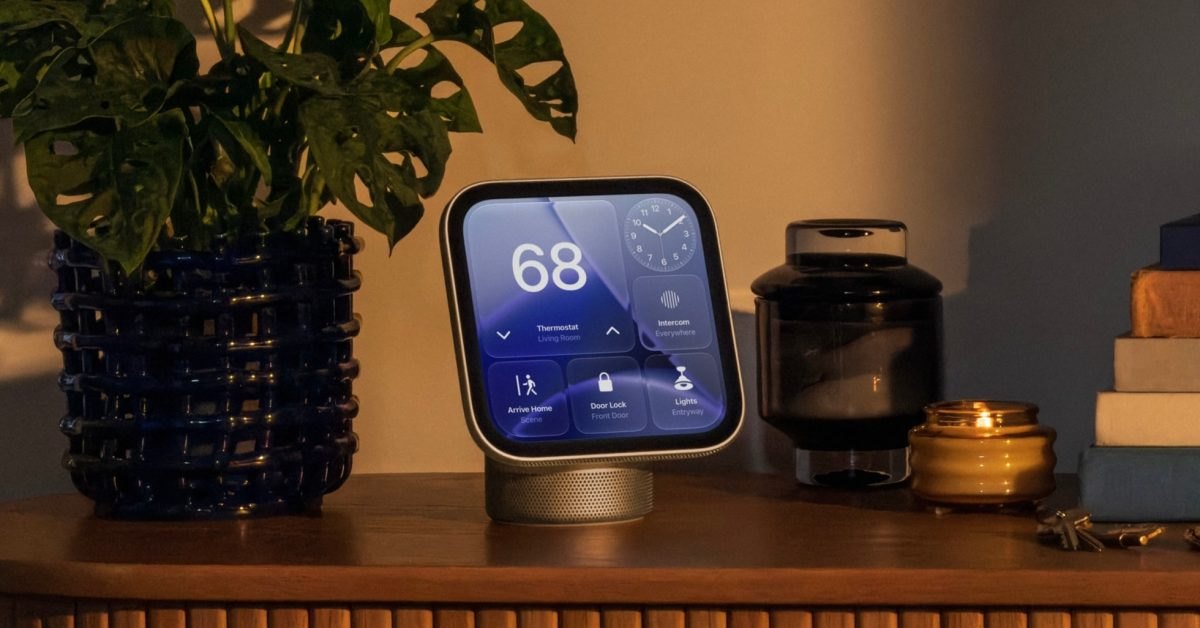
Lilian Rincon, Apple’s VP of product marketing for AI, told The Verge that Siri AI is core to HomeView because it is “much more capable.” She said conversation makes it easy for any family member. “It’s great because you can just ask it to change the temperature on your thermostat in a very natural way. As the Siri AI capabilities continue to evolve, the home experience is fitting to be able to interact with in this natural way.” That example is a spoken thermostat change on a shared device.
Rincon called the natural-language shift the point where AI goes mainstream. “Because now it can be … my mother-in-law or the Gen Z who’s in college, both of them can use this in the way that they naturally speak and get what they want,” she said. The product is a shared device. The personal context Drance called Apple’s “privacy story” is what those requests use, on a device designed specifically for the home, which Drance said was not deliverable before Siri AI.
Advertisement
Tech Pulse Daily
Get tomorrow's pulse first
Join engineers who read Tech Pulse before stand-up. Free, weekday mornings.
Apple explains why HomeView couldn’t launch: why it matters now
The delay follows a pitch that is the assistant. HomeView was reportedly mostly finished for years, yet Gurman still named Siri AI as the chief cause of the slips past March 2025. Drance and Rincon treat personal context and conversation as essential. Drance linked that context to Apple’s “privacy story” and to a device designed specifically for the home, and said Apple had not been able to deliver the combination before. Remove the more personalized Siri and the main pitch would need to change.
HomeView’s absence in the EU follows the same requirement. If Siri AI were simply a nice-to-have addition to an otherwise feature-rich product, an EU launch could still have gone ahead. The whole value proposition revolves around the new assistant and its personalized features. Waiting until Siri AI is available for iOS in the EU is the schedule that fits. November 13, 2026, is the in-home date tied to this pitch. That emphasis makes HomeView’s absence in the EU more understandable.
Apple explains why HomeView couldn’t launch: who is affected
Rincon’s mother-in-law and a Gen Z student in college are the users she named. Each should speak naturally and get what they want, including a request to change the thermostat temperature. Drance placed that assistant on a device designed specifically for the home, drawing on personal context she called Apple’s “privacy story,” as part of Apple’s renewed smart home push. HomeView is marketed as a shared device, so the case covers the household, not one owner. Those homes are who the November 13, 2026, arrival is for.
Zach Chadwick took the other side. In a top comment liked by 4 people, he called the device extremely redundant. He wrote that mostly everyone almost always has a phone on their person, to where this device is not needed, and that an iPhone, an iPad, and an Apple TV can do all the things HomeView offers. EU residents are held for another reason. HomeView is absent there while Siri AI, the center of the pitch, is not yet available for iOS in the EU.
Apple explains why HomeView couldn’t launch: what to watch
November 13, 2026, is when HomeView is supposed to arrive in homes, against the March 2025 target in Gurman’s November 2024 report. What remains open is when Siri AI is available for iOS in the EU, with the personalized features Drance and Rincon described. Until then, an earlier EU launch made sense only if the assistant were a nice-to-have. Rincon said that as the Siri AI capabilities continue to evolve, the home experience is fitting to interact with in this natural way.
Drance said Siri AI and a device designed specifically for the home come together in a way Apple had not delivered before, with personal context as the “privacy story.” Rincon said the assistant is “much more capable,” and that natural speech has to work for any family member, from her mother-in-law to a Gen Z student in college. Chadwick’s test is for people who already have an iPhone, an iPad, and an Apple TV. Those, he wrote, already do every job HomeView offers.
Developer Action Items
- ☐ Verify the claim on the official Apple / iOS page (or 9to5Mac), not from this recap alone.
- ☐ Name the surface that moved — API, policy, model, hardware, or commercial terms — before you Slack the thread.
- ☐ Assign one owner a day to read the primary material and decide: this-sprint, this-quarter, or noise.
- ☐ Do not change production on day-one coverage. Watch the vendor changelog and one independent write-up first.
Apple explains why HomeView couldn’t launch FAQ
When will Apple HomeView arrive in homes?
HomeView is set to arrive in homes on November 13, 2026. In November 2024, Mark Gurman said Apple was targeting March 2025, and that date kept slipping.
Why did the HomeView launch move past March 2025?
Gurman has repeatedly pointed to Siri AI as the chief cause. Kaiann Drance and Lilian Rincon told The Verge that personal context and conversation are what make this HomeView possible.
What did Kaiann Drance say changed for HomeView?
Drance, Apple’s VP of product marketing for home, said Siri AI and its personal context, which she called Apple’s “privacy story,” came together with a device designed specifically for the home. She said Apple had not been able to deliver that before.
Why is HomeView absent in the EU?
The value proposition revolves around the new Siri AI assistant and its personalized features. The timing that fits is to wait until Siri AI is available for iOS in the EU. If the assistant were only a nice-to-have, an EU launch could have gone ahead.
What can someone ask HomeView to do?
Lilian Rincon said a person can ask it to change the thermostat temperature in a natural way. She said her mother-in-law or a Gen Z student in college should both be able to speak normally and get what they want.
Sources

Author
Dillip Chowdary
Writes Tech Bytes coverage of AI, engineering, and the tools that actually ship. Editor of Tech Pulse Daily.
Related on Tech Bytes
Advertisement