Apple has new Mac app coming to make running local AI models easy
Apple is developing Harbor, a Mac app that pools unified memory across Thunderbolt 5 computers to run local open-weight AI models without using cloud servers.
By Dillip Chowdary • Nov 10, 2026 • Source: 9to5Mac
Apple is developing a dedicated Mac application named Harbor designed to turn personal computers into private artificial intelligence inference servers without routing queries through cloud infrastructure. Evidence discovered by leaker Aaron Perris reveals that the software enables Apple silicon machines to host and execute open-weight models completely offline. According to 9to5Mac's report, the incoming tool handles single-machine setups as well as multi-device configurations interconnected over high-speed hardware cabling.
This report details the architectural capabilities, deployment workflows, memory pooling mechanisms, and distribution timeline for the Harbor platform. The coverage is tailored for developers, researchers, and Mac operators seeking local execution of demanding machine learning tasks on their own hardware. It examines how Apple intends to eliminate manual terminal commands and complex server orchestration across desktop computers like Mac Studio and Mac mini.
01Private inference servers on Apple silicon
Harbor establishes a dedicated inference environment directly within macOS to keep sensitive operational data strictly confined to local hardware. The software runs open-weight models on Apple silicon architectures so that prompts and generated responses never reach remote cloud endpoints. This private operating model addresses compliance and privacy requirements by ensuring complete isolation from third-party networks during local processing tasks.
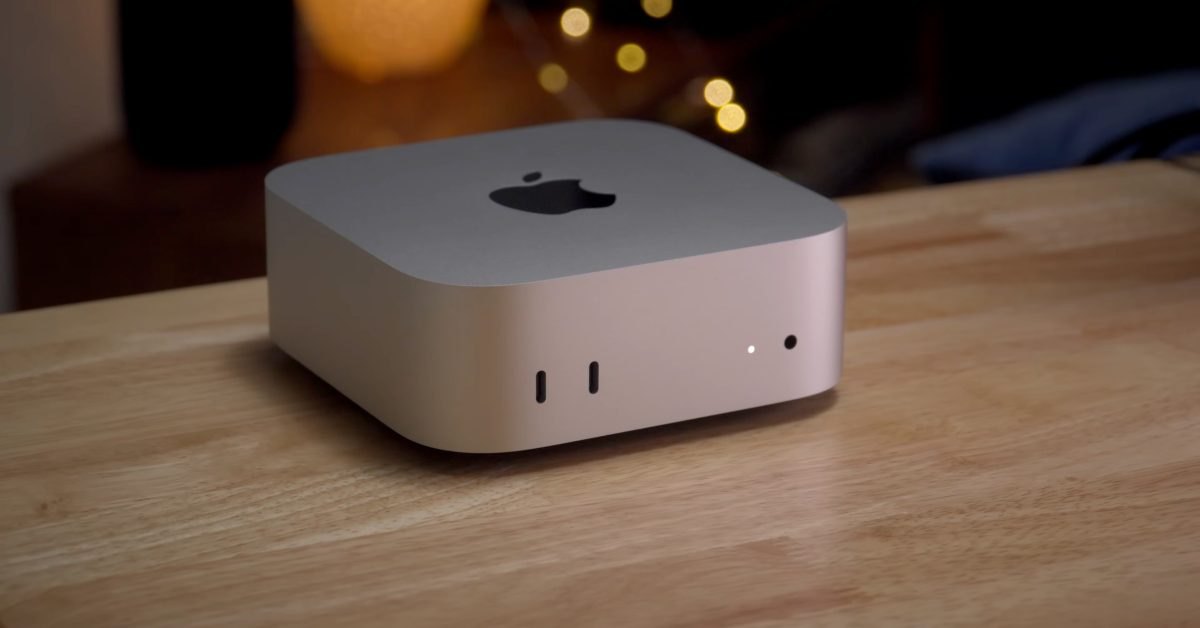
The platform capitalizes on the growing adoption of Mac computers as self-contained platforms for local artificial intelligence development. Desktop machines such as Mac Studio and Mac mini, alongside consumer hardware like MacBook Neo, have expanded user interest in running demanding models locally. Apple designed Harbor to centralize these operational workloads under a native interface rather than relying on fragmented third-party hosting tools.
By providing an internal server daemon on local silicon, the software supports continuous background availability for incoming inference requests. Workstations running the software can process automated scripts and interactive queries without transmitting internal tokens over external networks. The standalone system ensures that proprietary workflows remain entirely under the operator's physical custody at every stage of execution.
02Zero configuration setup over Thunderbolt five
Harbor replaces manual terminal routines with an automated setup system that finishes within minutes instead of hours. The software automatically scans and detects interconnected hardware over Thunderbolt 5 cables to assemble a functional cluster immediately. Users simply plug their machines together and start the application without navigating command-line parameters or building complex local networking rules.
The underlying detection layer removes the prerequisite of specialized infrastructure expertise that historically burdened multi-machine machine learning environments. Traditional cluster management often forced developers to configure network interfaces, assign static IP addresses, and manually manage distributed orchestration packages. Harbor bypasses these technical hurdles entirely by establishing direct hardware handshakes across high-throughput physical ports upon connection.
This zero-configuration approach allows developers to scale local hardware resources dynamically as testing and production workloads change. Teams can attach an extra Mac computer to an existing station whenever larger inference tasks arise during daily operations. Once connected through a physical Thunderbolt 5 cable, the newly attached device becomes part of the shared processing group without interrupting active tasks.
Advertisement
Tech Pulse Daily
Get tomorrow's pulse first
Join engineers who read Tech Pulse before stand-up. Free, weekday mornings.
03In app model browsing and direct management
Harbor incorporates a native catalog interface that allows operators to browse, download, and load open-weight models directly inside the application. The system eliminates external package installers and third-party script repositories by managing the complete lifecycle of model files internally. Users can select desired weights from the internal library and launch them into local memory with a single click.
Direct file handling reduces the friction of tracking checkpoints, tensor formats, and runtime dependencies across disparate directory paths. The application handles storage allocation, memory loading, and runtime initialization so operators can concentrate on their work rather than maintenance tasks. This integrated pipeline ensures that model weights remain organized and immediately accessible whenever the inference engine restarts.
The self-contained management structure also streamlines model switching during comparative evaluations and developmental testing sessions. Practitioners can alternate between different open-weight architectures without reconfiguring operational flags or manually adjusting execution environments. By consolidating model repositories into a unified graphical interface, Harbor standardizes the local inference experience across all supported Apple systems.
04Unified memory pooling across clustered hardware
When operators connect two or more Thunderbolt 5-capable Mac computers, Harbor pools their unified memory into a single shared inference resource. This unified memory clustering allows the system to load large model parameters that exceed the physical capacity of any single desktop unit. By aggregating hardware memory pools, the combined setup functions as a single unified machine learning engine.
Beyond expanding maximum parameter capacities, the aggregated memory pool increases concurrency limits for multi-user environments. Clustered systems can serve multiple simultaneous inference requests across the network without exhausting local hardware buffers. The load-balancing system coordinates compute demands across all attached machines to deliver consistent throughput during heavy querying periods.
This physical interconnection delivers higher performance margins than traditional network-attached inference arrays linked via standard local routers. High-bandwidth Thunderbolt 5 links provide the transfer rates necessary to maintain continuous data flow between linked memory pools during parallel token generation. Consequently, multi-Mac clusters can sustain complex evaluation workloads that previously required costly dedicated enterprise server hardware.
05Private preview under the Claris brand
Harbor is currently circulating in a private preview environment conducted under the umbrella of Apple’s Claris software brand. Distributing early builds through Claris allows Apple to refine clustering stability and model handling prior to broader consumer distribution. The testing phase gives enterprise and technical evaluators early access to validate server functions on various hardware configurations.
Although limited to select testing groups today, the software is expected to expand toward a public launch in the coming weeks and months. Aaron Perris surfaced details regarding the program on the social media platform X, sharing technical documentation and application screenshots. The discovery indicates that Apple is preparing a polished, customer-facing delivery path for wide deployment across Apple silicon systems.
The upcoming general release will align with Apple’s broader strategy of turning Mac hardware into primary hubs for private artificial intelligence execution. By combining plug-and-play clustering with native model management, the company offers a comprehensive alternative to rented cloud computing infrastructure. Developers and creative professionals will soon gain access to scalable local server capabilities directly through the macOS ecosystem.
Apple has new Mac app coming to make running FAQ
What is Apple Harbor?
Harbor is a new Mac application in development at Apple that turns a Mac into a private artificial intelligence inference server for running open-weight models locally on Apple silicon.
How does Harbor cluster multiple Mac computers together?
Harbor automatically detects devices connected over Thunderbolt 5 cables to pool their unified memory into a single shared inference resource without requiring manual command-line configuration.
Does data processed in Harbor leave the local hardware?
No, all models run strictly on local Apple silicon hardware, ensuring that user data never leaves the device and nothing reaches external cloud providers.
When will Harbor be released to the general public?
Harbor is currently available in a private preview under Apple's Claris brand, with a wider release expected to arrive in the weeks and months ahead.
Sources

Author
Dillip Chowdary
Writes Tech Bytes coverage of AI, engineering, and the tools that actually ship. Editor of Tech Pulse Daily.
Related on Tech Bytes
Advertisement