Apple raises trade-in values for iPads and Macs, with increases of up
Apple raised trade-in values for iPads and Macs by up to $365, lifting the Mac Pro to $2,560 alongside the OLED iPad mini launch as iPhone rates stayed flat.
By Dillip Chowdary • Oct 26, 2026 • Source: 9to5Mac
Apple updated its official hardware trade-in valuation schedules across tablet and personal computer lines, marking the second payout increase for both product categories within two months. As detailed in 9to5Mac's report, the price adjustments, first spotted by MacRumors on October 26, 2026, raise maximum trade-in credits for iPads by up to twenty dollars and boost select Mac payouts by as much as $365 across official retail channels.
This guide details the updated payout schedules across every affected iPad and Mac model, contrasting the higher payouts with the frozen valuation tiers for iPhones, Apple Watches, and rival Android handsets. Device owners planning an upgrade, enterprise managers tracking residual hardware values, and consumers timing their trade-ins will find complete valuation benchmarks across each product category as Apple prepares for upcoming personal computer hardware cycles.
The deal behind Apple trade-in values for iPads and Macs
The revised trade-in schedule establishes higher upper limits for customers trading in eligible tablets in exchange for store credit or new purchases. In the tablet portfolio, Apple adjusted its maximum trade-in value for the iPad Pro upward from $905 to $915, representing a $10 bump. The iPad Air ceiling climbed from $510 to $525, giving owners a $15 increase, while the baseline iPad tier advanced from $280 to $300, delivering a $20 improvement. The iPad mini tier also increased by $20, shifting from $320 up to $340. Every listed figure reflects an "up to" ceiling requiring devices to meet strict condition standards.
Mac computers received larger cash adjustments across portable and desktop designs. Payouts for the MacBook Pro advanced from $1,315 to $1,435, providing an increase of up to $120. Portable buyers trading a MacBook Air can now receive up to $795, up from $705, securing a $90 boost. Desktop models saw notable gains: the Mac mini moved from $620 to $645, iMac payouts rose from $385 to $440, Mac Studio credits expanded from $1,460 to $1,700, and the workstation Mac Pro jumped from $2,195 to $2,560. The iMac Pro remained unchanged at $340, leaving the $365 Mac Pro surge as the largest payout hike.
Why Apple trade-in values for iPads and Macs raised now
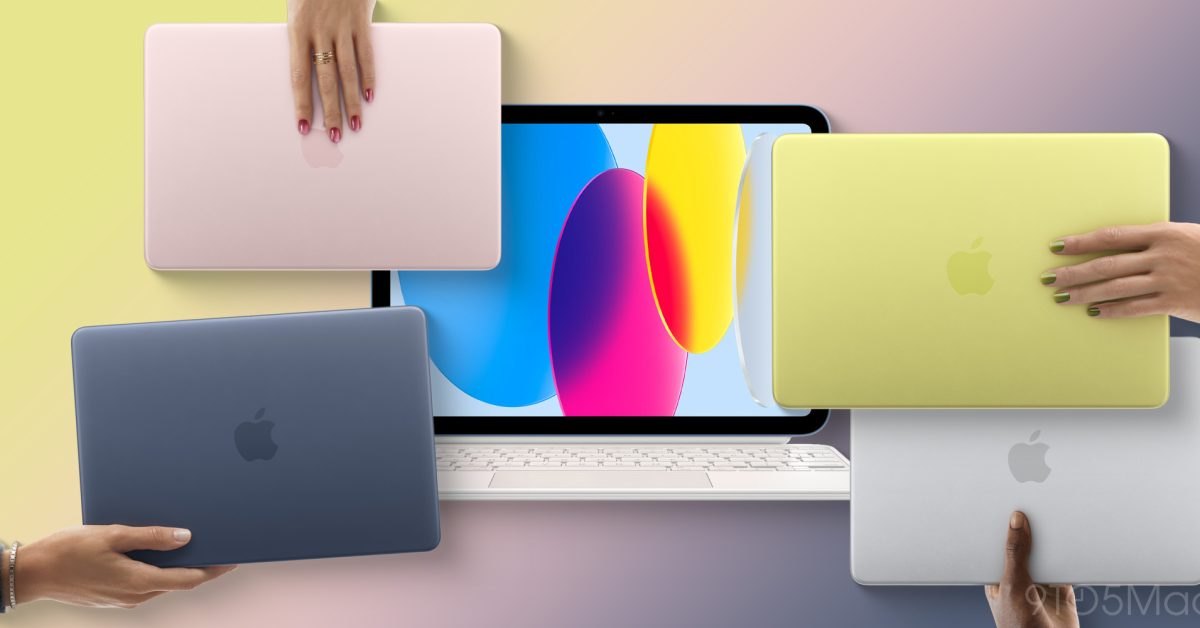
Timing for this second wave of tablet and computer payout increases corresponds directly with hardware catalog transitions across Apple product lines. The price refresh arrived alongside the formal announcement of the new OLED iPad mini, creating an immediate trade-in incentive for customers upgrading from older compact tablets. Raising the iPad mini credit to $340 provides direct relief against the retail price of the new display technology. Furthermore, the adjustments surface amid widespread industry expectations of new Mac launches arriving in the coming days, prompting Apple to soften upgrade friction before fresh silicon arrives.
The October revision follows an earlier policy shift initiated during the September 9 "Surprise and Shine" event. During that presentation cycle, Apple reconfigured trade-in tables by trimming maximum payouts across the iPhone family while initiating value increases for iPads and most Mac computers. By executing two separate valuation bumps for computers and tablets within sixty days, Apple widens the financial gap between its phone retention strategy and its computing upgrade incentives. Rather than letting computing hardware migrate to secondary marketplaces, the company uses expanded credits to funnel mature machines back into company retail channels.
Advertisement
Tech Pulse Daily
Get tomorrow's pulse first
Join engineers who read Tech Pulse before stand-up. Free, weekday mornings.
What the Apple trade-in values for iPads and Macs money
The financial mechanics behind Apple trade-in credit provide practical purchase offsets when applied directly toward higher-tier hardware or peripheral purchases. Customers submitting an eligible Mac Pro can capture up to $2,560, while a qualifying Mac Studio yields up to $1,700 and a premium MacBook Pro returns up to $1,435. For creative professionals and developer teams, these credits translate into immediate reductions on hardware invoices or Apple Gift Card balances. Rather than relying on third-party resale platforms with shipping overhead and fees, users receive guaranteed store value that rolls directly into upgraded displays, expanded memory tiers, or supplementary accessories.
The underlying money also reflects stark trade-in disparities when contrasted against the static values applied to smartphones. While Mac Pro payouts surged by $365 and MacBook Air credits rose by $90, smartphone values remained strictly frozen at September 9 levels. The top-tier iPhone 17 Pro Max yields a maximum of $885, followed by the iPhone 17 Pro at $785, both the iPhone Air and iPhone 17 at $585, the iPhone 16 Pro Max at $610, the iPhone 16 Pro at $510, and older releases like the iPhone 11 at $100. Payout capital is heavily skewed toward desktop computing and premium laptops.
Competitive context for Apple trade-in values for iPads and Macs
Apple trade-in valuations highlight a deliberate valuation hierarchy when evaluated against accepted Android devices and rival mobile ecosystems. While Apple accepts competitor hardware to entice platform switchers, trade-in allowances for rival flagship phones remain conservative compared to first-party tablets and computers. For example, Google Pixel 9 Pro XL units command a maximum payout of $290, with the Pixel 9 Pro capped at $275, the Pixel 9 at $200, the Pixel 8 Pro at $150, the Pixel 8 at $115, the Pixel 8a at $105, the Pixel 7 Pro at $90, and the Pixel 7 at $65.
Samsung and OnePlus devices show similarly constrained valuations inside Apple trade-in schedules. The Samsung Galaxy S22 Ultra 5G yields up to $125, the Galaxy S22 Plus 5G and standard Galaxy S22 5G return $80, the Galaxy S21 Ultra 5G tops out at $95, the Galaxy S21 Plus 5G reaches $70, and the baseline Galaxy S21 5G offers $55. Similarly, the OnePlus 13 brings up to $250, the OnePlus 13R offers $165, the OnePlus 12 provides $200, and the OnePlus 12R nets $115. Apple places far greater cash value on reclaiming its own legacy computing components than on buying rival phones.
Open questions on Apple trade-in values for iPads and Macs
Several practical questions remain regarding how long these elevated iPad and Mac payouts will persist once new hardware arrives in customer hands. Because trade-in values are indexed as "up to" thresholds, final payouts depend entirely on diagnostic checks, battery health metrics, display integrity, and enclosure conditions assessed by trade-in evaluators. Historical cycles show that post-launch periods frequently trigger downward valuation revisions once the initial promotional rush subsides and secondary device supplies surge. Prospective upgraders must decide whether locking in current valuations on an aging Mac mini or MacBook Air outweighs waiting for finalized machine benchmarks and shipping dates.
Another unresolved question centers on the divergence between computing device valuations and wearable electronics. While Mac Studio credits jumped to $1,700 and MacBook Pro credits reached $1,435, smartwatch valuations remained entirely stagnant. The Apple Watch Ultra 3 remains capped at $430, the Apple Watch Series 11 at $200, the Apple Watch SE third generation at $115, the Apple Watch Series 10 at $150, the Apple Watch Ultra 2 at $265, the Apple Watch Series 9 at $115, and the older Apple Watch Series 6 at $40. Observers continue questioning whether Apple will eventually adjust wearable trade-ins or keep them depressed while subsidizing computing hardware transitions.
Developer Action Items
- ☐ Map where Apple / Android sits in your stack (SDK, API key, billing, data-processing addendum).
- ☐ Hold non-urgent migrations until the integration or use-of-proceeds roadmap is public — day-one coverage is not a ship signal.
- ☐ If you are mid-contract or mid-POC, ask the vendor what changes for existing customers this quarter.
- ☐ Write the single decision this forces: stay, dual-source, or exit.
Apple trade-in values for iPads and Macs FAQ
Which Mac model received the largest trade-in value increase?
The Mac Pro received the largest payout increase, climbing by $365 from $2,195 up to $2,560.
How much did Apple increase trade-in values for iPads?
Apple increased iPad trade-in values by up to $20, raising the standard iPad to $300 and iPad mini to $340, while the iPad Pro rose to $915 and iPad Air to $525.
Did Apple raise trade-in values for iPhones or Apple Watches in this update?
No, trade-in values for iPhones and Apple Watches remained unchanged from the September 9 update, with the iPhone 17 Pro Max capped at $885 and Apple Watch Ultra 3 at $430.
What are the current trade-in values for Android phones at Apple?
Android payouts top out at $290 for the Google Pixel 9 Pro XL, $250 for the OnePlus 13, and $125 for the Samsung Galaxy S22 Ultra 5G.
Sources

Author
Dillip Chowdary
Writes Tech Bytes coverage of AI, engineering, and the tools that actually ship. Editor of Tech Pulse Daily.
Related on Tech Bytes
Advertisement