Apple should have made the MacBook logo RGB
Apple launched the $3,000 PROLED MacBook Pro with four white LEDs powering an illuminated lid logo that syncs with OLED screen brightness via software.
By Dillip Chowdary • Nov 14, 2026 • Source: The Verge
Apple launched the PROLED MacBook Pro featuring an OLED touchscreen, a thinner chassis, and a glowing lid logo. According to The Verge's report, Apple CEO John Ternus unveiled the notebook last month as the company's first touchscreen Mac. The illuminated emblem sparked immediate audience nostalgia, overshadowing the updated display panel and redesigned enclosure.
This article examines the hardware engineering behind the revived emblem, the software regulating its brightness, and the feasibility of third-party customization. It is written for Mac users, hardware enthusiasts, and prospective buyers evaluating the $3,000 laptop. We detail teardown findings from iFixit, terminal adjustments, third-party utility support, and Apple's broader product direction under Ternus.
01Touchscreen chassis and nostalgic glowing lid
Apple introduced the illuminated lid cutout alongside a thinner, lighter enclosure and an OLED touchscreen. The glowing icon revives a visual feature that Apple started phasing out in 2015 before removing it completely in the 2018 MacBook Air redesign. Event attendees reacted more enthusiastically to the restored logo than to the thinner chassis.
Legacy Mac models illuminated the lid cutout passively by channeling light from the liquid crystal display backlight. Because the PROLED MacBook Pro uses an organic light-emitting diode panel lacking a global backlight, individual pixels generate their own illumination. This technological shift forced Apple engineers to build an independent internal lighting system for the emblem.
The nostalgic design restores an exterior look that defined Apple laptops for over a decade before disappearing in favor of opaque black logos. While older implementations relied purely on mechanical light passthrough, the new model pairs modern emissive display tech with a dedicated lighting assembly. The result revives classic Mac branding within a modern form factor.
02Four white LEDs and software brightness control
A hardware teardown by repair specialist iFixit revealed that the illuminated lid logo is powered by four dedicated white LEDs. These diodes sit behind the display assembly and synchronize their brightness with the touchscreen through software controls. When users adjust display brightness, macOS automatically adjusts the voltage delivered to the four lid LEDs.
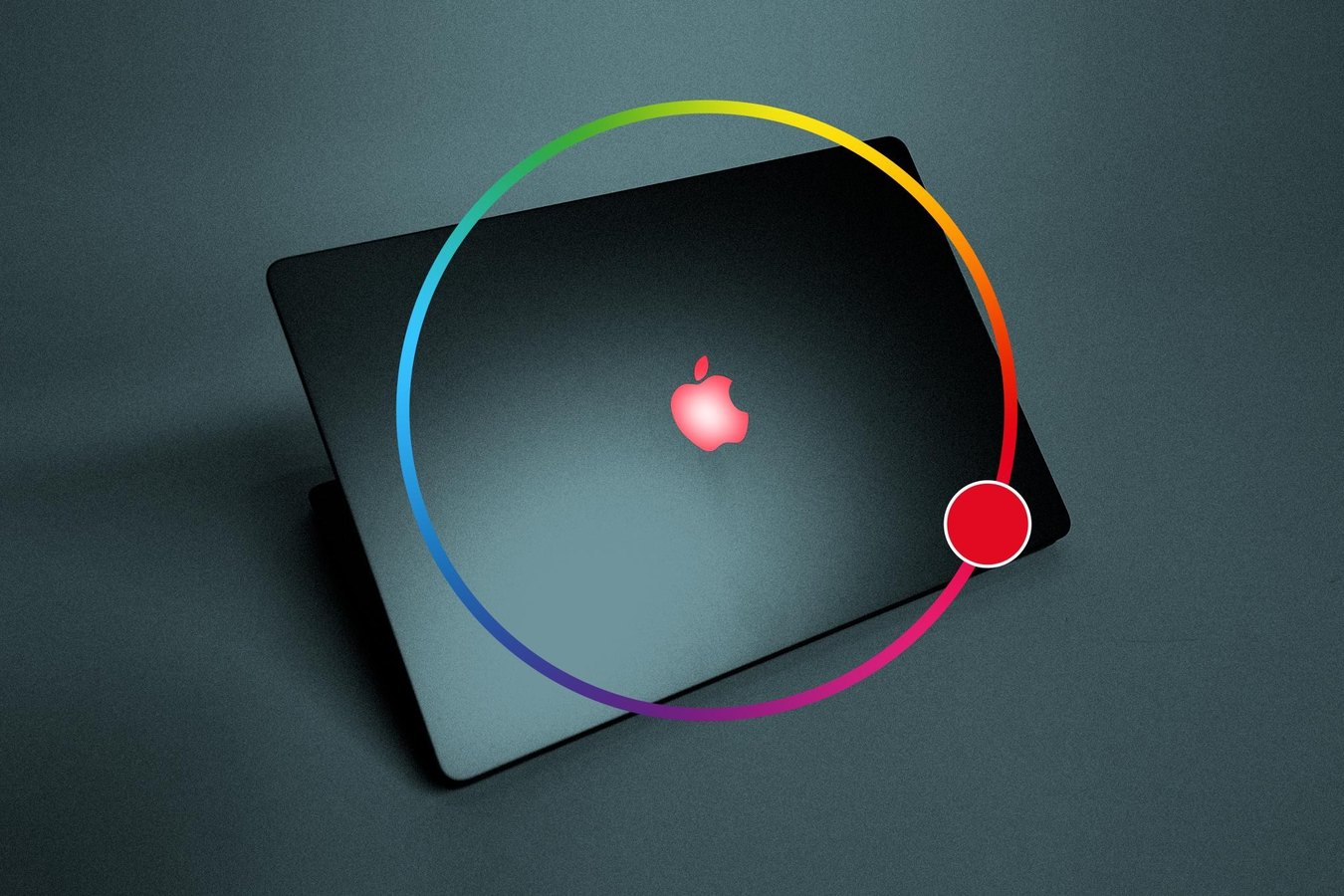
Software synchronization maintains the classic user experience where exterior illumination scales alongside the interior display. In darkened work environments, the system lowers the exterior light output to prevent unwanted glare. This integration demonstrates how Apple replicated vintage hardware behavior through software orchestration on modern OLED hardware without installing multicolor components.
Advertisement
Tech Pulse Daily
Get tomorrow's pulse first
Join engineers who read Tech Pulse before stand-up. Free, weekday mornings.
03Gaming hardware ambitions without multicolor illumination
Because the emblem relies on independent diodes, Apple had the physical space and architecture to install red, orange, yellow, green, blue, indigo, and violet components. RGB lighting has long served as a hallmark of gaming laptops and specialized PC hardware. Given Apple's stated ambition to attract gaming audiences, multicolor LEDs could have underscored that commitment.
Devices like Microsoft's Xbox Elite Series 2 controller allow users to customize the color of their glowing logos. A similar RGB implementation on the MacBook Pro could have let owners personalize their hardware or display Apple's historic rainbow colorway. Instead, Apple restricted the hardware exclusively to standard white output.
While multicolored lighting might clash with traditional enterprise laptop design, optional color settings could have remained an unobtrusive customization feature. Apple declined to include color-changing capabilities, preserving a uniform monochrome appearance across the chassis. The hardware remains strictly white, matching standard corporate aesthetic guidelines.
04Third-party software controls and panel teardown risks
Users can manage the illuminated logo using macOS Terminal commands or independent utility applications. A free third-party app called LogoLight enables owners to control the white diodes, adding custom behaviors like breathing effects, rhythmic pulsing, and Morse code. The utility can also sync illumination pulses to the beat of playing music.
While software tools can manipulate flashing patterns and brightness, they cannot introduce color to monochromatic white LEDs. Physical modifications to replace the diodes with aftermarket RGB hardware are virtually impossible. During iFixit's teardown, technicians found that accessing the LED assembly caused the delicate OLED screen to delaminate and shatter.
Attempting an internal modification voids the device warranty and risks destroying a display on a $3,000 laptop. Given the steep replacement costs for broken OLED panels, hardware modifications are unfeasible for normal users. Consequently, third-party software adjustments to white lighting represent the practical limit of emblem customization.
05Experimental hardware across laptops and smart displays
Adding a touchscreen to a Mac highlights a growing willingness to experiment under the leadership of John Ternus. Alongside the touchscreen PROLED notebook, Apple has developed new form factors including the iPhone Duo and the HomeView smart display. These recent product launches reflect an evolving design philosophy across multiple hardware categories.
Apple could potentially bring illuminated lid logos to future MacBook Air models or an entry-level MacBook Neo. Expanding the feature across the laptop lineup would give engineers additional opportunities to refine the internal diode assembly or test multicolor options. For now, the illuminated emblem remains exclusive to the high-end PROLED model in fixed white light.
Apple should have made the MacBook logo RGB FAQ
How is the illuminated lid logo powered on the PROLED MacBook Pro?
An iFixit teardown revealed that the logo is lit by four dedicated white LEDs. Because the OLED display has no backlight, software synchronizes the diodes to the screen brightness.
Can users change the color of the glowing Apple logo?
No, the hardware uses fixed white LEDs rather than RGB components. While software can adjust brightness and pulsing patterns, color changes are impossible without swapping the diodes.
Can the lid logo be customized or turned off using software?
Yes, users can turn off the illumination using Terminal commands or control it with third-party apps like LogoLight. LogoLight allows the logo to pulse, breathe, flash Morse code, or react to music.
Why are hardware RGB modifications impractical?
Opening the display assembly causes the OLED screen to delaminate and break, as demonstrated by iFixit. Attempting the repair voids the warranty and risks ruining a $3,000 laptop.
Sources

Author
Dillip Chowdary
Writes Tech Bytes coverage of AI, engineering, and the tools that actually ship. Editor of Tech Pulse Daily.
Related on Tech Bytes
Advertisement