Apple’s new study looks to improve the effectiveness of AI health tools
Apple launched the Apple Health AI Usage Study with OpenEvidence, enrolling up to 200,000 US iPhone 15 Pro users to evaluate conversational clinical AI tools.
By Dillip Chowdary • Nov 16, 2026 • Source: The Verge
At a glance
- Study name
- Apple Health AI Usage Study
- Collaborator
- OpenEvidence
- Cohort capacity
- Up to 200,000 participants
- Age requirement
- 21 and older
- Hardware requirement
- iPhone 15 Pro running iOS 26 or later
- Regional availability
- United States only
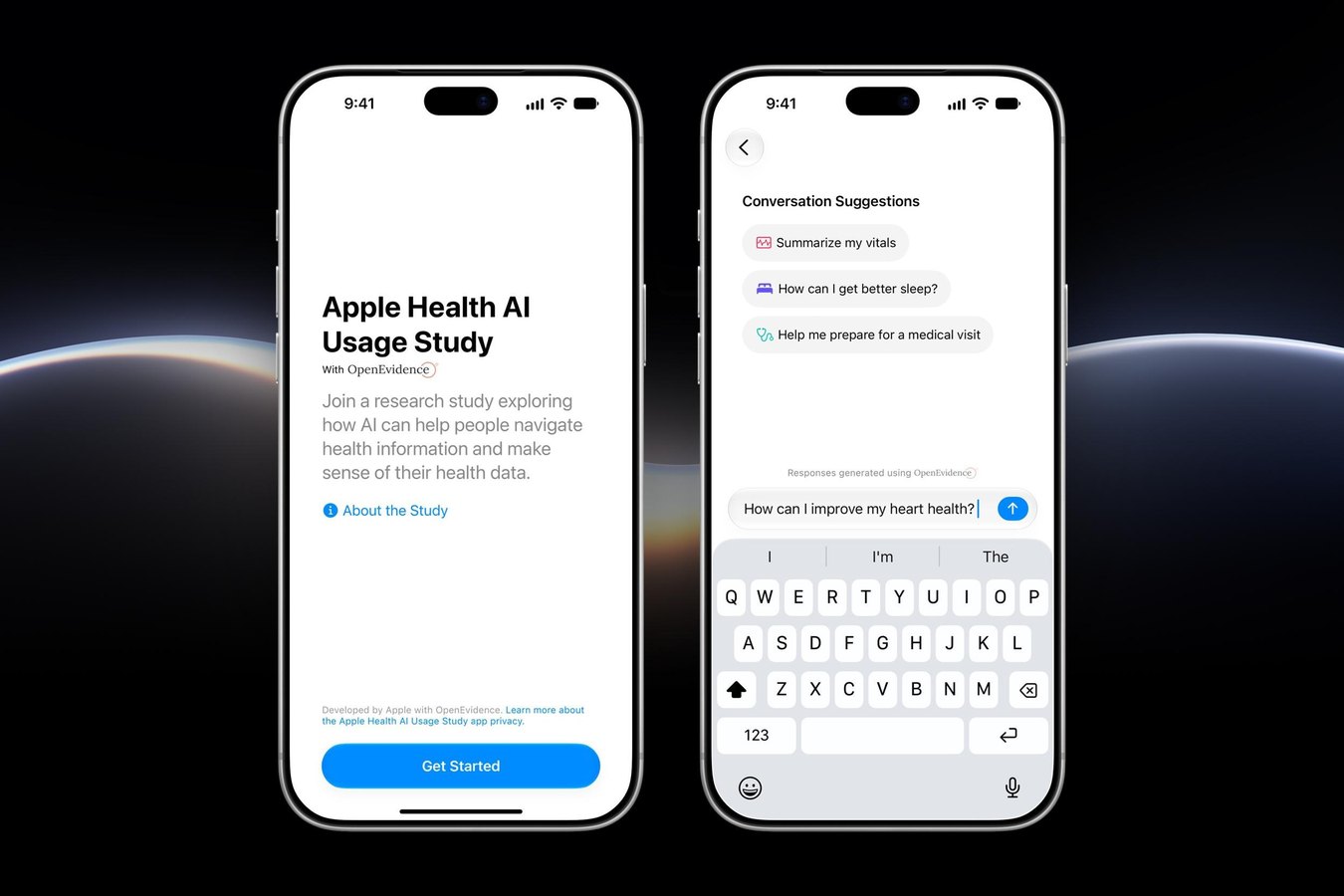
Apple announced the Apple Health AI Usage Study to examine how consumers interact with conversational artificial intelligence tools when seeking medical guidance. According to The Verge's report, the company launched a dedicated mobile application where users can submit health inquiries and evaluate the quality of clinical responses generated by specialized software. The research initiative aims to establish how effectively conversational models communicate complex medical topics directly to consumers.
This report details the technical requirements, institutional partnerships, participant criteria, and privacy constraints that govern Apple's clinical investigation. The analysis covers the operational framework for mobile health developers, prospective study participants, clinical researchers, and iPhone owners evaluating AI-driven healthcare assistants. Readers will find exact device prerequisites, data handling boundaries, and the specific metrics Apple uses to measure answer quality.
01Clinical evidence platform and response ratings
Apple is conducting the research initiative in formal collaboration with OpenEvidence, an established clinical intelligence platform used by healthcare professionals. The underlying engine synthesizes answers derived directly from authoritative medical literature, including peer-reviewed publications such as The New England Journal of Medicine. This architecture grounds patient-facing communication in validated clinical consensus rather than unverified web datasets.
Participants in the study interact with the software by submitting healthcare inquiries and rating the returned answers. Reviewers judge each output against three distinct criteria, assessing factual accuracy, level of detail, and practical relevance. Collecting structured quantitative feedback from everyday users allows the research team to map where clinical models succeed or introduce confusion.
The evaluation process focuses specifically on the clarity and comprehension of conversational health guidance across varying topics. By compiling direct user assessments over thousands of interactions, the project tracks whether automated medical summaries remain helpful across different consumer knowledge levels. Apple intends to leverage these findings to refine the presentation and tone of future patient communications.
02Cohort enrollment and hardware eligibility criteria
Apple officially opened enrollment for the study through a newly released iOS application available for direct download today. The recruitment campaign seeks up to 200,000 volunteer contributors across the United States to build a representative dataset of consumer health questions. Qualified participants must be at least 21 years old and reside within domestic jurisdictions throughout the observation window.
Participation requires specific modern hardware configurations to access the research testing environment. Enrolled volunteers must use an iPhone 15 Pro running iOS 26 or a later version of the mobile operating system. While the testing application does not incorporate Apple Intelligence systems, the baseline device tier remains strictly enforced for all study submissions.
Note: Enrollment is restricted exclusively to participants who are 21 years of age or older and physically located within the United States. Volunteers who possess compatible hardware but reside in international regions are currently ineligible to download the study tool or contribute feedback.
03Text interaction and peer-reviewed source links
Advertisement
Tech Pulse Daily
Get tomorrow's pulse first
Join engineers who read Tech Pulse before stand-up. Free, weekday mornings.
The dedicated application relies primarily on text-based prompt submission when users construct their healthcare inquiries. Participants can enter questions through manual typing or utilize keyboard dictation features built into the system keyboard. Apple confirmed that the research interface is not integrated with Siri, ensuring that voice assistant interactions remain distinct from the trial environment.
When the system delivers a response to a medical query, it formats clinical findings into plain language that is straightforward for non-specialists to digest. Every generated explanation features direct reference links pointing to the underlying peer-reviewed clinical sources that support the medical claims. This transparent citation mechanism allows users to verify information against published journal studies.
The standalone client operates independently of the broader Apple Intelligence framework across the operating system. System prompts and queries do not trigger native generative background tasks or rely on device-level on-screen context engines. Keeping the inquiry tool siloed maintains a controlled experimental environment for analyzing query phrasing and response ratings without external algorithmic interference.
04Optional HealthKit records and confidentiality safeguards
During the onboarding and enrollment phase, participants can grant permission to share personal Apple HealthKit records with the application. Available data types include historical activity tracking, recorded sleep metrics, and verified clinical laboratory test results. Connecting these metrics allows the platform to tailor its answers with specific context relevant to an individual user's medical background.
User confidentiality remains a foundational safeguard throughout the operation of the research trial. Apple maintains strict data protection measures to guarantee that shared health metrics and submitted queries remain confidential. The company affirmed that none of the private user information collected during the investigation will be utilized to train artificial intelligence models.
The research architecture isolates shared HealthKit datasets so personal identifiers are never merged into general diagnostic corpora. This boundary addresses common consumer concerns regarding the disclosure of sensitive diagnostic records to technology platforms. Apple designed the logging pipelines to separate personal activity histories from the aggregate performance scores assigned to clinical responses.
05Scientific rigor and patient evaluation feedback
Apple structured the study to enhance the overall usability and effectiveness of future consumer health technologies. Sumbul Desai, MD, Apple's vice president of Health and Fitness, emphasized that responsible innovation requires deep scientific rigor and validated clinical grounding. She stated that conducting a dedicated research study offers the most thoughtful method for observing how people engage with, comprehend, and evaluate health AI.
Dr. Desai noted that health remains deeply personal, necessitating real-world empirical observation of user interactions.
The findings generated across the 200,000-person cohort will contribute to broader scientific discussions surrounding medical intelligence tools. Apple aims to ensure that future technological iterations provide reliable, clinical-grade support for users navigating various phases of personal wellness.
The research framework prioritizes practical consumer comprehension above complex technical terminology. By analyzing participant scoring across thousands of diagnostic queries, researchers can determine which response formats encourage safe and informed health decisions. The resulting data will guide developers in refining clinical explanations so users can readily act upon verified health information.
Frequently asked questions
What devices are required to join the Apple Health AI Usage Study?
Participants must use an iPhone 15 Pro running iOS 26 or later to install the study application. The app does not require Apple Intelligence support.
How does the application generate medical answers for participants?
The application operates in partnership with OpenEvidence, a clinical AI platform used by healthcare professionals. Responses synthesize medical literature from sources like The New England Journal of Medicine and link directly to peer-reviewed clinical articles.
Will Apple use participant health data to train AI models?
Apple confirmed that collected participant data will remain confidential and will not be used to train artificial intelligence models. Sharing HealthKit information such as activity, sleep, or lab records is entirely optional during enrollment.
Who is eligible to participate in the study?
The study is open to individuals who are at least 21 years old and based in the United States. Apple is enrolling up to 200,000 participants through the newly released iOS application.
Sources

Author
Dillip Chowdary
Writes Tech Bytes coverage of AI, engineering, and the tools that actually ship. Editor of Tech Pulse Daily.
Related on Tech Bytes
Advertisement