Apple’s next HomeView could debut as soon as next year with a robotic arm
Apple announced its $299 HomeView smart display and is developing a 9-inch J595 model with a 360-degree robotic arm planned for release in 2027 or 2028.
By Dillip Chowdary • Oct 18, 2026 • Source: 9to5Mac

Apple has officially announced its first smart home display, named HomeView, entering the market at a $299 price point following an extended development cycle driven by delays in developing a smarter Siri. Fresh details outlined in 9to5Mac's report indicate that while the base model is now available, the company is actively preparing a higher-end companion device equipped with physical robotics. This incoming model addresses early user friction regarding screen orientation by mounting a larger screen atop a motorized arm that mechanically tracks active participants in a room.
This breakdown details the specifications, hardware adjustments, planned release timing, and targeted user base for Apple’s next-generation smart display hardware. Readers will learn how the upcoming unit differs from the standard $299 HomeView, what internal codename the engineering team is using, and how integrated acoustic tracking will control the physical movement of the display. Whether planning an immediate smart home purchase or evaluating long-term ecosystem investments, this overview provides the confirmed technical benchmarks without unverified speculation.
Apple’s next HomeView could debut as soon: the announcement
The initial HomeView launch establishes Apple’s presence in dedicated smart displays at $299, but internal roadmaps show a more capable iteration advancing through hardware milestones. According to Bloomberg reporting highlighted by Mark Gurman in the Power On newsletter, Apple is developing a premium smart home hub carrying the internal code-name J595. This machine is currently projected for debut as early as next year, with release targets spanning across 2027 or 2028 depending on production schedules.
Rather than arriving as a direct successor that renders the newly launched base unit obsolete, the robotic model will expand the product family by serving as a higher-end tier, potentially marketed under branding such as HomeView Pro. Early purchasers of the standard HomeView noted the physical limitation of having to manually adjust the unit on tables or countertops when multiple individuals gather around it. The forthcoming J595 build was designed specifically to eliminate that manual intervention through integrated mechanical positioning.
What actually changed with Apple’s next HomeView could debut as soon
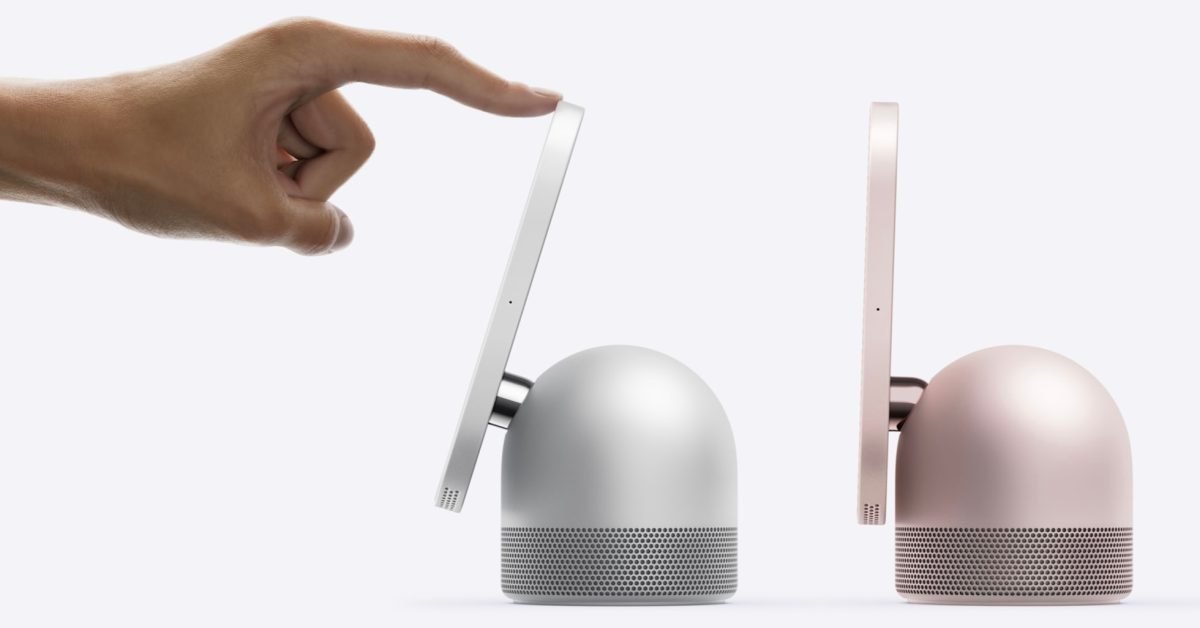
The primary architectural shift in code-name J595 centers on display dimensions and mechanical mobility. While the existing entry-level HomeView utilizes a 7-inch panel fixed with minimal physical tilt, the upgraded unit increases display real estate to a roughly 9-inch screen. This enlarged canvas is attached to a motorized robotic arm capable of swiveling a full 360 degrees around its base, providing unobstructed sightlines across an entire living space without requiring manual repositioning by occupants.
The mechanical arm relies on an advanced voice-recognition subsystem rather than simple manual steering or basic optical framing. The device listens to ambient audio, detects who is speaking during interactions or calls, and automatically pivots the motorized arm to face that individual directly. This acoustic localization acts as an evolution of Apple’s optical Center Stage camera framing found on existing hardware, moving the entire physical display rather than simply cropping a static wide-angle video feed.
Advertisement
Tech Pulse Daily
Get tomorrow's pulse first
Join engineers who read Tech Pulse before stand-up. Free, weekday mornings.
Who should care about Apple’s next HomeView could debut as soon
Households and multi-user environments that rely heavily on collaborative video conferencing or central table placement represent the primary audience for this robotic evolution. When placed on kitchen islands or conference tables with family members or colleagues seated in diverse locations, a standard static display requires constant manual turning to keep callers in frame. The motorized 360-degree swivel resolves this operational bottleneck by automating perspective alignment during group conversations and hands-free voice commands.
Prospective buyers must also consider the distinct pricing tier represented by the motorized design. Because Apple intends to position the 9-inch model as an upper-echelon device rather than an entry-level replacement, customers should not expect it to match the standard unit’s $299 launch price. Buyers who require simple, fixed countertop control can adopt the baseline HomeView today, while power users seeking automated tracking and larger screen surfaces should prepare budgets for a costlier premium device.
How to try Apple’s next HomeView could debut as soon
Customers seeking immediate hands-on access to Apple’s dedicated smart home interface must purchase the standard HomeView display, which is currently available for purchase at $299. The baseline unit allows users to interact with smart accessories, view household status updates, and utilize Apple’s updated Siri platform. This base model remains the only active hardware option on store shelves today, providing entry into the dedicated home interface while the robotic model completes its development cycles.
Those intending to evaluate the motorized 9-inch version cannot place orders or join waitlists yet, as code-name J595 remains unreleased and confined to hardware labs. Testing opportunities will only emerge closer to Apple’s official launch window, spanning from late next year through 2027 or 2028. Consumers who want automated participant framing right now can look to existing Center Stage implementations across compatible Apple devices, which simulate dynamic angle changes through software-based sensor cropping.
What to watch after Apple’s next HomeView could debut as soon
Monitoring the progress of the J595 project requires watching Apple’s software releases, particularly updates aimed at refining Siri’s contextual comprehension and speaker identification. Because the original HomeView suffered prolonged launch delays tied directly to the engineering pace of a smarter Siri, software stability remains a critical gating factor for the robotic hardware. The robotic arm relies fundamentally on accurate voice recognition to distinguish distinct speakers and swivel cleanly without false triggers.
Observers should also track future manufacturing reports regarding the mechanical durability and final retail pricing of the robotic arm assembly. Building motorized consumer electronics introduces unique wear-and-tear considerations, requiring extensive testing before full-scale commercialization in 2027 or 2028. As regulatory filings and component leaks surface over the coming year, supply chain tracking will reveal whether Apple finalizes the HomeView Pro naming scheme and how far above the base $299 mark the final retail price will sit.
Developer Action Items
- ☐ Diff the official changelog for Apple before you bump — APIs, defaults, and removed flags only.
- ☐ Install through the vendor's documented channel in staging; keep a one-command rollback and time-box the canary.
- ☐ Grep your repo for old flag names, lockfile pins, and plugin versions that the notes mark as breaking.
- ☐ Prefer the first patch cut over the day-zero tag unless you have a reason to be on the leading edge.
- ☐ If 9to5Mac did not name a region, plan, or SKU, screenshot the official availability line before you promise it to users.
Apple’s next HomeView could debut as soon FAQ
What is the price of the current Apple HomeView display?
The standard Apple HomeView smart display is available on the market for $299.
What are the main hardware differences in the upcoming robotic HomeView?
Code-named J595, the upcoming premium version features a roughly 9-inch screen compared to the current 7-inch screen, alongside a motorized robotic arm capable of rotating 360 degrees.
When is Apple expected to release the robotic HomeView model?
The device might debut as soon as next year, with current launch plans targeting a release in 2027 or 2028.
How does the robotic HomeView swivel toward users?
The display uses built-in voice recognition to identify who is speaking in the room and automatically turns the motorized arm to face that person.
Sources

Author
Dillip Chowdary
Writes Tech Bytes coverage of AI, engineering, and the tools that actually ship. Editor of Tech Pulse Daily.
Related on Tech Bytes
Advertisement