Authors Can Defend Against AI Allegations With ‘Paper Trail’ Tools. Is It
Developers launched provenance trackers like ObraVera and Wintertext after Hachette halted Mia Ballard's novel over a 78 percent automated detection scan.
By Dillip Chowdary • Nov 09, 2026 • Source: Wired
Software developers are launching process-tracking applications such as Workings, Blindproof, Wintertext, Human Ink, and ObraVera to help writers document their creative workflows and establish verifiable provenance, according to Wired's report. The platforms record drafting habits, typing rhythms, and timestamps while encrypting files or generating cryptographic hashes to produce an auditable paper trail. The emergence of these forensic writing tools arrives as high-profile accusations of unauthorized artificial intelligence assistance begin disrupting major publishing deals and fueling distrust across the literary marketplace.
This analysis examines the operational capabilities, structural limitations, and broader industry implications of writing-verification platforms for authors, literary agents, and commercial publishers. As suspicion over automated prose intensifies across online reading communities, professional novelists increasingly seek dependable mechanisms to protect their creative credibility and contractual commitments. The investigation details how forensic software functions in production, why publishing leaders question the viability of mandatory certification, and what obstacles prevent these utilities from providing ironclad proof of human authorship.
Authors Can Defend Against AI Allegations: what actually changed
Publishing infrastructure faced an abrupt reckoning after online speculation and automated detection tools derailed the publication of high-profile manuscripts. In March, Hachette Book Group canceled an upcoming United States print run for Mia Ballard's horror novel Shy Girl and discontinued distribution in the United Kingdom following claims that the text relied on machine generation. AI detector Pangram evaluated the manuscript and estimated that 78 percent of the text was AI-generated. Ballard denied using artificial intelligence to write the book, attributing flagged modifications to an editor who worked on an earlier self-published release, while announcing plans to pursue formal legal action.
The fallout extended beyond a single title, ensnaring a winner of the Commonwealth Short Story Prize and an author whose crime novel drew multimillion-dollar publisher bidding wars, both of whom denied subsequent accusations. Novelist Andrea Bartz, who previously served as lead plaintiff in a class-action copyright lawsuit that yielded a 1.5 billion dollar settlement with Anthropic over pirated training data, noted that unverified claims rapidly trigger damaging industry witch hunts. Because the literary sector lacks a unified technical benchmark for confirming human drafting, developers introduced process trackers like Wintertext, Human Ink, and Workings to build unalterable records during manuscript generation.
Authors Can Defend Against AI Allegations: how it works
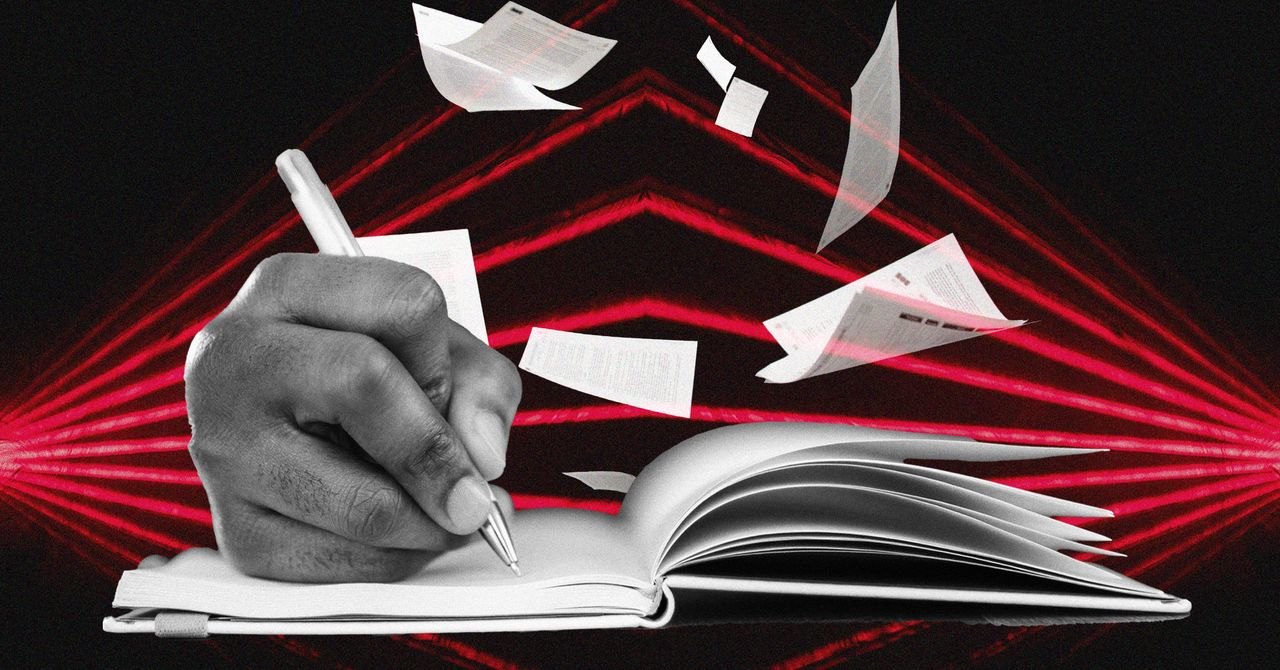
Process-tracking utilities document writing activity in real time by logging drafting sessions, recording keystroke patterns, and assigning cryptographic signatures to digital text. Systems such as ObraVera generate timestamps and unique cryptographic hashes for written passages and spoken audio notes deposited into its registered user database. Technical founder Brady Ridgway stated that ObraVera matches stored prose against subsequent unauthorized appearances or disputed ownership claims, allowing administrators to verify exactly when a registered individual entered specific text into the system.
Other tools monitor continuous typing rhythms or integrate directly into cloud processors, including an automated drafting tracker that Pangram maintains for Google Docs. However, system architects emphasize that software-generated logs cannot offer comprehensive protection against deliberate deception. Pangram cofounder and chief executive Max Spero explained that individuals can easily circumvent recording software by hand-typing AI-generated drafts directly onto the screen or configuring automated software typers. Spero also observed that typical authors routinely draft across disjointed files, swap preliminary materials via email, and rely on voice memos, leaving substantial gaps in automated logs.
Advertisement
Tech Pulse Daily
Get tomorrow's pulse first
Join engineers who read Tech Pulse before stand-up. Free, weekday mornings.
Authors Can Defend Against AI Allegations: why it matters
The emergence of auditing software highlights growing anxiety over inaccurate automated detectors and reputational damage across digital book communities. Pangram advertises an industry-leading false-positive rate of 0.01 percent for creative prose, yet Authors Guild chief executive Mary Rasenberger reported that numerous writers have submitted entirely human-authored manuscripts to Pangram only to receive reports indicating machine generation. Rasenberger cautioned that reliance on flawed detectors creates an unhealthy climate of mutual suspicion, emphasizing that professional authors selling original voice and imagination rarely submit machine-generated slop to traditional fiction editors.
At the same time, provenance software provides valuable documentation when corporate developers scrape published works into training datasets without author permission or descriptive metadata. Platforms like ObraVera establish an immutable public record of ownership dates that assists legal claims when protected passages surface within unauthorized model outputs. Even so, Ridgway acknowledged that existing software merely logs that a registered user declared a submission to be free of artificial intelligence assistance, remaining incapable of independently verifying whether the user's personal declaration represents the truth.
Authors Can Defend Against AI Allegations: who is affected
Working novelists face the immediate operational burden of navigating reader paranoia and defensive documentation requirements. The Authors Guild has met with multiple software firms pitching verification products, with policy director Umair Kazi reviewing options while Rasenberger characterized mandatory record-keeping as an insulting burden that the guild refuses to endorse as an industry requirement. Authors already report severe repercussions on consumer platforms, with Bartz describing instances where hostile readers organized review-bombing campaigns against releases on Goodreads or pledged to boycott any fiction published after 2022 to avoid synthetic prose.
Publishing professionals and literary agencies are similarly reluctant to integrate auditing requirements into existing editorial and acquisition pipelines. Industry analyst Jane Friedman reported in her newsletter The Bottom Line that publishers and literary agents will not adopt verification workflows that introduce additional financial costs or operational delays. Friedman pointed out that trade publishers traditionally resist technologies conceived by external developers, noting that coordinating disparate houses around a single authentication protocol would prove as difficult as herding cats while still leaving systems vulnerable to manipulated verification records.
Authors Can Defend Against AI Allegations: what to watch
Industry observers expect the commercial viability of provenance software to face severe resistance unless major publishing houses formally mandate certification for manuscript submissions. Friedman argued that the current wave of public AI controversies may ultimately prove short-lived as detection software matures and writers witness the catastrophic commercial penalties suffered by authors who submit automated manuscripts. Without institutional adoption, writers investing in process trackers risk spending money on forensic documentation that literary agencies and legal departments decline to recognize or inspect during contract negotiations.
Meanwhile, authors are turning to fiction itself to address the psychological and financial toll of synthetic text controversies. Bartz's upcoming 2027 novel, Delete Your Account, examines generative technology through the perspective of a blocked author who considers unconventional tools to complete her writing obligations. As literary markets confront escalating reader skepticism, writers must determine whether maintaining meticulous digital audit trails offers genuine security or simply introduces an unpaid administrative obligation into the creative writing process.
Developer Action Items
- ☐ Verify the claim on the official Anthropic / Google page (or Wired), not from this recap alone.
- ☐ Name the surface that moved — API, policy, model, hardware, or commercial terms — before you Slack the thread.
- ☐ Assign one owner a day to read the primary material and decide: this-sprint, this-quarter, or noise.
- ☐ Do not change production on day-one coverage. Watch the vendor changelog and one independent write-up first.
Authors Can Defend Against AI Allegations FAQ
What happened to the novel Shy Girl after AI allegations surfaced?
Hachette Book Group canceled the upcoming United States release and withdrew United Kingdom copies of Shy Girl after online speculation and a Pangram scan estimated 78 percent of the book was AI-generated.
How do paper trail tools attempt to verify human writing?
Platforms like Workings, Blindproof, Wintertext, Human Ink, and ObraVera record drafting habits, typing rhythms, and timestamps while encrypting files or generating cryptographic hashes to document text provenance.
Why do publishing experts doubt verification apps will become mandatory?
Industry analyst Jane Friedman noted that agents and publishers will reject systems requiring extra time or expense, while Authors Guild leaders consider compulsory receipt-keeping an unreasonable burden on writers.
Sources

Author
Dillip Chowdary
Writes Tech Bytes coverage of AI, engineering, and the tools that actually ship. Editor of Tech Pulse Daily.
Related on Tech Bytes
Advertisement