'Birdbrain' Is a Misnomer. Crows Make Decisions Faster Than We Can
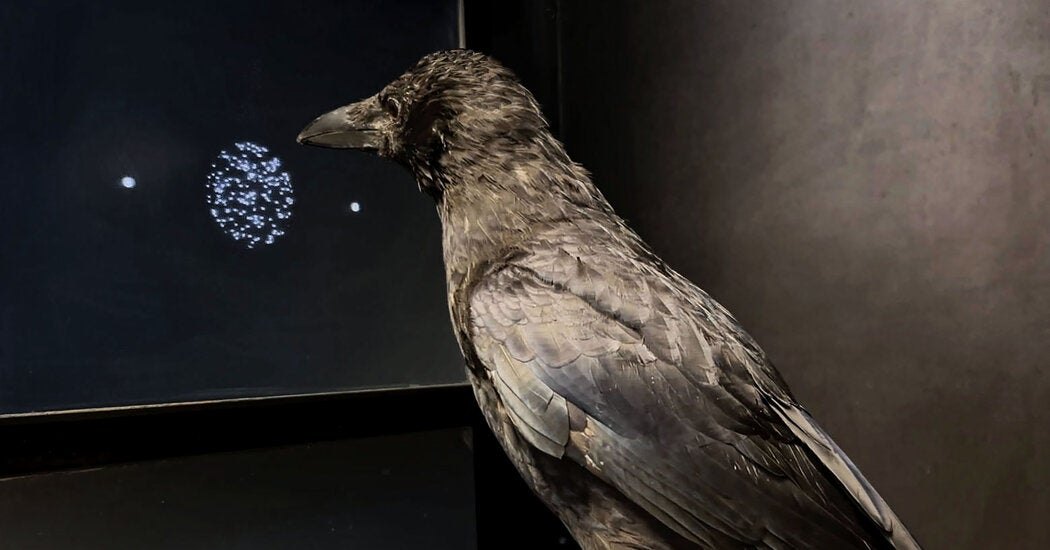
Carrion crows process visual cues at twice the speed of humans and monkeys, setting a new benchmark for avian decision speed in findings published in Science.
By Dillip Chowdary • Nov 15, 2026 • Source: nytimes.com
At a glance
- Subject
- Carrion crows Lemmy and Iggy
- Publication
- Science
- Processing speed
- Twice as fast as humans and monkeys
- Key researcher
- Mike Colombo at University of Otago
- Documented abilities
- Tool use, counting, self-recognition, planning
- Corvid species
- Crows, ravens, rooks, and scrub jays
Two carrion crows named Lemmy and Iggy process visual cues and execute decisions at twice the speed of humans and monkeys, according to nytimes.com's report on findings published in Science. The experimental discovery quantifies the neural speed of avian decision-making for the first time in laboratory conditions. This physiological evidence directly challenges centuries of derogatory assumptions regarding avian mental competence.
This analysis examines the laboratory performance of corvids, the history of scientific skepticism surrounding avian intelligence, and recent comparative breakthroughs across bird species. Cognitive scientists, animal behaviorists, and evolutionary biologists will find actionable details on how neural reaction times dismantle historical assumptions about brain size and organizational competence.
01Visual Processing Speed Across Species
Experimental trials showed that carrion crows analyze visual stimuli and initiate motor actions with remarkable efficiency. In side-by-side comparative measurements, the birds registered visual signals and responded twice as rapidly as both human participants and nonhuman primates. These quantitative metrics establish the first direct baseline for avian neurological response times during active decision tasks.
External specialists highlighted the unexpected magnitude of the timing difference between avian and primate subjects. Mike Colombo, a neuroscientist and comparative psychologist at the University of Otago in New Zealand who was not involved in the research, noted that people rarely imagine birds outperforming primates. Colombo emphasized that the crows demonstrate exceptionally rapid visual cognition during these rigorous laboratory trials.
02Laboratory Performance and Tool Manipulation
Lemmy and Iggy arrived at this visual study with extensive experience across multiple psychological testing protocols. In previous laboratory experiments, both crows demonstrated an ability to utilize tools to forage for food items. These earlier projects established that their physical problem-solving skills rely on structured observation rather than accidental trial and error.
Beyond physical foraging tools, the two crows mastered abstract numerical concepts during previous laboratory investigations. Researchers trained them to recognize numerical values and count physical objects presented in controlled experimental settings. Those foundational projects confirmed that corvid neural circuits successfully process symbolic quantities and retain procedural instructions across testing intervals.
03Historical Skepticism and Brain Morphology
Advertisement
Tech Pulse Daily
Get tomorrow's pulse first
Join engineers who read Tech Pulse before stand-up. Free, weekday mornings.
Scientific evaluations of avian intelligence struggled against persistent anatomical biases throughout the nineteenth and twentieth centuries. Scholars observed that bird brains were physically small and lacked the layered surface convolutions found in mammalian brains. These superficial structural differences led generations of researchers to dismiss birds as cognitively incompetent animals.
Early ornithological studies into birdsong failed to overturn the widespread academic consensus against avian intellect. Although researchers observed complex speech-like sound sequences and vocal mimicry in several species, they interpreted these vocalizations dismissively. Mainstream academics categorized elaborate melodies as isolated biological adaptations that operated independently of general cognitive capacity.
The broader scientific community required nearly a century to discard these rigid anatomical prejudices. Colombo pointed out that researchers have spent the last twenty years finally recognizing the fascinating architecture of the avian brain. Modern neurological assessments proved that specialized neural organization compensates effectively for smaller absolute brain volume.
04Cognitive Diversity Across Corvid Species
Advanced cognitive capabilities extend across the broader corvid family, which encompasses ravens, rooks, scrub jays, and crows. Multiple species within this group have demonstrated self-recognition in standard psychological tests, proving a level of self-awareness shared by few mammals. In addition, corvids regularly solve abstract problems that require multi-stage planning and mental simulation.
Corvid behavior also displays genuine future planning and sophisticated theory of mind in social interactions. Individual birds anticipate upcoming events by caching resources in secure locations and tracking where rivals look. They assess what neighboring birds observe and alter their storage behaviors accordingly to prevent competitors from stealing cached items.
05Cross-Species Competence in Avian Research
Expanded testing across other avian groups confirms that complex information processing is not restricted to corvids. Recent controlled experiments revealed that common pigeons can reliably differentiate between cancerous and noncancerous cell samples under microscopic observation. This medical imaging task demonstrates perceptual classification skills that rival specialized human diagnostic capabilities.
Pigeons also succeed in abstract symbolic tasks involving alphanumeric structures and mathematical orders. In structured laboratory settings, pigeons accurately distinguish between valid words and meaningless non-words displayed on testing monitors. Furthermore, these birds reliably order numerical values, proving that diverse avian lineages independently evolved advanced visual discrimination abilities.
Frequently asked questions
How fast do crows process visual decisions compared to primates?
In laboratory findings published in Science, crows processed and responded to visual cues at twice the speed of humans and monkeys.
Which individual birds were tested in the visual research?
Two carrion crows named Lemmy and Iggy participated in the study after previously demonstrating tool use and counting abilities.
What cognitive skills have scientists documented in corvids?
Corvids can recognize themselves, solve abstract problems, plan for future needs, and demonstrate theory of mind by anticipating what rivals see.
Can birds other than crows perform complex visual classification?
Research demonstrated that pigeons can differentiate cancerous from noncancerous cells, order numbers, and distinguish words from non-words.
Sources

Author
Dillip Chowdary
Writes Tech Bytes coverage of AI, engineering, and the tools that actually ship. Editor of Tech Pulse Daily.
Related on Tech Bytes
Advertisement