Bluetti launches ‘e-generator’ to take on noisy, stinky, polluting gas
Bluetti doesn't want you to call the Pioneer 5000 a solar generator (SoGen) even though that's what it is. Bluetti launches ‘e-generator’ to take on noisy.
By Dillip Chowdary • Sep 06, 2026 • Source: The Verge

What happened
Bluetti has unveiled the Pioneer 5000, a large battery-based power station the company is actively asking people not to call a solar generator — even though it functions as one. The product is designed to compete directly with traditional gas generators, positioning itself as a cleaner, quieter alternative for users who need serious portable power without the fumes, noise, or fuel logistics that come with combustion engines.
This article breaks down what Bluetti announced, how the Pioneer 5000 actually differs from other large power stations already on the market, and what builders, homesteaders, contractors, and power-conscious households should know before paying attention to or purchasing one.
How it works
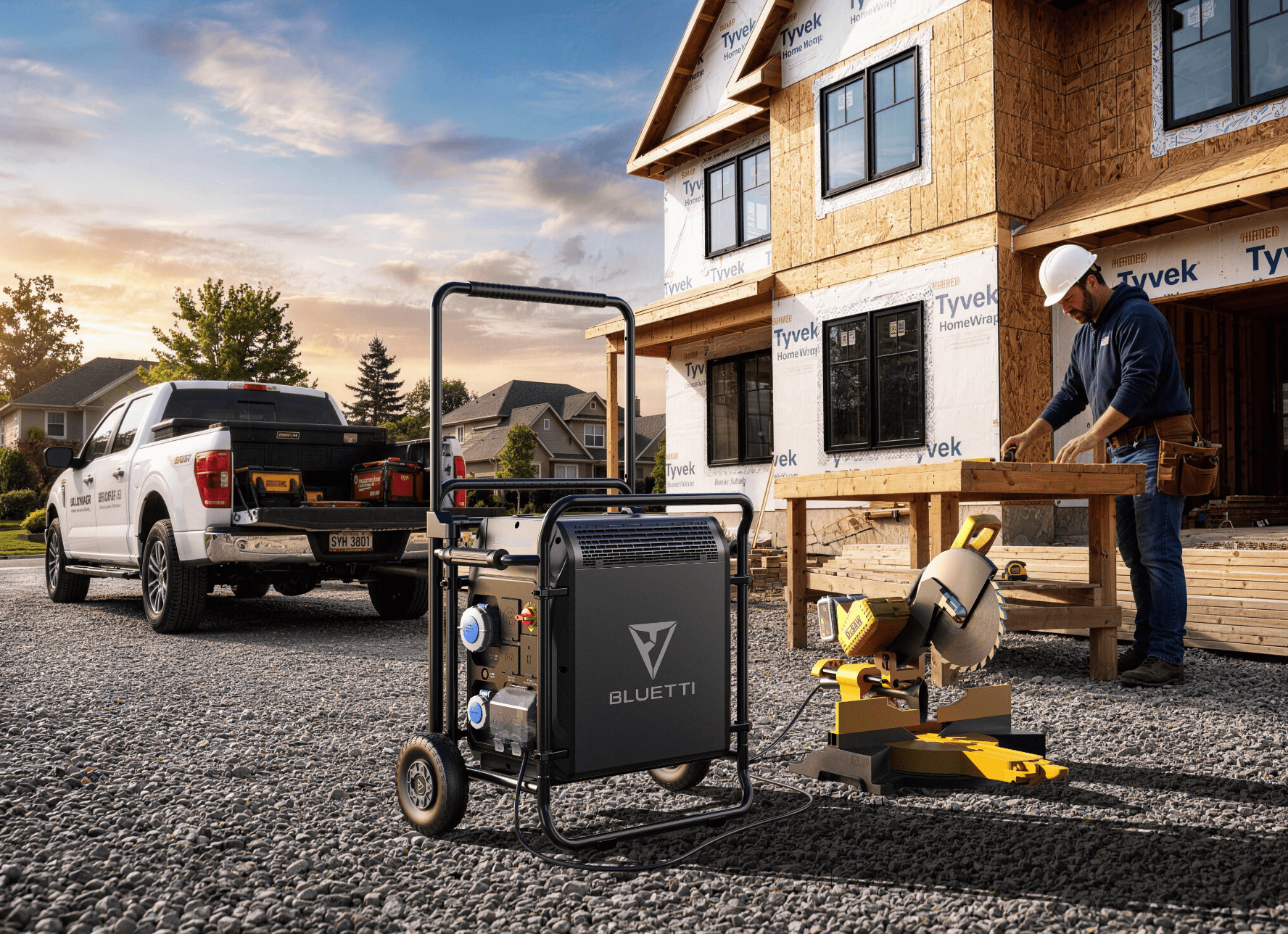
Bluetti introduced the Pioneer 5000 under the self-coined label "e-generator," a term the company is using to draw a deliberate contrast with the gas generator category rather than the solar generator category it technically belongs to. The framing is strategic: solar generators, or SoGens, already carry associations of limited output and recreational camping use, while gas generators occupy the heavy-duty work and backup-power space. Bluetti wants the Pioneer 5000 to live in that second space, competing on capability rather than convenience, and the marketing language reflects that intent.
Advertisement
Tech Pulse Daily
Get tomorrow's pulse first
Join engineers who read Tech Pulse before stand-up. Free, weekday mornings.
Why it matters
The feature Bluetti is leading with is up to 18 kilowatts of instant surge power, which is the burst capacity needed to start large motor-driven appliances like air conditioners, well pumps, and power tools that draw far more current on startup than they do during steady operation. Most portable battery stations do not offer surge capacity anywhere near that figure. The other differentiator Bluetti is highlighting is the inclusion of a dolly cart, which is a physical mobility feature that makes the unit more like a portable generator in practice rather than a stationary home battery system. These two elements together — extreme surge headroom and a cart for repositioning — are what Bluetti argues separate the Pioneer 5000 from other large power stations charged via solar.
Contractors who run job sites without grid access, and anyone managing an off-grid property with high-draw equipment, are the most direct audience for a unit spec'd at 18 kilowatts of surge capacity. That number is high enough to cover the startup loads of most residential HVAC systems and heavy power tools, which means tradespeople and rural property owners currently relying on gas generators have a concrete reason to evaluate it. Emergency preparedness households — particularly those in regions with frequent grid outages — are also well-positioned to benefit, since the Pioneer 5000 eliminates the carbon monoxide risk and fuel storage requirements that make gas generators genuinely dangerous in enclosed or semi-enclosed spaces.
Who is affected
Bluetti has not released detailed pricing or a firm shipping date in the information currently available from the announcement. Prospective buyers should monitor Bluetti's official site and authorized retail channels for preorder and availability updates. Given Bluetti's history with large power station launches, the Pioneer 5000 will likely appear on the company's own storefront first before reaching third-party retailers. Anyone seriously evaluating it for a job site or home backup role should verify the unit's continuous output rating alongside the 18-kilowatt surge figure, since surge capacity and sustained output are different specifications and both matter depending on the use case.
What to watch next
The key question the announcement leaves open is how the Pioneer 5000's actual solar input capacity and battery storage size compare to competing large-format power stations from brands like EcoFlow, Jackery, and Anker, none of which Bluetti named directly. Surge power is one metric, but total stored energy and recharge speed determine how long and how often a unit can perform at that level. Independent reviewers putting the Pioneer 5000 through sustained load testing — not just peak surge demos — will produce the data that matters most for anyone considering it as a true gas generator replacement. The "e-generator" category label Bluetti is attempting to establish is also worth watching: if it gains traction with other manufacturers, it could signal a broader industry shift in how battery-based power products are positioned and regulated.
Developer Action Items
- ☐ Diff the official changelog for Bluetti launches e-generator take before you bump — APIs, defaults, and removed flags only.
- ☐ Install through the vendor's documented channel in staging; keep a one-command rollback and time-box the canary.
- ☐ Grep your repo for old flag names, lockfile pins, and plugin versions that the notes mark as breaking.
- ☐ Prefer the first patch cut over the day-zero tag unless you have a reason to be on the leading edge.
- ☐ If The Verge did not name a region, plan, or SKU, screenshot the official availability line before you promise it to users.

Author
Dillip Chowdary
Writes Tech Bytes coverage of AI, engineering, and the tools that actually ship. Editor of Tech Pulse Daily.
Related on Tech Bytes
Google Mantis: An Agentic Vulnerability Scanning Harness for Reducing False Positives
Read →
The Claude Compiler Is Dead. Long Live the Claude Compiler
Read →
Playco cut manual fixes 50% prototyping games with GPT-6 Astra
Read →
Claude Fable 5.1 made me a nice animated pelican
Read →
Today's Tech Pulse briefing
Full briefing →
Advertisement