Brick’s new app blocker is designed for bedtime doomscrolling
Brick launched the $129 Brick Night, a Bluetooth app blocker powered by two CR2477 batteries that automatically blocks apps in zones up to 25 by 25 feet.
By Dillip Chowdary • Oct 24, 2026 • Source: The Verge
Brick launched the Brick Night, a hardware app blocker priced at $129 designed to curb bedtime phone doomscrolling without manual effort. As detailed in The Verge's report, the device expands on the company's $59 original gadget by replacing physical tap engagement with spatial proximity. While the initial Brick required tapping handsets against an NFC surface, the new model uses an automated Bluetooth perimeter that detects when a user enters the bedroom and initiates app restrictions in the background immediately.
This analysis examines the hardware specifications, spatial boundaries, multi-user support, pricing differences, and functional tradeoffs defining Brick's latest release. The breakdown is tailored for smartphone users managing bedtime screen time, households sharing living quarters, and existing owners deciding whether to add the ambient hardware. Readers will find the concrete operational limits of the unit, including coverage dimensions and battery architecture, alongside key limitations such as the omission of NFC antennas that prevents it from replacing the original unit.
Brick’s new app blocker is designed: the announcement
Hardware maker Brick officially unveiled the Brick Night on October 23, 2026, introducing a bedside device engineered specifically to target late-evening mobile habits. Retailing at $129, the unit arrives at more than double the price of the original $59 Brick, reflecting a structural redesign and new wireless components. Instead of demanding conscious friction at bedtime, the unit eliminates the manual decision loop entirely. The release marks the company's first expansion beyond touch-based lockout tools into ambient boundary monitoring, targeting bedroom environments directly.
The physical chassis is considerably bigger than the original compact Brick, accommodating internal hardware engineered to broadcast continuous signals throughout a room. Power is supplied by two CR2477 coin cell batteries, allowing the unit to maintain steady wireless discovery without an active wall outlet or charging cable. By positioning the hardware as an unobtrusive room accessory, Brick aims to eliminate bedtime friction where tired phone owners bypass lockout steps simply by neglecting to manually tap their phones against a sensor before going to sleep.
What actually changed with Brick’s new app blocker is designed
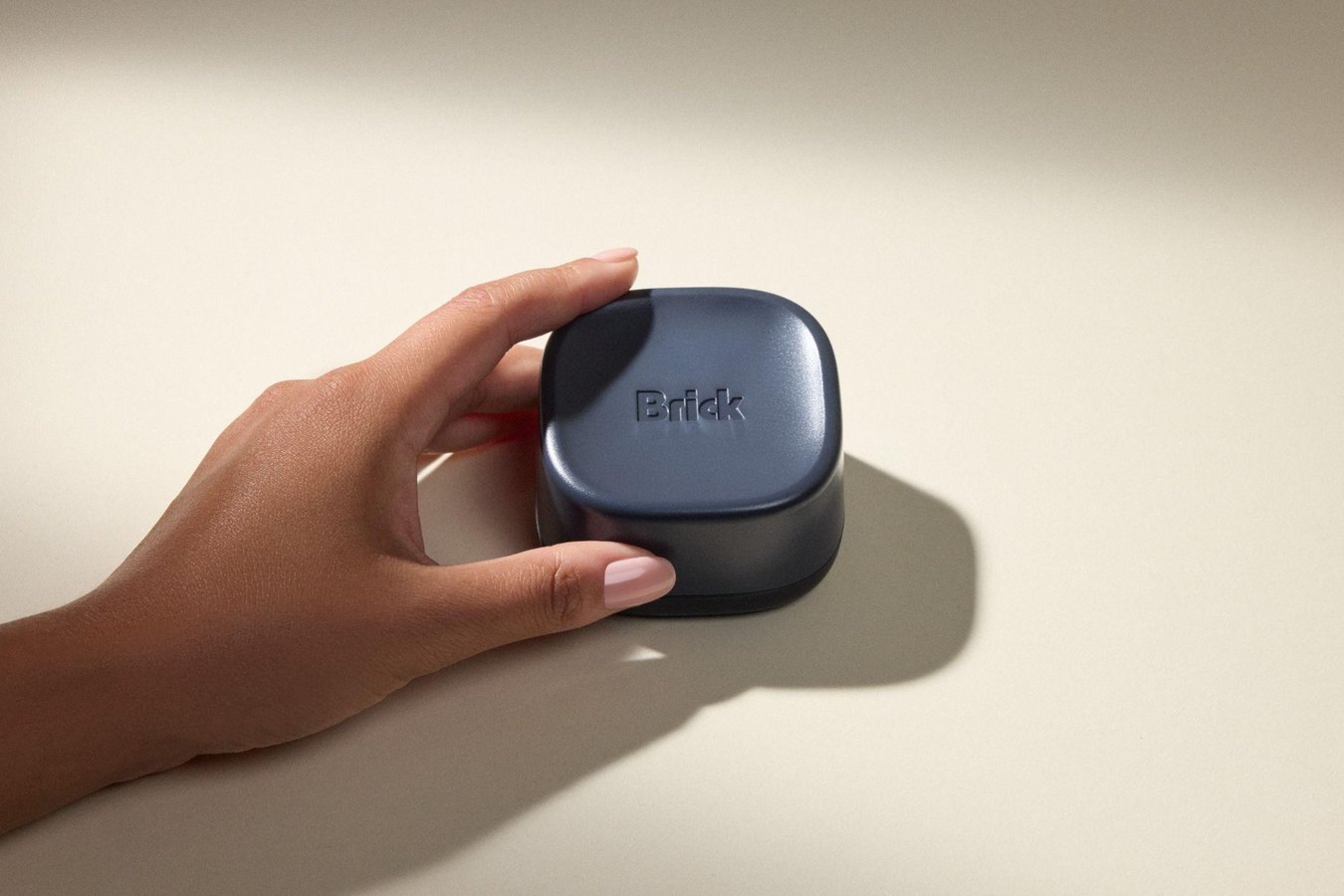
The primary technical shift between the original hardware and the Brick Night centers on the transition from near-field communication to Bluetooth tracking. The first-generation Brick operates strictly through direct physical contact, demanding that an owner tap the handset against the plastic block to engage or disengage application blocks. In contrast, the Brick Night broadcasts a localized Bluetooth beacon that detects paired phones automatically upon arrival. Once the phone enters the designated operational zone, the system restricts application access silently in the background, requiring zero taps.
Spatial coverage can be configured up to a maximum boundary of 25 feet by 25 feet, permitting users to cover standard bedrooms or adjust the threshold for smaller spaces. Software management mirrors the granular control of the original system, allowing people to select specific applications to block rather than rendering an entire phone inaccessible. Furthermore, Brick added multi-user architecture to the station. Each household member can pair their own phone, independently configuring distinct blocked app lists, operating schedules, customized modes, and spaces without interference.
Advertisement
Tech Pulse Daily
Get tomorrow's pulse first
Join engineers who read Tech Pulse before stand-up. Free, weekday mornings.
Who should care about Brick’s new app blocker is designed
Individuals struggling with compulsive bedtime phone usage represent the primary audience for the Brick Night, particularly those who consistently abandon manual digital wellbeing routines. Because traditional app timers and physical tap stations rely heavily on willpower at moments of peak mental fatigue, automated enforcement removes human hesitation from the equation. Anyone who walks through their bedroom door with their smartphone finds distracting feeds silenced immediately upon entry. This hands-off transition ensures intended nighttime boundaries remain active even when users feel too exhausted to execute voluntary lockout rituals.
Multi-person households and shared living quarters also gain utility from the hardware because several occupants can utilize a single bedside station concurrently. Partners sharing a bedroom or roommates living in close proximity can customize personal schedules, select unique collections of blocked services, and establish distinct operating spaces according to their private digital boundaries. A partner needing access to reading applications can preserve those apps while their companion restricts entertainment alerts. The independent profile management ensures that communal placement on a table accommodates differing evening habits across paired devices.
How to try Brick’s new app blocker is designed
Prospective buyers can purchase the Brick Night directly from Brick for $129, choosing between the new spatial blocker and the original $59 handheld unit. Deployment begins by inserting the two included CR2477 coin cell batteries into the device chassis and setting the physical station in the chosen room, such as on a nightstand, desk, or shelf. Because the device operates entirely on battery power and wireless transmission, positioning does not depend on access to an electrical outlet, allowing users to place the larger enclosure wherever signal coverage best fits.
Once placed, users configure the environment through the companion smartphone application, pairing their handset over Bluetooth and setting up their blocking parameters. Owners define the desired spatial radius within the 25 feet by 25 feet maximum envelope, map the active time windows for enforcement, and pick the specific catalog of distracting applications to restrict upon entry. Household members joining the system pair their respective devices to establish individualized accounts, adjusting their personal app selections, operational modes, and space configurations so the peripheral handles each incoming device according to designated profile rules.
What to watch after Brick’s new app blocker is designed
The principal limitation of the Brick Night is its total lack of NFC capabilities, preventing the new peripheral from serving as an all-in-one replacement for the original Brick. Because the $129 unit relies solely on Bluetooth proximity, owners cannot tap their phone against the casing to execute manual tap-based locking or unlocking. Consumers who value the deliberate physical interaction of the original $59 model must retain that legacy device, meaning users seeking both tactile and spatial blocking must operate two separate hardware units.
Prospective buyers must also monitor battery longevity across the dual CR2477 cells as the unit continuously broadcasts Bluetooth signals to detect paired phones. Maintaining persistent discovery over an active 25-foot zone requires steady power delivery, and users will need to observe how frequently coin batteries require replacement under multi-user demands. Additionally, customers must evaluate whether the $129 price tag, more than double the cost of the initial version, delivers enough behavioral value over simpler software controls to justify purchasing dedicated ambient bedroom hardware.
Developer Action Items
- ☐ Verify the claim on the official Brick app blocker designed page (or The Verge), not from this recap alone.
- ☐ Name the surface that moved — API, policy, model, hardware, or commercial terms — before you Slack the thread.
- ☐ Assign one owner a day to read the primary material and decide: this-sprint, this-quarter, or noise.
- ☐ Do not change production on day-one coverage. Watch the vendor changelog and one independent write-up first.
Brick’s new app blocker is designed FAQ
How much does the Brick Night cost compared to the original Brick?
The Brick Night costs $129, which is more than double the price of the original $59 Brick.
How does the Brick Night detect when to block apps?
It uses Bluetooth to automatically create an app-blocking zone of up to 25 feet by 25 feet, kicking in when you enter the room without requiring you to tap the device.
What power source does the Brick Night use?
The device is powered by two CR2477 coin cell batteries, allowing it to operate untethered without a wall outlet.
Can multiple people use the same Brick Night device?
Yes, the Brick Night supports multiple users, and each person can independently configure their own blocked apps, settings, time windows, spaces, and modes.
Can the Brick Night replace the original Brick for tap-based blocking?
No, the Brick Night lacks NFC capabilities, so it cannot perform tap-based blocking and cannot serve as a complete replacement for the original device.
Sources

Author
Dillip Chowdary
Writes Tech Bytes coverage of AI, engineering, and the tools that actually ship. Editor of Tech Pulse Daily.
Related on Tech Bytes
Advertisement