Can AI help solve the COBOL code crisis?
OpenAI reported that GPT-6.1 Sol reached 98 percent accuracy migrating COBOL to modern languages, but researchers warn legacy replacement remains unsolved.
By Dillip Chowdary • Oct 26, 2026 • Source: The Verge
OpenAI announced substantial improvements in its latest artificial intelligence models targeted at migrating legacy software written in older programming languages like COBOL into modern codebases. As detailed in The Verge's report, the company highlighted benchmark results on October 19th showing that its newest systems can translate aging legacy software into contemporary languages such as C++, Java, Kotlin, Python, and Rust while strictly preserving original behavior. The announcement follows an industry-wide push to modernize antique institutional infrastructure that has remained frozen in place for decades due to the extreme operational risks of manual code rewrites.
This report examines the concrete test metrics published by OpenAI, the competing legacy modernization playbook released by Anthropic, and the practical technical constraints identified by academic software evolution researchers. It is intended for enterprise engineering leaders, systems architects, and infrastructure engineers who maintain high-volume transaction processing systems, federal data pipelines, and banking platforms that continue to depend on mainframe runtimes.
AI help solve the COBOL code crisis: what actually changed
OpenAI published benchmark figures evaluating its frontier models on behavior-preserving code migration across older languages. In company testing, GPT-6.1 Sol achieved an 87 percent behavior preservation accuracy under low reasoning effort, representing the initial computational steps allocated toward analyzing an engineering problem before generating an answer. When allocated higher reasoning effort, GPT-6.1 Sol reached 98 percent accuracy. OpenAI noted that a migration was counted as successful only when all validation test suites passed. The firm also documented enhanced model capabilities for generating database software across multiple programming languages, including COBOL itself.
The progression represents a measurable leap over older model families evaluated on the same tasks. Under low reasoning effort, GPT-6 Astra recorded an 86 percent success rate, whereas earlier architectures struggled significantly on identical criteria. GPT-6 Sol achieved only 21 percent accuracy at low reasoning, and the older GPT-5.6 Sol registered just 5 percent. Anthropic entered the same arena in February by publishing a dedicated code modernization playbook that framed Claude Code as a tool to translate legacy COBOL logic into Java or Python, arguing the economics of modernization had fundamentally shifted despite releasing no formal accuracy benchmarks.
AI help solve the COBOL code crisis: how it works
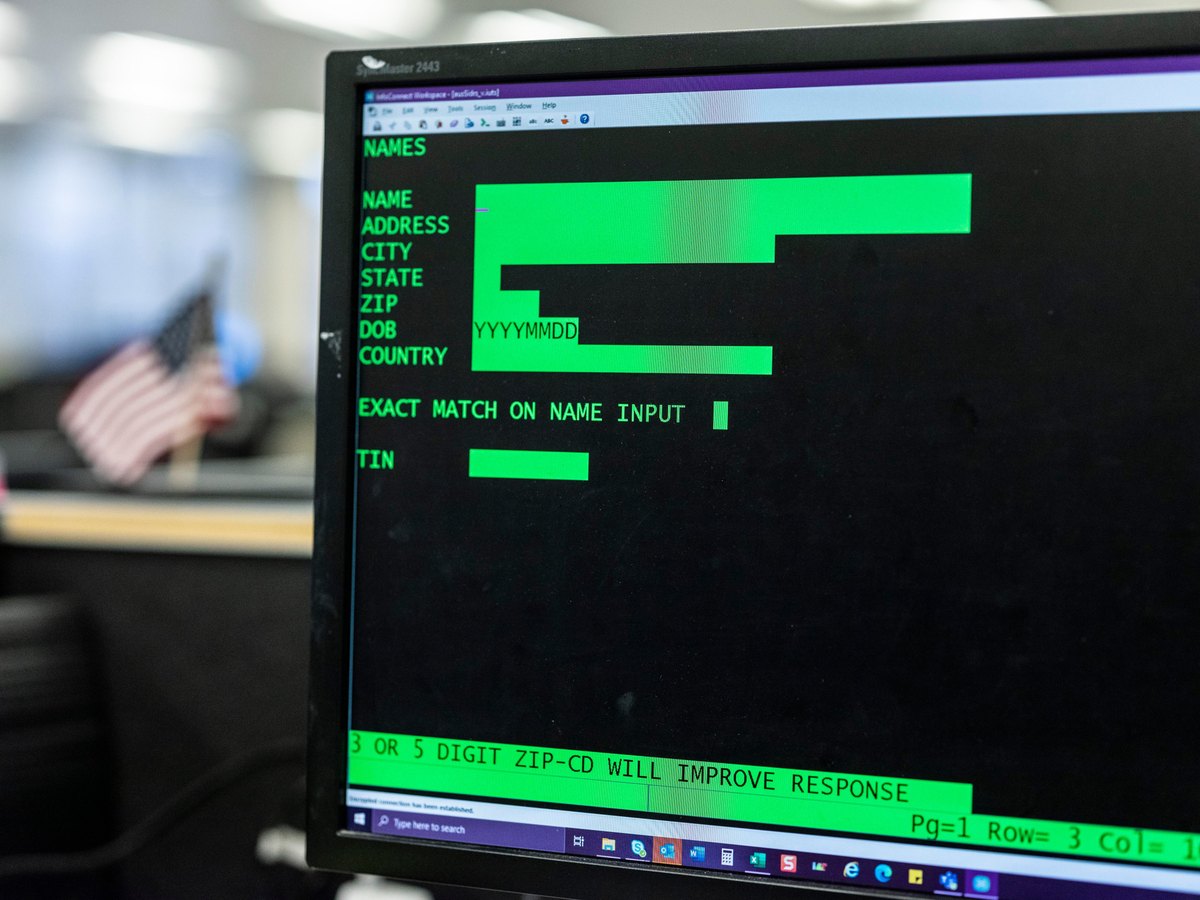
The migration workflow relies on language models parsing archaic procedural syntax and converting it into structured object-oriented or memory-safe target languages. OpenAI demonstrated conversions transforming COBOL directly into C++, Java, Kotlin, Python, and Rust while attempting to retain exact operational outputs. Because any functional deviation can corrupt state across interdependent applications, verification remains the core technical barrier. Computer scientists note that verifying these automated translations requires running identical operational inputs across both old and new codebases to ensure outputs align across all baseline and edge cases.
Academic researchers emphasize that automated code translation must be paired with rigorous formal verification to achieve safety. Jacopo Mauro, a mathematics and computer science professor at the University of Southern Denmark, noted that formal verification techniques computationally prove code behavior using mathematical principles, though implementing such frameworks for legacy codebases requires significant engineering labor. Mauro pointed out that while formal verification would allow automated checking superior to human reviews, human verification remains essential today. Additionally, models must generate accompanying translation documentation to help surviving domain experts audit translated logic.
Advertisement
Tech Pulse Daily
Get tomorrow's pulse first
Join engineers who read Tech Pulse before stand-up. Free, weekday mornings.
AI help solve the COBOL code crisis: why it matters now
COBOL, originally created in 1959 as the common business-oriented language, still anchors critical global finance and public administration. Figures from IBM show that COBOL underpins more than 40 percent of online banking platforms, processes 80 percent of in-person credit card transactions, and supports 95 percent of all ATM transactions worldwide. In the public sector, the language continues running operations inside the Internal Revenue Service, the Social Security Administration, and state-level administrative bodies. One rough estimate cited in the report calculates that the collective inefficiencies of maintaining COBOL drain roughly $105 billion annually from United States gross domestic product.
The modernization imperative is compounding because institutions face an absolute shortage of personnel who understand legacy syntax. Many original mainframe engineers have retired or passed away, leaving organizations reluctant to alter functional software. Alastair Donaldson, a professor of programming languages at Imperial College London, observed that while nobody in their right mind would select COBOL for a new development project, institutions cannot simply discard systems whose internal architecture is no longer understood. Parallel challenges persist in other legacy languages like Fortran, which remains actively deployed across atmospheric science, ocean forecasting, scientific computing, and nuclear security infrastructure.
AI help solve the COBOL code crisis: who is affected
The technical shift directly impacts major mainframe technology vendors and large-scale enterprises managing mainframe footprints. When Anthropic released its modernization playbook in February targeting enterprise workloads, shares in IBM fell sharply, reflecting investor sensitivity to threats against legacy system maintenance revenues. Enterprise IT departments managing tens of millions of lines of antique source code face immense architectural risk. Vadim Zaytsev, an associate professor of software evolution at the University of Twente, noted that single enterprise installations can span 250 million lines of COBOL, which he emphasized was far from the largest active deployment in industry.
Beyond commercial financial institutions, public agencies rely heavily on these legacy foundations to deliver basic citizen services. The Internal Revenue Service still utilizes systems such as COBOL 73 to process taxpayer returns, while state unemployment distribution engines have repeatedly stalled when unexpected surges overwhelmed unmaintained procedural backends. For these organizations, an unhandled runtime error can halt payments, delay tax compliance cycles, or freeze consumer payments at retail terminals.
AI help solve the COBOL code crisis: what to watch
Industry specialists warn that high synthetic benchmark scores do not translate directly into safe enterprise decommissioning. Arie van Deursen, a software engineering professor at Delft University of Technology, described OpenAI's published evaluations as superficial, arguing that the benchmark tested models against isolated, well-defined problems resembling public training corpora rather than real institutional sprawl. Van Deursen stressed that the evaluations failed to address the foundational engineering challenge of decomposing monolithic legacy software into modular components that can be decommissioned independently.
OpenAI spokesperson Oscar Haines acknowledged that legacy code translation remains far from a solved problem, noting the company is collecting enterprise feedback while working on improved test suites and broader language comprehension. Software researchers emphasize that even a 99 percent automated translation rate leaves severe liabilities unresolved. In a system encompassing hundreds of millions of lines of code, an unresolved one percent error margin represents millions of untracked lines capable of destabilizing connected databases, third-party interfaces, and core organizational operations.
Developer Action Items
- ☐ Diff the official changelog for OpenAI / Anthropic / Claude 6.1 before you bump — APIs, defaults, and removed flags only.
- ☐ Install through the vendor's documented channel in staging; keep a one-command rollback and time-box the canary.
- ☐ Grep your repo for old flag names, lockfile pins, and plugin versions that the notes mark as breaking.
- ☐ Prefer the first patch cut over the day-zero tag unless you have a reason to be on the leading edge.
- ☐ If The Verge did not name a region, plan, or SKU, screenshot the official availability line before you promise it to users.
AI help solve the COBOL code crisis FAQ
What accuracy did OpenAI report for migrating COBOL code?
OpenAI reported that GPT-6.1 Sol achieved an 87 percent behavior preservation accuracy at low reasoning effort, which increased to 98 percent when allocated higher reasoning effort.
How widespread is COBOL in modern financial systems?
According to IBM, COBOL handles 95 percent of ATM transactions, supports 80 percent of in-person credit card transactions, and powers over 40 percent of online banking systems.
Which modern programming languages can OpenAI models convert COBOL into?
OpenAI demonstrated test migrations converting COBOL software into C++, Java, Kotlin, Python, and Rust while attempting to preserve original functional behavior.
Why do software engineering professors remain skeptical of automated COBOL migration?
Researchers note that rewriting code syntax does not solve the harder tasks of decomposing monolithic architectures, handling multi-language dependencies, and verifying data integrations across massive codebases.
Sources

Author
Dillip Chowdary
Writes Tech Bytes coverage of AI, engineering, and the tools that actually ship. Editor of Tech Pulse Daily.
Related on Tech Bytes
Advertisement