Canva’s first AI image model plans designs before generating them
Canva launched Canva Craft, a two-stage AI image model generating 2K visuals in over 30 aspect ratios that ranks fourth on the Design Arena leaderboard.
By Dillip Chowdary • Oct 23, 2026 • Source: The Verge
Canva launched Canva Craft, its first in-house artificial intelligence image model designed to compete directly with generative systems from OpenAI, Microsoft, and Google. As detailed in The Verge's report, the model introduces a two-stage architecture that plans layouts before rendering pixels, improving precision, consistency, and control. Canva Craft generates 2K images across more than 30 aspect ratios and is available globally.
This report details the technical architecture, training data, benchmark performance, and platform integrations powering Canva Craft. It examines how the two-stage pipeline works, where the engine ranks against OpenAI, and how Canva plans to connect autonomous agents using open protocols. The analysis is written for creators, marketers, and design teams evaluating whether in-house generative models can reliably produce commercial graphics.
Canva’s first AI image model plans designs: what actually changed
The primary change in Canva Craft is its shift from single-step image generation to a two-stage planning and rendering architecture. Traditional generative systems attempt to calculate composition, style, and content at once, which often causes distorted layouts and unreadable lettering. Canva Craft restructures this workflow by first establishing a structural layout plan before rendering final pixels. This approach gives the model greater precision, consistency, and control, allowing it to generate complex scenes that require legible text and precise object placement across distinct canvas zones.
Beyond the structural generation system, the model expands output capabilities to match commercial design requirements. Canva Craft generates imagery at up to 2K resolution across more than 30 aspect ratios, supporting formats from vertical social media posts to widescreen presentations. The model creates realistic scenes, digital art, environmental imagery, marketing collateral, infographics, and menus. This release builds directly on Canva's April updates, which introduced prompt-based editing capabilities and non-destructive image layering that let users alter specific design sections while leaving remaining areas untouched.
Canva’s first AI image model plans designs: how it works
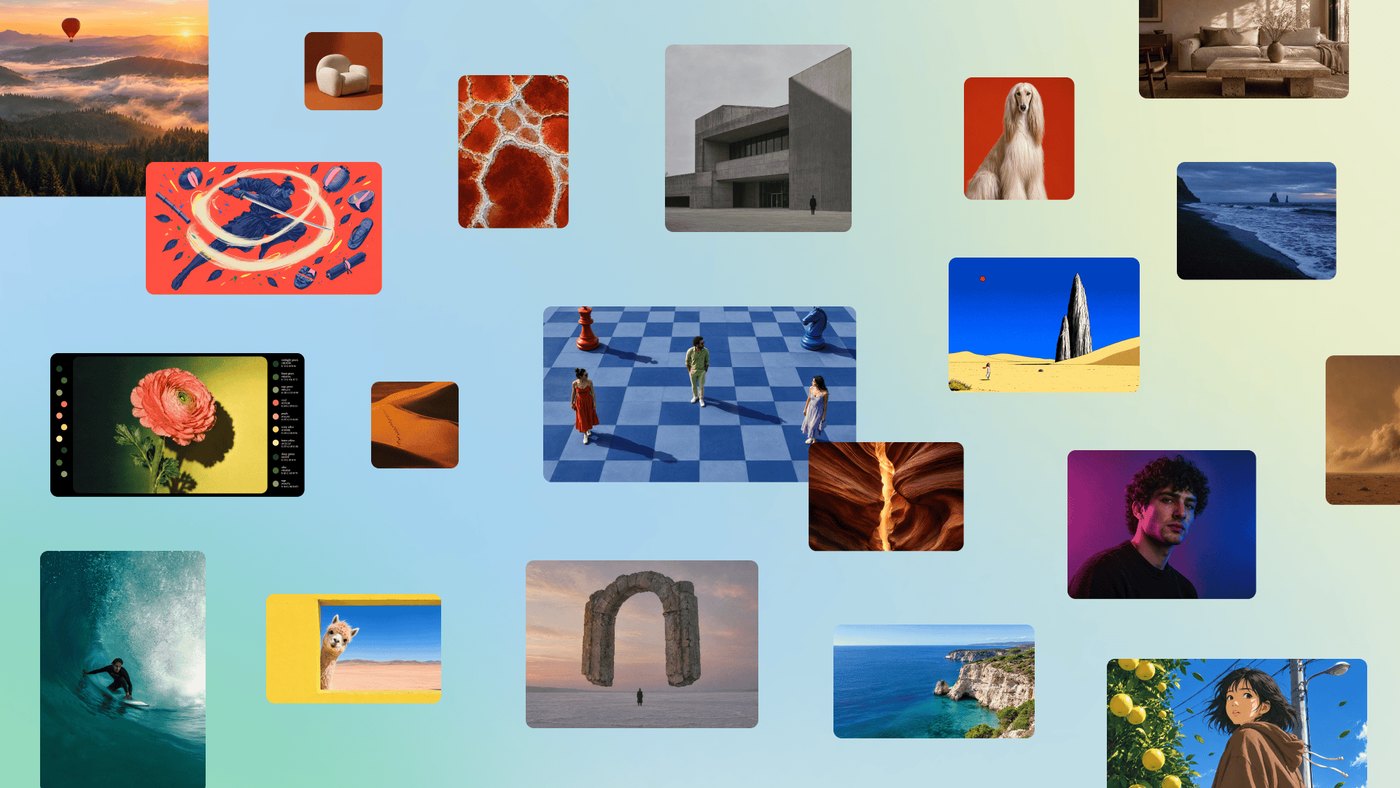
Canva Craft operates through a two-stage system designed specifically around graphic design principles. In the initial stage, the model drafts an underlying plan for the composition, mapping where visual subjects, graphical elements, and text should appear. In the second stage, it synthesizes the visual imagery at resolutions reaching 2K. By separating spatial layout planning from image generation, Canva Craft resolves common artificial intelligence flaws, ensuring that text remains legible, objects occupy correct positions, and proportions remain balanced across more than 30 supported aspect ratios.
The model's design competence comes from its specialized training on millions of human-made templates from Canva's existing content library. These templates include real-world social media posts, presentations, infographics, and menus created by human designers. By training on structured templates, Canva Craft learned how professional creators balance typography, visual hierarchy, and whitespace. The model also works with Canva's prompt-powered editing tools and layered image features, allowing creators to describe design adjustments with natural language and alter individual image layers without disturbing surrounding elements.
Advertisement
Tech Pulse Daily
Get tomorrow's pulse first
Join engineers who read Tech Pulse before stand-up. Free, weekday mornings.
Canva’s first AI image model plans designs: why it matters now
The rollout of Canva Craft positions Canva as a direct foundation model developer alongside OpenAI, Microsoft, and Google. Instead of relying entirely on external model providers, Canva has developed an internal image engine optimized for design workflows. On Design Arena's crowdsourced leaderboard for artificial intelligence image generation models, Canva Craft currently ranks fourth globally. It sits directly behind three OpenAI models: GPT-Image-2.5 Sunburst, GPT-Image-2.5 Flare, and GPT-Image-2, demonstrating that template-trained design models can compete directly against premier general-purpose image generators.
The release also addresses growing enterprise requirements for safety, data privacy, and brand control in generative workflows. Canva equipped the model with robust input and output moderation, privacy and safety controls, and reporting tools. Businesses require predictable rendering, accurate text, and verified safety guardrails before deploying generative artificial intelligence in public marketing materials. By combining human-template training with comprehensive safety systems, Canva provides commercial teams with a dependable environment to produce digital artwork, social media graphics, and presentations with minimal operational risk.
Canva’s first AI image model plans designs: who is affected
Canva Craft directly affects millions of digital creators, marketers, educators, and design teams who use Canva's platform worldwide. The model is available now to all users globally and can be accessed by clicking the three-dot option on Canva's left-hand menu and opening Dream Lab. For professionals creating menus, social graphics, and marketing content, the model's ability to plan layouts and render legible text reduces the manual cleanup usually needed after using standard generative tools. Supporting more than 30 aspect ratios ensures assets fit diverse publishing channels.
Corporate teams and enterprise administrators are also impacted by the model's integrated privacy controls, moderation systems, and non-destructive editing workflows. Teams can generate marketing materials and refine them using natural language prompts to modify specific image layers while preserving the overall design. Because Canva Craft includes built-in reporting tools and content moderation, organizations can adopt generative design workflows with clearer oversight. This enables marketing departments to rapidly produce brand-aligned graphics, infographics, and environmental scenes within an environment configured to maintain user safety and data privacy.
Canva’s first AI image model plans designs: what to watch
The most important technical development on Canva's horizon is planned integration with the open Model Context Protocol. This integration will enable external artificial intelligence agents to connect directly into Canva Craft. By supporting the protocol, Canva will allow autonomous software agents to plan designs, format templates, and generate complete images programmatically. This framework positions Canva Craft to operate as an automated design layer for multi-agent workflows, letting third-party software generate marketing collateral, presentations, and infographics without requiring manual input through the standard browser interface.
Canva also announced that it will release more efficient Craft-fast and Craft-ultrafast models in the future. These lightweight versions will offer faster generation speeds for high-volume production tasks and rapid creative iteration. Observers will also track Canva Craft's performance on the Design Arena benchmark to see whether future iterations can overtake OpenAI's GPT-Image-2.5 models. As Canva continues refining its two-stage planning architecture, the platform's trajectory will demonstrate whether specialized, template-trained generative systems can outperform frontier generalist models in commercial graphic production.
Developer Action Items
- ☐ Diff the official changelog for OpenAI / Google / Microsoft before you bump — APIs, defaults, and removed flags only.
- ☐ Install through the vendor's documented channel in staging; keep a one-command rollback and time-box the canary.
- ☐ Grep your repo for old flag names, lockfile pins, and plugin versions that the notes mark as breaking.
- ☐ Prefer the first patch cut over the day-zero tag unless you have a reason to be on the leading edge.
- ☐ If The Verge did not name a region, plan, or SKU, screenshot the official availability line before you promise it to users.
Canva’s first AI image model plans designs FAQ
What is Canva Craft?
Canva Craft is Canva's first in-house artificial intelligence image generation model, built to compete with systems from OpenAI, Microsoft, and Google. It uses a two-stage architecture that plans layouts before rendering images.
What image resolutions and aspect ratios does Canva Craft support?
Canva Craft can generate images at up to 2K resolution across more than 30 aspect ratios. It produces realistic scenes, digital art, environmental imagery, social media posts, presentations, infographics, and menus.
How does Canva Craft rank on AI design benchmarks?
Canva Craft ranks fourth on Design Arena's crowdsourced leaderboard for AI image generation models. It sits directly behind OpenAI's GPT-Image-2.5 Sunburst, GPT-Image-2.5 Flare, and GPT-Image-2.
How can users access Canva Craft?
Canva Craft is available globally to all users immediately. It can be accessed inside Canva by navigating to the three-dot option on the left-hand menu and selecting Dream Lab.
Sources

Author
Dillip Chowdary
Writes Tech Bytes coverage of AI, engineering, and the tools that actually ship. Editor of Tech Pulse Daily.
Related on Tech Bytes
Advertisement