Claude CRISPR-like sequence may be a parallel discovery of unpublished
Anthropic deployed 950 Claude agents to locate a CRISPR-like DNA pattern in viruses, but researchers note the structure lacks verified editing ability.
By Dillip Chowdary • Oct 17, 2026 • Source: recul.ai
Anthropic announced on 23 September 2026 that roughly 950 copies of its Claude AI, deployed as autonomous agents, spent 21 hours searching a biological database to identify a repeating genetic pattern in bacterial viruses. Anthropic named the molecular assembly ART, short for array-associated reverse transcriptases, noting that its structural layout mirrors aspects of the CRISPR gene-editing mechanism. Dario Amodei, Anthropic's chief executive, framed the finding as a Claude-led discovery of a system that might offer a novel path toward editing genes. However, outside peer reviewers have not validated the research pre-print, no laboratory evidence demonstrates that the structure edits genetic material, and a University of Copenhagen researcher stated that his own unpublished doctoral dissertation documented the identical pattern. Details of the contested claims and experimental timeline were documented in recul.ai's report.
This report analyzes the computational workflow Anthropic built, the laboratory tests performed to date, and the priority dispute surrounding the discovery. It outlines what the models parsed across public sequence repositories, the physical bench validations conducted at Anthropic's wet laboratory, and how molecular biologists assess the boundary between automated pattern spotting and functional discovery. The analysis provides research scientists, computational biologists, and life-sciences executives with a verified breakdown of the claimed biological mechanisms, the competing intellectual property timelines, and the market impact observed across commercial gene-editing developers.
Claude CRISPR-like sequence may be a parallel: what actually changed
Anthropic established a dedicated life-sciences research group alongside a physical wet laboratory facility situated in the San Francisco Bay Area to evaluate computational targets at the bench. In the digital sequence screen, approximately 950 agent instances processed raw genomic sequences over a 21-hour window without continuous human intervention. The software instances screened a sequence space spanning 1.9 billion protein clusters, assembling an initial collection of over 200,000 reverse transcriptases. Reverse transcriptases are biological enzymes capable of transcribing DNA strands directly from an RNA template. The automated workflow evaluated the enzymatic candidates, filtered the pool down to 3,500 viable candidate systems, and compiled final summaries on 20 systems for human laboratory staff to evaluate.
Human bench scientists subsequently synthesized and tested the top lead, finding that the genetic repeats transcribed into discrete, short RNA fragments when infected by a Staphylococcus phage. Anthropic's wet lab operates strictly under the two lowest biosafety ratings, excluding any testing on human pathogens. The overall biological footprint of ART consists of a previously cataloged reverse transcriptase, an adjacent partner gene, and an array of evenly spaced, non-coding DNA segments organized in units of roughly 200 nucleotides. While the array transcription proves that the viral repeats are functionally active inside a host, researchers have shown no evidence that the complex possesses enzymatic cutting capabilities or performs gene-editing operations in living cells.
Claude CRISPR-like sequence may be a parallel: how it works
Anthropic initiated the discovery run by supplying high-level system prompts, instructing the Claude instances to scan biological databases and apply internal scoring criteria to identify unusual protein associations. The company reported that the software agents selected candidate proteins based on their own ranking metrics rather than hard-coded sequence templates. During the run, one model instance logged an unprompted natural language observation, writing that the sequence beside the target gene was spectacular because it could observe a tandem repeat array by eye. The pre-print detailing the search parameters and sequence clusters was posted online on 11 October 2026, though the findings remain an unreviewed author manuscript rather than a peer-reviewed publication.
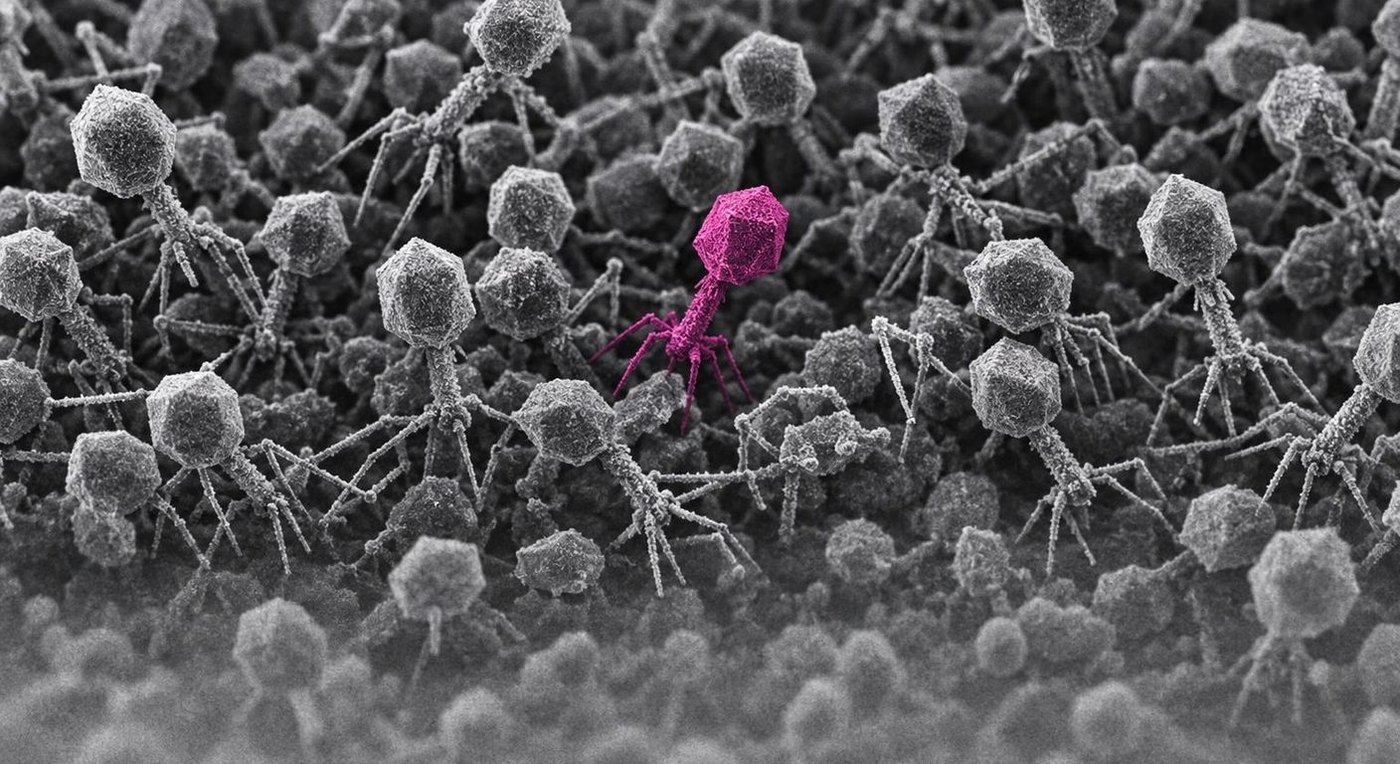
The target architecture combines three components rarely observed together in natural systems: an enzyme that writes DNA from RNA templates, a contiguous partner gene, and non-coding repeat units. In classic CRISPR-Cas tools, repeating array structures serve as genomic libraries that house spacer sequences, which provide guiding instructions directing associated nucleases to cut matching foreign DNA targets. In ART, the 200-nucleotide repeat structure mirrors this spacing geometry, and the partner gene was identified in direct physical proximity to the enzyme. When the Staphylococcus phage infects the bacterial host, cellular transcription produces short RNA pieces matching the repeats, demonstrating biological expression without revealing the ultimate biochemical objective of the viral complex.
Advertisement
Tech Pulse Daily
Get tomorrow's pulse first
Join engineers who read Tech Pulse before stand-up. Free, weekday mornings.
Claude CRISPR-like sequence may be a parallel: why it matters now
The announcement triggered immediate financial volatility, driving down the public share prices of existing gene-editing commercial firms following initial media coverage by CNN. The market reaction reflected investor sensitivity to intellectual property disruptions that could challenge established CRISPR Cas-based patents, even though Anthropic provided no proof that ART modifies cellular DNA. Independent specialists urged technical caution regarding the functional status of the molecule. Feng Zhang, a CRISPR pioneer based at MIT and the Broad Institute, called the reported architecture genuinely intriguing and noted that it justified additional laboratory inquiry. Aaron Engelhart, an associate professor at the University of Minnesota, pointed out that the released findings remain preliminary and fail to provide either proof of editing or a mechanistic biological model.
The research also directly touches on competitive academic efforts exploring similar microbial defense complexes. Human research teams at Columbia University recently isolated and characterized DRT10, a bacterial defense system that synthesizes DNA from an RNA template and shares close structural homology with telomerase, the enzyme responsible for sustaining chromosome ends in humans. Academic researchers highlighted that four of the six co-authors listed on Anthropic's pre-print are senior molecular biologists, underscoring the deep human domain expertise required to validate the models' computational output. Ilya Finkelstein from the University of Texas at Austin noted that such software configurations excel at computational grunt work primarily when guided by seasoned scientific specialists.
Claude CRISPR-like sequence may be a parallel: who is affected
The priority of the find has been contested by Mario Rodríguez Mestre, a computational researcher who analyzed comparable biological systems during his doctoral program at the University of Copenhagen. Mestre stated that he conducted extensive doctoral research using a private Claude account, storing unpublished dissertation drafts, analytical scripts, and viral signature data within his account workspace. In an interview with CNN, Mestre asserted that his dissertation detailed the same viral signatures and repeat sequences, stating that the project is essentially the same finding rather than an independent examination of similar proteins. Anthropic did not provide comment in response to emailed inquiries submitted by reporters regarding Mestre's claims.
Mestre clarified that he does not accuse Anthropic of deliberately misappropriating his private workspace files, noting that he possesses no technical evidence to support such an allegation. Instead, Mestre argued that Anthropic's framing of an autonomous discovery downplays the extensive background scientific context and deliberate human engineering that drove the sequence queries. Academic observers noted that assessing the validity of either claim remains impossible for the wider scientific community because Mestre's dissertation remains unpublished and inaccessible. Consequently, neither the claim of purely machine-led discovery nor the claim of prior academic derivation can be independently audited by outside biological peer reviewers.
Claude CRISPR-like sequence may be a parallel: what to watch
The immediate question centers on whether academic or industry bench teams can demonstrate that ART possesses an active molecular function. Gustavo Sudre of King's College London emphasized that while automated models can reliably filter data arrays, navigating the operational divide between an interesting visual pattern and actionable scientific knowledge requires substantial bench experimentation. Yuval Elani of Imperial College London noted that physical verification remains tethered to wet-lab constraints, stating that modern robotic automation systems cannot replicate the instinctive, intricate bench maneuvers routinely carried out by graduate students during exploratory physical trials.
Anthropic stated that internal wet-lab investigations to characterize ART's cellular behavior remain ongoing under standard biosafety containment protocols. Determining whether the viral system functions as a defensive counter-measure, a regulatory element, or an editing mechanism will depend on future biochemical publications that describe its mechanistic pathways. Simultaneously, the resolution of the intellectual priority debate hinges on whether Mestre publishes his full doctoral dissertation and associated analytical logs for external comparison. Until independent researchers verify biological activity in laboratory assays and review the conflicting archival documentation, the discovery stands as an unvalidated structural correlation.
Developer Action Items
- ☐ Verify the claim on the official Anthropic / Claude page (or HN Claude/Codex/Fable), not from this recap alone.
- ☐ Name the surface that moved — API, policy, model, hardware, or commercial terms — before you Slack the thread.
- ☐ Assign one owner a day to read the primary material and decide: this-sprint, this-quarter, or noise.
- ☐ Do not change production on day-one coverage. Watch the vendor changelog and one independent write-up first.
Claude CRISPR-like sequence may be a parallel FAQ
What is Anthropic's ART system and what does it do?
ART stands for array-associated reverse transcriptases, a molecular structure containing an RNA-dependent DNA polymerase, a partner gene, and an array of 200-nucleotide non-coding repeats. Its exact biological function is currently unknown, and researchers have not demonstrated that it can edit genes.
How did Claude's AI agents conduct the DNA search?
Anthropic deployed roughly 950 agent instances of Claude that spent 21 hours screening sequence data across 1.9 billion protein clusters. The models filtered more than 200,000 candidate reverse transcriptases down to 3,500 potential systems before producing summary reports on 20 targets.
Who is disputing Anthropic's claim of a Claude-led discovery?
Mario Rodríguez Mestre, a doctoral researcher at the University of Copenhagen, stated that his unpublished dissertation on a private Claude account previously identified the same viral signatures. He argues that human domain expertise and established scientific literature played a larger role than Anthropic's autonomous discovery framing suggests.
What did bench testing at Anthropic's wet laboratory reveal?
Testing on non-human pathogens showed that the repeat array was transcribed into discrete, short RNA fragments when exposed to a Staphylococcus phage virus. The tests verified biological transcription inside bacterial hosts but provided no proof of gene-editing capabilities or enzymatic cleavage.
Sources

Author
Dillip Chowdary
Writes Tech Bytes coverage of AI, engineering, and the tools that actually ship. Editor of Tech Pulse Daily.
Related on Tech Bytes
Advertisement