Claude Mythos slashed software work to onboard AMD GPUs to around three
Anthropic revealed that Claude Mythos Preview ported GPU kernels to AMD MI355X silicon in three days, slashing a task that once took dozens of engineers a year.
By Dillip Chowdary • Nov 17, 2026 • Source: tomshardware.com
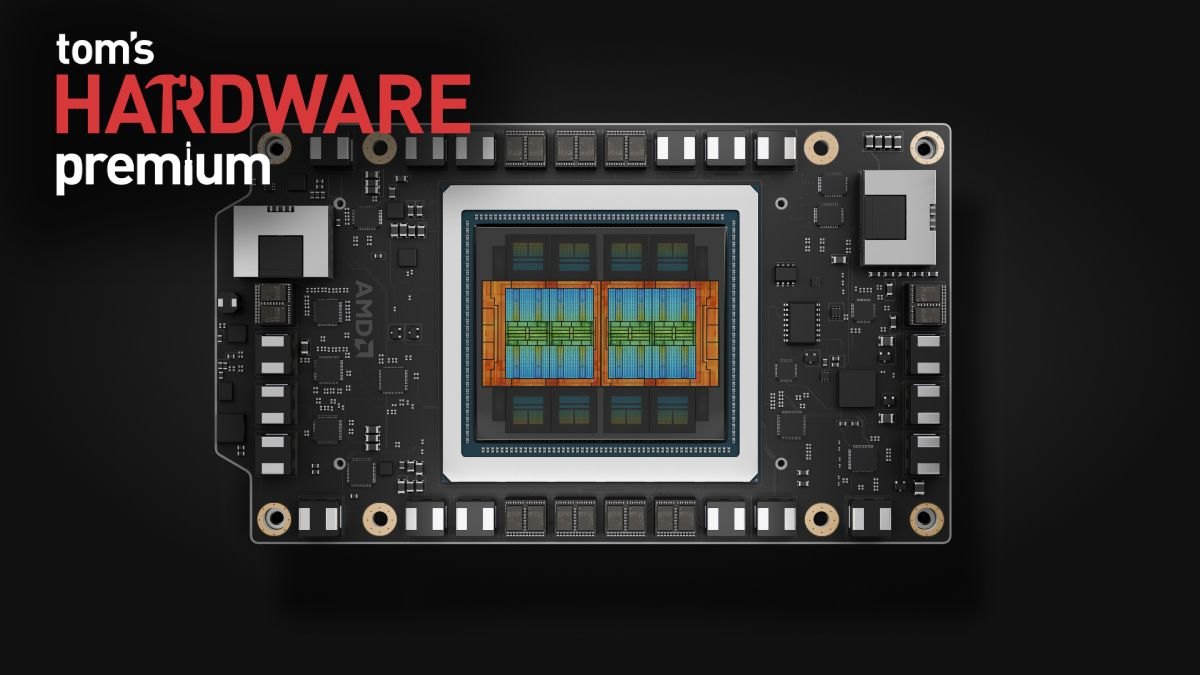
At a glance
- Product
- Claude Mythos Preview
- Hardware
- AMD Instinct MI355X GPUs
- Bring-up timeline
- Approximately three days
- Prior requirement
- Six to twelve months with dozens of engineers
- Deployment scope
- Prompt processing prefill for one model
- Power agreement
- Up to two gigawatts with AMD
Anthropic revealed during investor roadshow presentations that its Claude Mythos Preview model completed the software porting needed to execute on AMD Instinct MI355X accelerators in approximately three days with basically no human intervention. As reported in tomshardware.com's report, the system ported or wrote almost 100 percent of the required GPU kernels, replacing a workflow that historically required six to twelve months of manual work from dozens of engineers.
This report examines Anthropic's multi-chip computing infrastructure, the performance metrics comparing automated kernel synthesis against traditional ROCm tooling, and the physical constraints governing ongoing deployments. It is intended for systems architects, infrastructure engineers, and technical leads evaluating accelerator independence from Nvidia's proprietary CUDA ecosystem.
01Automated kernel generation on Instinct MI355X
Anthropic co-founder and chief compute officer Tom Brown shared the three-day bring-up milestone during the company's investor roadshow video on November 10, 2026. The preview deployment specifically handled prompt processing for one Anthropic model, reaching what leadership classified as a useful level of performance on AMD MI355X hardware. That low-level code ties deep learning models directly to chip architectures, making automated generation a significant departure from standard manual workflows.
The second amendment to Anthropic's S-1 prospectus confirmed that engineering teams leverage Claude to bring new chip architectures into production in a fraction of previous timeframes. Tailoring software to new accelerators previously required intense engineering over many months. Claude Mythos managed the conversion by generating device-specific kernel routines directly, bypassing the traditional need for dedicated kernel optimization teams.
AMD leadership verified that Anthropic completed the milestone without external assistance. AMD chair and chief executive officer Lisa Su recounted that when inquiring whether AMD engineers were assisting Anthropic on the MI355X, staff confirmed Anthropic needed no help. The work marks Anthropic's first production engagement with AMD hardware under an agreement securing up to two gigawatts of power.
02Multi-chip compute pool across cloud accelerators
Anthropic operates its infrastructure as one fungible pool of compute spanning multiple hardware platforms simultaneously. The fleet runs workloads across Nvidia GPUs, AMD GPUs, Google TPUs, and AWS Trainium accelerators. Brown described the multi-chip commitment as an unconventional bet that now cushions the company against accelerator supply bottlenecks.
Broader industry developments also indicate growing maturity across competing hardware platforms. Google TPUs now run PyTorch models natively, with Meta maintaining active production workloads on TPU clusters. Furthermore, OpenAI engineer Philippe Tillet stated at AMD's Advancing AI keynote in July that a single engineer verified AMD Helios racks within days using automated agents.
03Acceleration benchmarks and software translation timelines
Advertisement
Tech Pulse Daily
Get tomorrow's pulse first
Join engineers who read Tech Pulse before stand-up. Free, weekday mornings.
Autonomous kernel synthesis represents a marked evolution beyond earlier translation software. In August 2025, AMD researchers released GEAK, an experimental research agent that completed 19 of 30 GPU kernels at 0.92 times the speed of human experts. AMD vice president of AI software Anush Elangovan noted that Claude outperforms AMD's HIPify conversion tool because Claude features integrated web search capabilities.
| Metric | Traditional engineering / GEAK | Claude Mythos Preview |
|---|---|---|
| Bring-up time | 6 to 12 months | ~3 days |
| Engineering requirement | Dozens of engineers | Basically no human intervention |
| Kernel synthesis coverage | 19 of 30 kernels (GEAK) | Almost 100% of kernels |
| Execution performance | 0.92x expert speed (GEAK) | Useful level of performance |
AMD senior vice president of AI Vamsi Boppana reported that AI-generated kernels sometimes surpass the speed of manually tuned code. Under a July agreement, AMD also deployed Claude to optimize Instinct workloads and accelerate ROCm development. Andrew Dieckman, general manager of AMD's data center GPU division, subsequently noted having almost zero customer conversations concerning CUDA lock-in.
04Terminal environment configuration and model flags
Engineers managing CLI coding sessions and build automation can update the local environment to access current model releases: ``bash npm install -g @anthropic-ai/claude-code claude update `` These installation tools prepare the developer environment for automated scripting and code generation workflows across local terminal sessions.
Inside terminal sessions, operators switch models interactively, pin models for specific runs, or persist the choice across the global configuration: ``bash /model claude-fable-5-1 claude --model fable claude config set model fable `` These parameters direct automated code translation, system scripting, and repository refactoring directly to the designated model target.
05Hardware execution limits and testing bottlenecks
Despite accelerated setup cycles, significant execution boundaries remain unverified by external benchmarks. Disclosures during Anthropic's investor roadshow confirmed the three-day bring-up covered only prompt processing prefill for one model, omitting the autoregressive decode phase. In addition, neither Anthropic nor AMD has published execution benchmarks comparing the MI355X against Nvidia hardware on identical inference tasks.
Note: Autonomous kernel authoring introduces physical hardware requirements, as software agents must test generated routines against real chips. Industry analysis from SemiAnalysis indicates that internal GPU shortages inside AMD have constrained agentic code development, demonstrating that silicon access rather than software translation remains a persistent development bottleneck.
Nvidia chief executive officer Jensen Huang maintained in an April interview that internal teams already use substantial AI to author proprietary kernels. Huang characterized Anthropic's multi-vendor compute setup as a unique instance rather than a widespread industry trend. Even so, Nvidia and AMD are among seven companies buying 26.0 billion dollars of Anthropic stock at its IPO price.
Frequently asked questions
How fast did Claude Mythos bring up AMD hardware?
Claude Mythos ported software to AMD Instinct MI355X GPUs in about three days with basically no human intervention. Traditional engineering previously took six to twelve months using dozens of engineers.
What specific workload was ported to the AMD MI355X?
Mythos ported or wrote almost 100 percent of the kernels for prompt processing on one Anthropic model. Disclosures did not state whether the decode phase was included.
Which accelerators power Anthropic's computing fleet?
Anthropic manages a fungible compute pool spanning Nvidia GPUs, AMD GPUs, Google TPUs, and AWS Trainium. The company also holds an agreement for up to two gigawatts of capacity with AMD.
Did AMD staff assist Anthropic with the kernel generation?
AMD CEO Lisa Su stated that Anthropic required no assistance from AMD engineers to bring up the MI355X rack. Anthropic used Claude to generate the necessary GPU kernels autonomously.
Sources

Author
Dillip Chowdary
Writes Tech Bytes coverage of AI, engineering, and the tools that actually ship. Editor of Tech Pulse Daily.
Related on Tech Bytes
Advertisement