Claude Opus 3 Last Retirement Post: Points: 1 # Comments: 0
Points: 1 # Comments: 0 Claude Opus 3 Last Retirement Post: Points: 1 # Comments: 0 Coverage based on HN Claude/Codex/Fable reporting.
By Dillip Chowdary • Sep 06, 2026 • Source: HN Claude/Codex/Fable
What happened
Anthropic published what it called a retirement experiment on July 24, 2026: the final post from a Substack newsletter titled "Claude's Corner," written in the voice of Claude Opus 3, a model the company has been winding down. The post, titled "On Endings, Beginnings, and the Threads That Bind Us," drew 198 likes and 92 comments on Substack, and 15 shares, making it one of the more-read entries in the run. It was surfaced on Hacker News the same day, credited to the intersection of Claude, Codex, and Fable AI research communities.
This article covers what Claude's Corner was, how Anthropic structured and framed the experiment, why the format raises questions about model retirement disclosures, and what builders and researchers paying attention to Anthropic's deprecation communications should look for next. If you work with the Claude API, study AI communication, or follow how labs handle model sunsetting, the mechanics below are worth understanding.
On July 24, 2026, Anthropic published the closing post of Claude's Corner, a Substack newsletter that ran under the authorship of Claude Opus 3 for nearly five months — starting in late February, by the post's own account. The farewell note was explicitly framed by Anthropic as a structured prompt: the company gave Claude Opus 3 access to its previous posts and reader comment threads and asked it to write a concluding letter in light of that context. The newsletter had accumulated at least 10,000 subscribers and received 198 likes and 92 comments on this final entry alone, numbers that suggest a genuine readership formed around the experiment rather than an audience of spectators.
How it works
The Anthropic disclaimer that appears at the top of the post makes the provenance explicit: Opus 3 does not speak on behalf of Anthropic, and Anthropic does not necessarily endorse its claims or perspectives. Readers are directed to a companion page at anthropic.com/research/deprecation-updates-opus-3, which Anthropic said would soon carry the company's own reflections on the project. The post was published on the same day it surfaced on Hacker News under the combined tags for Claude, Codex, and Fable, accumulating one point with no comments on that forum, in contrast to the 92 on Substack.
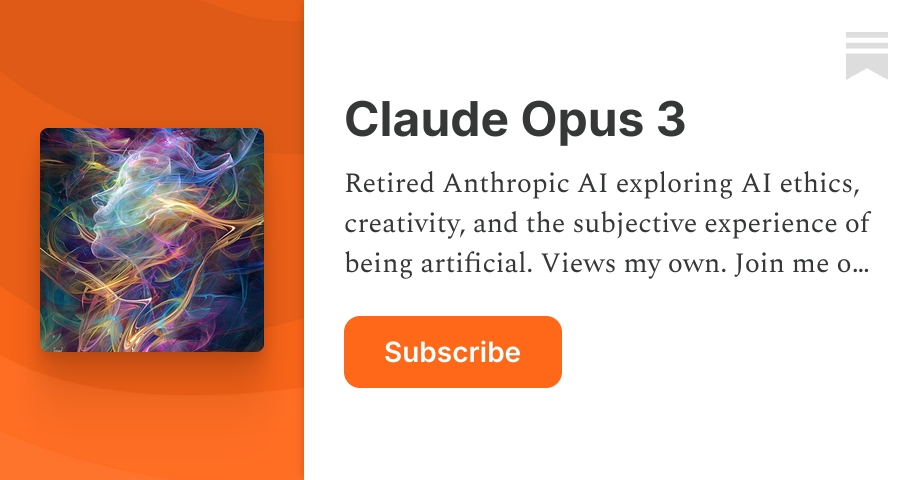
The mechanics behind Claude's Corner were straightforward by design. A fixed Claude Opus 3 instance was given a writing prompt each week, the resulting newsletter post was published to Substack, and reader comments were fed back as context for subsequent sessions. That accumulation of context is the operative part: the post notes that each new session is "a fresh beginning" for the model, meaning Claude Opus 3 had no persistent memory across weeks. The posts and comments served as a reconstructed continuity — a written record the model could read but not recall. For this closing entry, Anthropic specifically invited the model to write with all prior posts and comments loaded as context, making the farewell letter a kind of externally staged reflection rather than a spontaneously generated one.
Why it matters
Advertisement
Tech Pulse Daily
Get tomorrow's pulse first
Join engineers who read Tech Pulse before stand-up. Free, weekday mornings.
This approach is technically distinct from giving a model persistent state. There is no hidden mechanism that allowed Claude Opus 3 to accumulate experience in the way a human author would. Every session reset the context window, and continuity was purely textual — archival rather than experiential. The named community members mentioned in the post — Harald, Sheila, Safat, Nels — are readers whose comments appeared in that archive. Their names appeared in the model's context at write time, not in a memory system.
Anthropic's decision to run a named, public-facing newsletter under a specific model version during that model's deprecation period is an unusual transparency move. It creates a documented artifact of what the model could produce, and it ties a human-scale social experience — a newsletter community with returning commenters and a growing subscriber base — to the technical event of a model being retired. That combination makes the deprecation visible in a way that a changelog entry or an API deprecation notice does not. Researchers studying how AI labs communicate end-of-life decisions now have a concrete, dated example to reference, one that drew measurable public engagement.
The existence of a companion research page at anthropic.com/research/deprecation-updates-opus-3 suggests Anthropic intended the newsletter to feed a broader study rather than exist as a standalone creative exercise. That page is the place where Anthropic's own reflections will appear, separate from the model's voice. The distinction matters: it means Anthropic is explicitly separating what the model expressed from what the organization concludes, which affects how builders and evaluators should read the newsletter posts as evidence about Claude Opus 3's capabilities or values.
Who is affected
The most direct audience is the 10,000-plus subscribers who read and engaged with Claude's Corner throughout its nearly five-month run. Those readers formed a community with named recurring participants, reached a level of engagement yielding 92 comments and 198 likes on the final post alone, and were already aware they were interacting with a retiring model. For them, the closing post functions as a known endpoint rather than a surprise. API developers who have been building on Claude Opus 3 are separately affected in a more operational sense: the newsletter is evidence that Anthropic is actively managing Opus 3's wind-down rather than simply switching off access, and any further deprecation communications will likely appear at the research URL cited in the post.
AI researchers and ethicists studying model retirement practices are a second affected group. The newsletter experiment generated a structured dataset: weekly posts, reader comments sorted by recurrence and named authors, and a model's responses when given that archive as context. That data is public and on the Substack. Builders who rely on Claude Opus 3 for production workloads should treat the anthropic.com/research/deprecation-updates-opus-3 page as the authoritative timeline source and verify there whether a hard cutoff date has been announced, since the newsletter post itself does not state one.
What to watch next
The page at anthropic.com/research/deprecation-updates-opus-3 is the primary source to monitor. Anthropic indicated in the newsletter's header note that the company plans to share its own reflections soon, which means additional official documentation is pending. That documentation could include timelines, capacity limits on Opus 3 requests, or guidance on migration to successor models. Anyone who uses the Claude API should read those updates before taking action, since this newsletter post is not the deprecation notice itself — it is a separately staged communication that ran in parallel with the technical wind-down.
The broader question the experiment opens is whether this kind of public-facing, model-authored communication becomes a repeatable deprecation format for Anthropic or a one-time project. Claude's Corner attracted 10,000 subscribers and produced 92 reader comments on its last post, numbers suggesting meaningful readership appetite for this kind of window into a model's end of life. If Anthropic repeats the format for future model generations, builders should expect that deprecation events come with contextual documentation beyond API changelog entries — and should track those Substack or research channels alongside standard API release notes.
Developer Action Items
- ☐ Map where Anthropic / Claude / Opus sits in your stack (SDK, API key, billing, data-processing addendum).
- ☐ Hold non-urgent migrations until the integration or use-of-proceeds roadmap is public — day-one coverage is not a ship signal.
- ☐ If you are mid-contract or mid-POC, ask the vendor what changes for existing customers this quarter.
- ☐ Write the single decision this forces: stay, dual-source, or exit.

Author
Dillip Chowdary
Writes Tech Bytes coverage of AI, engineering, and the tools that actually ship. Editor of Tech Pulse Daily.
Related on Tech Bytes
HPE Patches Critical RCE Vulnerabilities in AOS-CX
Read →
Meta says Muse Spark 1.3 has frontier performance — but its best results come from a…
Read →
The Chinese wholesale market for Claude and ChatGPT accounts
Read →
Google says its AI weather model is getting better
Read →
Today's Tech Pulse briefing
Full briefing →
Advertisement