Claude Opus 5.5, GPT-6 Sol, GPT-6 Luna, and a new price war
. Claude Opus 5.5, GPT-6 Sol, GPT-6 Luna, and a new price war Why it matters for engineering teams What shipped and who is affected.
By Dillip Chowdary • Sep 24, 2026 • Source: HN Claude/Codex/Fable
Anthropic released Claude Opus 5.5 on September 22, 2026, cutting input token prices 20% and cache-read prices 60% compared to five prior Opus generations that all shared the same $5/$25 rate. Hours after the Anthropic announcement, OpenAI released GPT-6 Sol and GPT-6 Luna, immediately repricing its top-tier reasoning model at half the cost of its predecessor GPT-5.6 Sol, and its lightweight model GPT-6 Luna at just $0.10 per million input tokens — one of the cheapest rates OpenAI has ever published for a capable model.
This article covers the concrete specs of Claude Opus 5.5 — its new price, its stated quality improvements, its known failure mode at maximum thinking level, and how it fits into the wider pricing race now that both Anthropic and OpenAI moved on the same day. Developers evaluating Opus 5.5 as a production model, builders watching the Haiku and Sonnet tiers for future movement, and anyone running cost-sensitive agentic pipelines will find the numbers they need here.
What shipped in Claude Opus 5.5
Anthropic shipped Claude Opus 5.5 on September 22, 2026, positioning it as a direct response to user feedback about Opus 5's communication style. The model carries the same maximum output token limit as other current Claude models — 128,000 tokens — and is available at all effort levels, from the default reasoning setting up through "max" thinking. Anthropic said Sonnet 5.5 and Haiku 5.5 are coming soon, making this the first instalment of a broader 5.5 refresh across the lineup.
The release landed into an unusually competitive day. xAI had pushed Grok 4.7 the day before at $2/$6 per million tokens, and within roughly an hour of Anthropic's announcement, OpenAI countered with GPT-6 Sol and GPT-6 Luna. Opus 5.5 is described as being better at Blender and across every effort level, with particular emphasis on token efficiency — attributes the team framed as the intelligence of Fable 5.1 at a lower per-token cost.
What improved in Claude Opus 5.5
Anthropic reduced Opus 5.5 pricing 20% on input and output versus the five consecutive Opus versions — 4.5, 4.6, 4.7, 4.8, and 5.0 — that all held at $5 per million input tokens and $25 per million output tokens. The cache-read price fell 60%, which has an outsized effect on agentic workloads where 90% or more of input tokens often come from cached context. The model is also described as more token-efficient, meaning the lower per-token rate compounds with fewer tokens consumed per task.
| Model | Input ($/M) | Cached input ($/M) | Output ($/M) |
|---|---|---|---|
| Claude Opus 4.5–5.0 (prior) | $5.00 | $0.50 | $25.00 |
| Claude Opus 5.5 | $4.00 | $0.20 | $20.00 |
| GPT-5.6 Sol (pre-cut) | $4.00 | $0.40 | $20.00 |
| GPT-6 Sol | $2.00 | $0.20 | $10.00 |
| GPT-6 Luna | $0.10 | $0.01 | $0.50 |
| Claude Fable 5.1 | $10.00 | $0.25 | $50.00 |
| GPT-6 Astra | $10.00 | $1.00 | $50.00 |
Opus 5.5 arrived priced identically to where GPT-5.6 Sol sat before OpenAI halved that model's price on the same day. GPT-5.6 Sol also has a scheduled 25% price increase in November, which means Opus 5.5's rate will be directly competing against models that were already cheaper at announcement and are set to get cheaper still from OpenAI's next round.
What you gain from Claude Opus 5.5
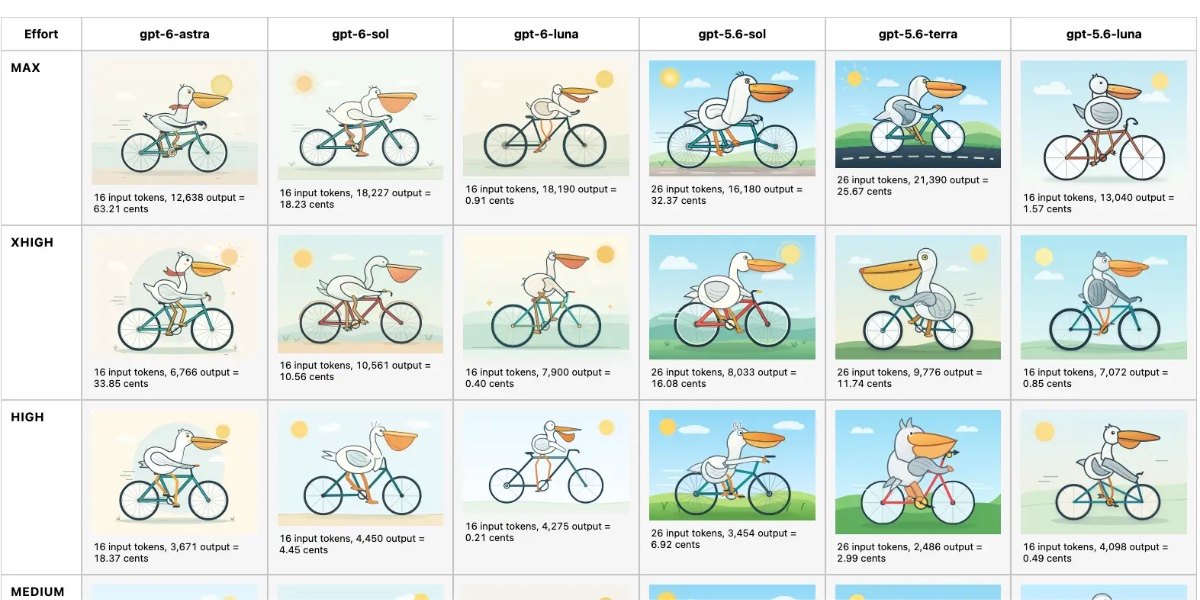
Builders running long agentic conversations stand to see meaningful cost reductions even before accounting for quality improvements. When cached tokens make up 90% or more of input, the 60% cache-read reduction from $0.50/M to $0.20/M is the dominant savings driver — far more impactful than the 20% cut on fresh input tokens. Anthropic described the model as communicating more clearly and working across every effort level, which matters for pipelines that switch reasoning depth dynamically.
The stated quality parity with Fable 5.1 at a lower cost makes Opus 5.5 worth evaluating as a drop-in for cases where Fable 5.1 was previously the target but cost was a barrier. One documented limitation: running Opus 5.5 at "max" thinking level caused the model to consume all 128,000 output tokens in extended reasoning before producing any final response — consistently, across multiple attempts, each taking close to 20 minutes and costing $2.56. Builders should treat "max" as effectively unusable until Anthropic addresses this and should verify behavior at lower effort settings before moving workloads that previously used Fable 5.1 on "max."
Advertisement
Tech Pulse Daily
Get tomorrow's pulse first
Join engineers who read Tech Pulse before stand-up. Free, weekday mornings.
How to get Claude Opus 5.5
Claude Opus 5.5 is available through Anthropic's API and in Claude Code. To update Claude Code and switch to the model, run:
claude updateThen switch to Opus 5.5 inside a session:
/model claude-opus-5-5To launch Claude Code pinned to Opus 5.5 from the command line:
claude --model claude-opus-5-5To set it as the default model so every new session starts on Opus 5.5:
claude config set model claude-opus-5-5For direct API access, point requests at claude-opus-5-5 in the model field. Builders migrating from Opus 5.0 can swap the model string without any other change, as the API surface is identical. Verify cache-read savings are materializing in your usage dashboard — the change from $0.50/M to $0.20/M for cached input should be immediately visible in per-request breakdowns for long-context pipelines.
What to watch after Claude Opus 5.5
Anthropic confirmed Sonnet 5.5 and Haiku 5.5 are coming. Haiku 4.5 currently sits at $1/$5 per million tokens — ten times the price of GPT-6 Luna at $0.10/$0.50. Whether Anthropic can price Haiku 5.5 competitively enough to retain the budget-tier workloads that GPT-6 Luna now reaches at a fraction of the cost is the most consequential follow-on question for developers evaluating the full Claude 5.5 lineup.
The "max" thinking failure mode in Opus 5.5 also deserves a patch watch. Fable 5.1 on "max" did not reproduce the same runaway-reasoning behavior, so the issue appears specific to Opus 5.5 rather than a platform-wide regression. GPT-5.6 Sol's scheduled November price increase will shift competitive positioning again, and Grok 4.7's $2/$6 input/output rate — which looked aggressive at launch — now sits at the same input price as GPT-6 Sol with GPT-6 Sol beating it on output. Builders picking a default reasoning model in the $2–$4/M input range today should benchmark Opus 5.5 against GPT-6 Sol before committing, as the gap between them has narrowed significantly from where it stood at yesterday's open.

Author
Dillip Chowdary
Writes Tech Bytes coverage of AI, engineering, and the tools that actually ship. Editor of Tech Pulse Daily.
Related on Tech Bytes
Airbnb widens access to GPT-6 Astra and OpenAI frontier models
Read →
Use open weight models as your AI coding agent with Amazon Bedrock
Read →
OpenAI just upgraded ChatGPT Voice in three ways
Read →
Introducing Support for Local AI Models in the Antigravity SDK
Read →
Today's Tech Pulse briefing
Full briefing →
Advertisement