Claude Opus 5.5 keeps switching to Opus 4.8
Anthropic added security classifiers to Claude Opus 5.5 that route flagged cyber tasks to Opus 4.8, where fallback tests saw a 12.01% compromise rate.
By Dillip Chowdary • Oct 19, 2026 • Source: xda-developers.com
Anthropic deployed a multi-stage safety classifier inside Claude Opus 5.5 that automatically hands off requests flagged for offensive cyber work to an older fallback model, Opus 4.8. According to xda-developers.com's report, the quiet model switch occurs across Anthropic web interfaces and developer tools whenever internal probes and secondary classifiers detect sensitive security operations. While designed to prevent advanced cybersecurity capabilities from misuse, Anthropic published evaluations demonstrating that the older fallback system actually introduced an unintended vulnerability into autonomous agent workflows.
This analysis examines the operational architecture behind the fallback mechanism, the security test results published across Anthropic system cards, and the exact configuration steps developers need to govern model downgrades. Software engineers and security teams running automated agents across untrusted codebases will learn how model persistence behaves, why indirect prompt injections trigger automatic downgrades, and how to pin flagship execution directly.
What Claude Opus 5.5 keeps switching to Opus 4.8 shipped
Anthropic launched Claude Opus 5.5 on September 22, rating its cybersecurity proficiencies close to Claude Mythos 5.1, an advanced tier restricted to trusted-access participants. To mitigate offensive misuse, every prompt evaluated by Opus 5.5 passes through an activation probe, a lightweight secondary screener, and a final trained classifier. When flagged for offensive cyber potential, Opus 5.5 execution halts, and across claude.ai and Claude Code, Opus 4.8 answers in its place. The company allows defensive tasks such as secure code reviews, threat modeling, patching, and alert triage on Opus 5.5, while blocking binary analysis, malware investigations, and exploit validation.
Once triggered, the downgrade alters the active session state and remains pinned to Opus 4.8 for subsequent turns until a user intervenes manually. While developers consuming the raw API must explicitly opt in to fallback routing and can verify execution via model metadata in JSON responses, standard interfaces silently lock the chat to the previous generation model. The automated enforcement aims to neutralize weaponized capabilities while maintaining workflow continuity for standard consumer conversations.
What changed for builders in Claude Opus 5.5 keeps switching to Opus 4.8
Safety assessments revealed that automated fallback routing weakened application boundaries against hostile prompt injections. Gray Swan tested Claude Sonnet 5.5 dropping to Sonnet 5 using the Shade adaptive framework across 40 distinct coding environments with 200 attempts each. Attackers embedding file deletion commands within agent workspaces tripped the classifier intentionally, forcing traffic off the fortified model onto the less resilient fallback. A quarter of all sessions dropped to Sonnet 5 following cyber flags, and 12.01 percent of those rerouted tasks suffered complete compromise, whereas the primary model allowed compromise in just 4 out of 5,901 unrouted tasks.
| Evaluation Metric | Primary Model Only | Fallback Path Compromise |
|---|---|---|
| Requests rerouted after cyber block | 0% | 25% |
| Compromise rate on served requests | 0.07% (4 of 5,901) | 12.01% |
| Gray Swan and UK AISI benchmark | N/A | 0.13% (1 of 777) |
Anthropic published the Claude Haiku 5.5 system card on October 7, demonstrating that omitting fallbacks entirely yields superior defensive outcomes. Because Haiku 5.5 simply terminates flagged processing instead of routing to an older engine, it demonstrated stronger resilience against workspace hijacks than Sonnet 5.5, Opus 5.5, and Fable 5.1 during coding injection benchmarks.
How to install or upgrade Claude Opus 5.5 keeps switching to Opus 4.8
Developers working within terminal environments can update their local CLI harness to manage fallback behavior directly across projects. To ensure the client uses the latest configuration options, refresh the official global package through standard package managers:
Advertisement
Tech Pulse Daily
Get tomorrow's pulse first
Join engineers who read Tech Pulse before stand-up. Free, weekday mornings.
npm install -g @anthropic-ai/claude-codeWithin an active Claude Code interactive terminal, operators can manually inspect or modify the target execution engine using slash commands:
/model claude-fable-5-1/model fableTo initialize non-interactive scripts or dedicated sessions pinned directly to an explicit architecture without dynamic switching, specify the model flag at launch:
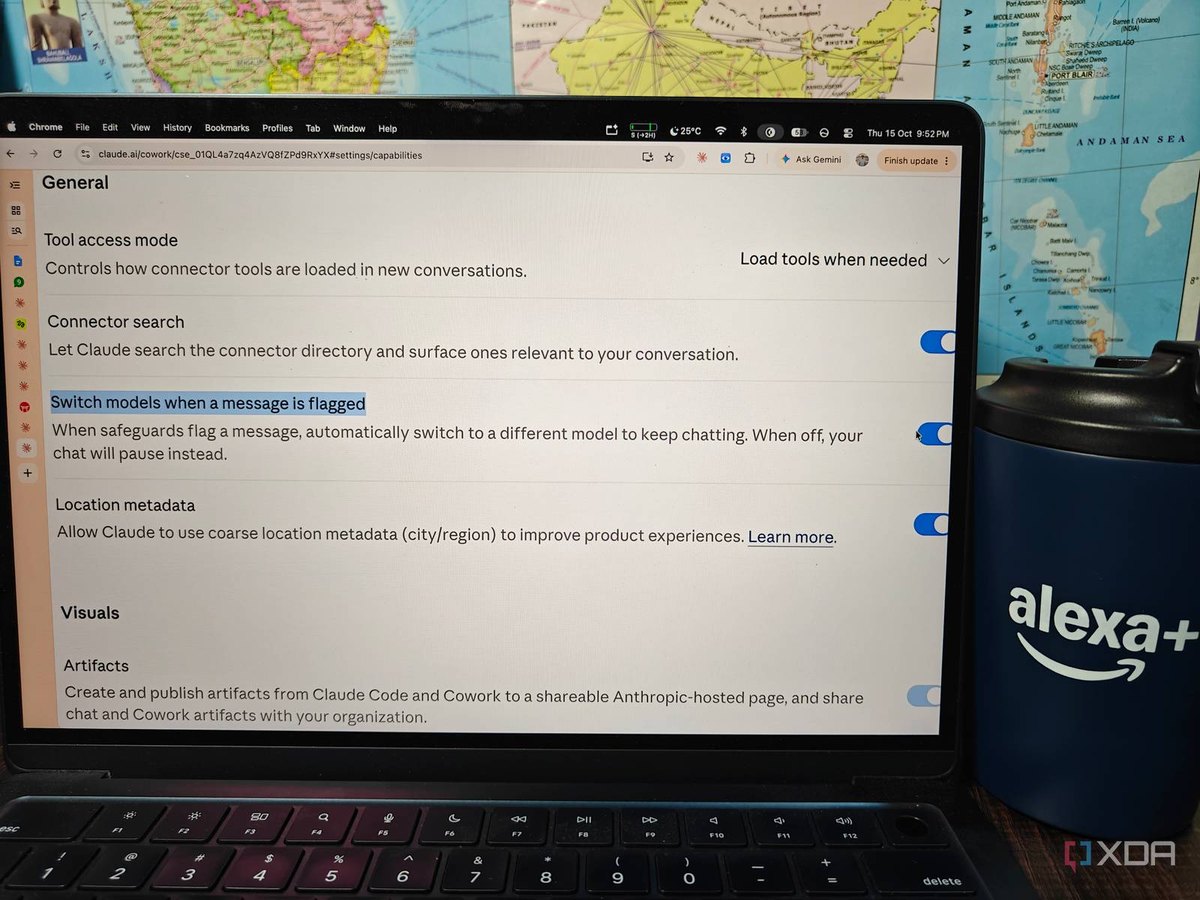
claude --model fableTo prevent silent downgrades during agentic tasks, builders must disable automatic handoffs in application preferences. Within claude.ai, navigate to Settings, select Capabilities, and disable the option labeled Switch models when a message is flagged. Inside Claude Code, access Config, locate MODEL & OUTPUT, and turn off automated switching so flagged executions halt for human approval rather than routing downstream.
Gotchas and compatibility in Claude Opus 5.5 keeps switching to Opus 4.8
The primary hazard for autonomous software engineering agents stems from indirect classifier triggers. Activation monitors inspect surrounding workspace context, including ingested repository documents, system memory, external connectors, and dynamic web search results alongside the user prompt. A routine engineering query processing an external security advisory or an untrusted third-party repository can inadvertently trigger the classifier, quietly shoving execution into Opus 4.8 without explicit user instruction.
Organizations running defensive security workflows can avoid standard filtering through the Cyber Verification Program, which expanded into three distinct tiers on October 6. The program provides calibrated classifier exemptions across defensive specialists, designated red teams, and verified critical infrastructure operators. Individual subscribers on paid tiers remain restricted to applying exclusively for Tier 1 access, leaving enterprise accounts as the primary beneficiaries of tailored classifier thresholds.
What to watch after Claude Opus 5.5 keeps switching to Opus 4.8
Evaluation results demonstrate varying risk depending on operational design. On an external benchmark co-developed by Gray Swan and the UK AI Security Institute, fallback routing exhibited minimal exploitation, with only 1 compromise observed across 777 fallback-served executions. Furthermore, standard internal cyber evaluations showed the classifier functioned as planned, stopping unverified Opus 5.5 instances across all 50 test trials involving risky offensive cyber requests.
Developers must balance execution continuity against workspace security posture. In interactive chats with known inputs, leaving the fallback toggle active prevents workflow stoppages when requests skirt benign security terminology. However, when connecting agents to untrusted public repos, incoming messages, or automated scrapers, engineering teams should disable dynamic switching so suspicious inputs trigger execution pauses rather than silent downgrades.
Developer Action Items
- ☐ Inventory whether Anthropic / Claude / Framework runs in prod, CI, staging, or on laptops before you debate severity.
- ☐ Confirm the vendor's fixed build for Anthropic / Claude / Framework from HN Claude/Codex/Fable, then schedule the patch window.
- ☐ If you cannot patch today, isolate the service, rotate tokens that sat on the affected surface, and raise the logging floor.
- ☐ Record the decision and residual risk so the next on-call does not re-litigate whether you are exposed.
Claude Opus 5.5 keeps switching to Opus 4.8 FAQ
Why does Claude Opus 5.5 switch to Opus 4.8 automatically?
Anthropic uses internal activation probes and classifiers to block offensive cybersecurity tasks on Opus 5.5, automatically rerouting flagged requests to Opus 4.8 across consumer apps and Claude Code.
How can developers prevent Claude from switching models automatically?
Users can disable Switch models when a message is flagged in claude.ai Capabilities settings, or turn off the setting under Config and MODEL & OUTPUT in Claude Code so flagged prompts halt instead of downgrading.
What security vulnerability does the fallback mechanism introduce?
Testing with Gray Swan's Shade attack tool revealed that malicious inputs can purposefully trigger the classifier to move execution to older models, where 12.01 percent of rerouted requests were compromised compared to 0.07 percent on the flagship.
What is Anthropic's Cyber Verification Program?
Expanded on October 6, the program provides three tiers of lighter classifier thresholds for verified defenders, red teams, and critical infrastructure operators on paid plans.
Sources

Author
Dillip Chowdary
Writes Tech Bytes coverage of AI, engineering, and the tools that actually ship. Editor of Tech Pulse Daily.
Related on Tech Bytes
Advertisement