Coordinated disturbances haunt grids worldwide. Here’s how researchers
Researchers at Forschungszentrum Jülich found that uncoordinated battery polling routines cause synchronized 60-second power grid frequency drops worldwide.
By Dillip Chowdary • Nov 08, 2026 • Source: TechCrunch
Researchers at Forschungszentrum Jülich in Germany, led by Dirk Witthaut, identified the physical mechanism behind persistent electrical grid anomalies that cause frequency drops every 60 seconds across continents, according to TechCrunch's report. Germany's largest transmission system operator, Tennet Germany, initially brought the recurring frequency dips to the research team after engineers observed the identical pattern appearing on power grids in Europe, Australia, Malaysia, and the United States.
This investigation explains why interconnected electrical networks experience synchronized drops on minute boundaries and outlines the risks facing power infrastructure as battery installations multiply. Grid operators, facility architects, data center engineers, and power system regulators can trace the precise operational trigger to internet-connected battery management systems and uncoordinated power polling routines.
Coordinated disturbances haunt grids: what actually changed
Engineers historically attributed ultra-low frequency oscillations on power systems to mechanical resonance in hydropower generation facilities. Every rotating turbine vibrates at specific speeds, and when those movements match the resonant frequency of an electrical network, control systems can amplify small fluctuations into larger instabilities. Witthaut and his team evaluated Scandinavian grid control models to see whether hydro generation caused the 60-second drop, but mechanical resonance naturally disperses over time rather than repeating indefinitely without interruption.
The researchers recognized that persistent synchronization required an internal clock mechanism. To capture high-resolution local signals, the team deployed more than 80 smart power quality meters across the Jülich research campus, monitoring medium-voltage lines, low-voltage circuits, transformers, solar arrays, and high-performance computing centers. The sensors sampled voltage, current, frequency, and real power every three seconds, revealing identical minute-aligned power spikes originating at transformers tied directly to battery energy storage systems and uninterruptible power supplies.
Coordinated disturbances haunt grids: how it works
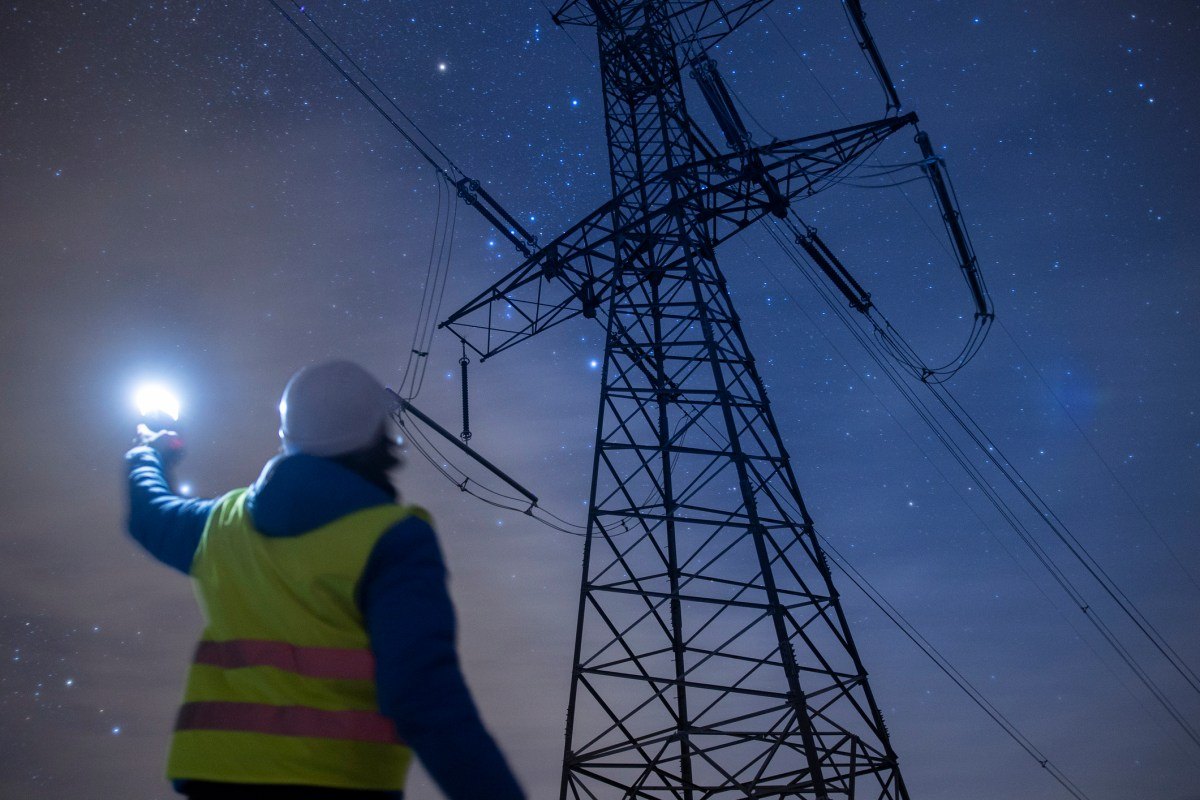
Stationary commercial battery systems, ranging from small office equipment backups to massive data center UPS fleets and grid-scale storage units, perform automated state-of-charge checks on exact 60-second cycles. Because these stationary battery systems maintain active internet connections, internal hardware clocks synchronize to precise network time protocol standards across independent facilities. When an individual battery evaluates its charge state, the resulting power draw remains tiny, but millions of simultaneous measurements create an aggregated load spike that drags down the wider electrical frequency.
Field data collected across Ireland demonstrated how rapid battery adoption compounds the physical phenomenon. Data center facilities accounted for 18% of Ireland's total electrical consumption by 2022, concentrating enormous fleets of synchronized backup power hardware within a single national transmission network. Between 2016 and 2021, the recurring minute-by-minute frequency sag on the Irish system expanded fourfold, jumping from 3 milli-Hertz to 12 milli-Hertz, with recent automated measurements recording single drops surpassing 20 milli-Hertz.
Advertisement
Tech Pulse Daily
Get tomorrow's pulse first
Join engineers who read Tech Pulse before stand-up. Free, weekday mornings.
Coordinated disturbances haunt grids: why it matters
Transmission system stability depends on maintaining generation and load within strict frequency tolerances to protect synchronous equipment from mechanical stress. On Ireland's 50 Hertz grid, transmission managers design infrastructure to handle deviations within 200 milli-Hertz, while preferring to restrict regular operational swings to 100 milli-Hertz. Although an isolated 20 milli-Hertz sag remains inside allowable safety margins, grid operators juggle multiple concurrent disturbances, and stacking load events during existing strain can push transmission assets toward automatic trip thresholds or cascade into blackouts.
Beyond immediate grid reliability hazards, unmanaged oscillations place direct wear on utility generation hardware. Unchecked frequency swings damage turbine shafts, control linkages, and power generation assets, particularly within large hydropower stations where mechanical resonance easily compounds electrical fluctuations. If control room operators misinterpret the source of synchronized sags or apply incorrect counter-responses, unexpected control inputs can destabilize voltage regulators and damage physical utility components.
Coordinated disturbances haunt grids: who is affected
Transmission operators managing national and regional power infrastructure across Europe, North America, Southeast Asia, and Australia bear the operational burden of balancing these predictable electrical sags. In markets like Ireland, where server farms and digital infrastructure claim approaching a fifth of total grid capacity, utility engineers face increasingly steep minute-boundary dips. Equipment operators running critical computing sites must coordinate with grid partners as local battery installations unintentionally create regional transmission challenges.
Consumer electronics and distributed internet-of-things hardware introduce broader exposure beyond institutional battery facilities. Testing conducted by the Jülich team on smart ovens and Raspberry Pi compute clusters revealed periodic consumption pulses capable of generating recurring ripples across local circuits. Because recent market research indicates less than 3% of consumer IoT hardware runs current firmware, unpatched connected devices represent an enduring source of background timing fluctuations that cannot easily be recalled or reconfigured.
Coordinated disturbances haunt grids: what to watch
Resolving the minute-boundary frequency drop requires software modifications rather than expensive physical hardware replacements. The Jülich research group recommends that storage hardware developers, data center operators, and uninterruptible power supply manufacturers implement deliberate randomization schedules into internal state-of-charge polling routines. Shifting battery health diagnostic checks across staggered second intervals eliminates simultaneous power spikes and flattens cumulative demand back into a continuous, imperceptible baseline across regional distribution lines.
Regulatory oversight will determine how quickly equipment manufacturers adopt coordinated testing standards across varied jurisdictions. Energy oversight commissions can enforce local compliance within domestic grid interconnections, but global equipment supply chains demand international standards to prevent imported hardware from reintroducing synchronized behavior. As commercial facilities install larger battery banks to support growing compute infrastructure, technical coordination across manufacturers, utility regulators, and system operators will decide whether the widespread 60-second drop resolves permanently.
Developer Action Items
- ☐ Verify the claim on the official Coordinated disturbances haunt grids page (or TechCrunch), not from this recap alone.
- ☐ Name the surface that moved — API, policy, model, hardware, or commercial terms — before you Slack the thread.
- ☐ Assign one owner a day to read the primary material and decide: this-sprint, this-quarter, or noise.
- ☐ Do not change production on day-one coverage. Watch the vendor changelog and one independent write-up first.
Coordinated disturbances haunt grids FAQ
What causes power grids around the world to drop frequency every 60 seconds?
Internet-connected uninterruptible power supplies and stationary batteries synchronize their internal clocks online and execute state-of-charge health checks at the exact same second, creating combined power spikes that dip regional grid frequency.
How large are the synchronized frequency drops observed on electrical networks?
On the Irish grid, where data centers represented 18% of electricity demand by 2022, the minute-boundary drops increased from 3 milli-Hertz in 2016 to 12 milli-Hertz in 2021, with recent drops exceeding 20 milli-Hertz.
How can manufacturers and data center operators prevent these electrical disturbances?
Equipment manufacturers can deploy software updates that introduce timing randomization into battery diagnostic schedules instead of polling state-of-charge precisely on the minute.
Sources

Author
Dillip Chowdary
Writes Tech Bytes coverage of AI, engineering, and the tools that actually ship. Editor of Tech Pulse Daily.
Related on Tech Bytes
Advertisement