Dark Matter Might Have Its Own Periodic Table of Invisible Particles
Five physicists calculate that mirror-sector particles could form unstable dark hydrogen and carbon-like nuclei, so dark matter may need a periodic table.
By Dillip Chowdary • Nov 29, 2026 • Source: Wired
At a glance
- Matter share
- About 85 percent of all matter
- Research team
- Five physicists
- Named physicist
- Zackaria Chacko
- Theory
- Mirror Twin Higgs
- Dark hydrogen
- Unstable in the researchers' model
- Status
- Theoretical; no atoms observed
The Wired piece has a clear sequence, so the five sections will follow that order and use only its names and numbers.Dark matter accounts for approximately 85 percent of all matter in the universe, and a team of five physicists is exploring whether that share could form nuclei, atoms, and elements of its own. Their recent preprint, described in Wired's report, extends the Mirror Twin Higgs idea through Zackaria Chacko, one of that theory's creators. Under certain conditions, the calculations suggest mirror-sector particles could bind into dark equivalents of known elements, from the simplest cases to structures as complex as carbon. The account first appeared on WIRED en Español and was translated from Spanish.
This piece is for readers who follow dark-matter research and want the classification argument in one place. It covers the gravitational evidence, the decades-long question of one particle versus several, the mirror sector proposed two decades ago for the Higgs boson mass, and the calculation that dark hydrogen would be unstable. It also keeps the researchers' stated limit: none of these atoms has been observed, and some physicists doubt such structures can form.
01Eighty-five percent, still unidentified
Dark matter accounts for approximately 85 percent of all matter in the universe, though that is about all that is really known about it. Scientists believe it because of the gravitational effects it has on galaxies and other cosmic structures. Because it does not otherwise interact with ordinary matter, what it is made of has remained difficult to determine.
For decades, scientists have tried to determine whether dark matter consists of a single type of particle or of several particles with different properties and thus different interactions with the surrounding world. Earlier this year, scientists found the most convincing evidence of a dark matter particle yet. If the several-particle scenario is true, it is possible that more particles could still be found.
The several-particle picture also raises a further question. If there are a variety of dark particles, could they interact and combine with one another, just as the particles we know do, to form their own dark atoms and molecules? If that were the case, the dark universe could be much more complex than researchers had initially imagined.
02Patterns that once predicted elements
Humanity has already faced a similar challenge in trying to understand the diversity of ordinary matter. To many introductory chemistry students, the periodic table can seem like an odd way to organize information, yet it is one of the most ingenious tools developed for the physical world. The classification system does not just order the elements.
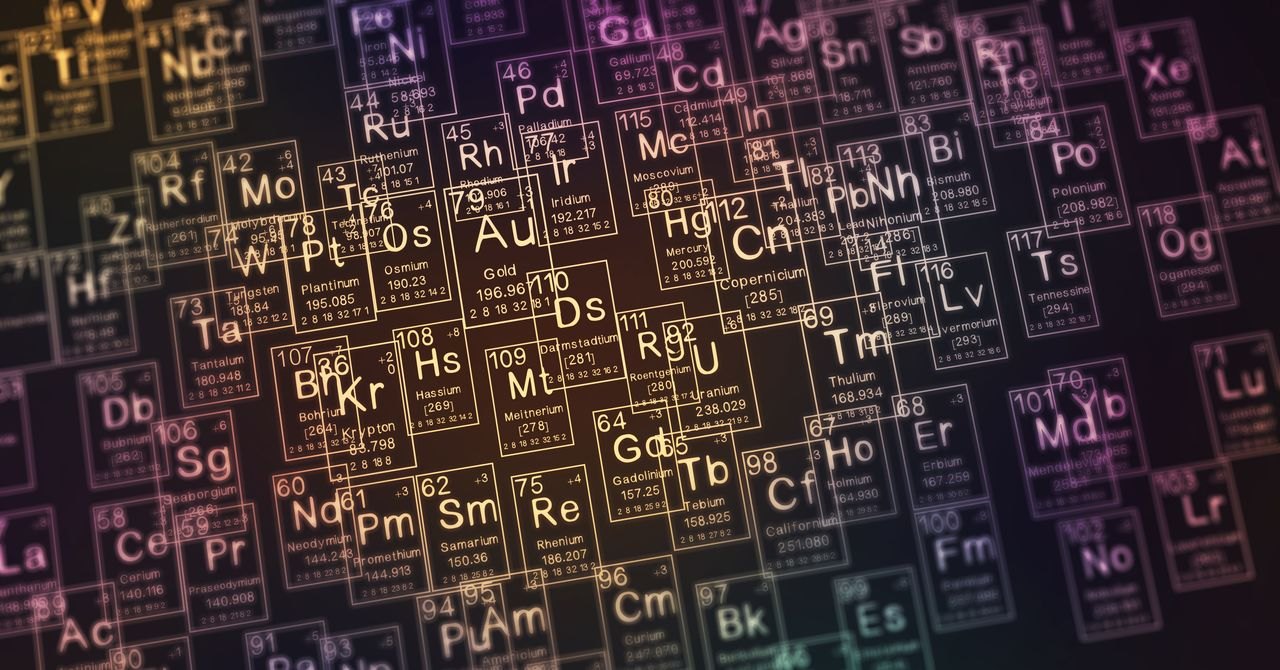
It reveals patterns among their properties that even helped predict the existence of other elements that had not yet been discovered. A team of five physicists is exploring a scenario in which dark matter could form different classes of nuclei and atoms, governed by their own rules. Their research suggests that something similar to a periodic table may be needed to understand the organization of dark matter.
03Mirror sector and Higgs mass
Advertisement
Tech Pulse Daily
Get tomorrow's pulse first
Join engineers who read Tech Pulse before stand-up. Free, weekday mornings.
The hypothesis at the heart of this research seems straight out of science fiction. The researchers propose that our universe would contain a kind of mirror sector, where particles that barely interact with visible matter have their own forces and can interact with one another. The idea is not new, and it is quite serious.
The Mirror Twin Higgs was proposed two decades ago as a possible solution to a problem related to the mass of the Higgs boson. According to this theory, mirror particles would help offset certain quantum effects that might otherwise cause its mass to be much greater than what we observe. Although the existence of these particles has never been proven, the proposal offered an ingenious way to address the problem without requiring all new particles to be visible to detectors.
04Dark equivalents up to carbon
Zackaria Chacko, one of the creators of the Mirror Twin Higgs theory, is part of this new investigation that extends the hypothesis into the dark-matter puzzle. Along with several collaborators, he explores in this recent preprint what would happen if particles from this hypothetical mirror sector could combine with one another. Those combinations would form nuclei, atoms, and a variety of dark elements.
Their calculations suggest that, under certain conditions, these particles could combine to form dark equivalents of some of the elements we know, ranging from the simplest to others as complex as carbon. This would not be an exact copy of our matter. The dark particles would have different masses and properties, which would also change the rules governing how they bond, what structures they can form, and which ones remain stable.
For example, in the researchers' model, dark hydrogen atoms would be unstable and could not survive as those in our universe do. This is a striking difference when we consider that hydrogen is the simplest and most abundant element in ordinary matter.
| Contrast | Ordinary matter | Mirror-sector model |
|---|---|---|
| Hydrogen | Simplest and most abundant element | Unstable; could not survive as in our universe |
| Element range | Elements we know | Dark equivalents from the simplest to carbon |
| Likeness | Our matter | Not an exact copy |
| Bonding and stability | How the elements we know bond and hold | Different masses and properties change both |
05Dark periodic table, still theoretical
If these dark elements were ever discovered, understanding the rules governing their formation would be essential for classifying them. A sort of dark periodic table could help bring order to that diversity, just as it did with the elements we know. Those rules would reflect different masses and properties, not a one-to-one copy of ordinary chemistry.
Note: For now, this all remains in the realm of theoretical physics. Researchers have not observed any of these atoms, and some doubt such structures could actually form. There is still plenty about dark matter that has yet to be discovered.
Frequently asked questions
How much of the universe's matter is dark matter?
Dark matter accounts for approximately 85 percent of all matter in the universe. Scientists believe it because of gravitational effects on galaxies and other cosmic structures. It does not otherwise interact with ordinary matter, which has made its composition hard to determine.
What is the Mirror Twin Higgs?
The Mirror Twin Higgs was proposed two decades ago as a possible solution to a problem with the mass of the Higgs boson. Mirror particles would offset quantum effects that might otherwise make that mass much greater than what is observed, without requiring every new particle to be visible to detectors. The existence of those particles has never been proven.
Who is Zackaria Chacko on this paper?
Zackaria Chacko is one of the creators of the Mirror Twin Higgs theory and part of the new five-physicist investigation. With several collaborators, he explores in a recent preprint whether mirror-sector particles could combine into nuclei, atoms, and dark elements.
Could dark matter form atoms as complex as carbon?
Under certain conditions, the calculations suggest dark equivalents of some known elements, from the simplest up to others as complex as carbon. They would not be an exact copy. Different masses and properties would change bonding, the structures that can form, and which of those structures remain stable.
Has anyone observed these dark atoms?
No. The work remains in theoretical physics. Researchers have not observed any of these atoms, and some doubt such structures could actually form.
Sources

Author
Dillip Chowdary
Writes Tech Bytes coverage of AI, engineering, and the tools that actually ship. Editor of Tech Pulse Daily.
Related on Tech Bytes
Advertisement