Decision models take 26% of requests; Anthropic now wins new teams 2:1
Decision models captured 26 percent of production requests on Vercel AI Gateway in October 2026 while representing only 0.53 percent of total platform spend.
By Dillip Chowdary • Nov 09, 2026 • Source: Vercel Blog
Vercel reported in Vercel Blog's report that lightweight decision models surged to 26 percent of all production gateway requests within six weeks of arrival, while accounting for just over half a cent of every dollar spent. The data draws from more than 100 trillion tokens routed monthly across language, decision, voice, image, and video models between production applications and AI labs. Across the gateway, OpenAI and Anthropic now reach a nearly identical share of paying teams, though new teams entering the system in October selected Anthropic by nearly two to one.
This breakdown details how production software architectures are decoupling routine evaluations from heavy generative workflows, tracking usage patterns across startups and enterprise accounts through October 2026. The findings provide engineering leads, product architects, and infrastructure teams with direct benchmark data on token economics, model half-lives, multi-modal adoption rates, and provider distribution.
01Lightweight judgment calls capture massive request share
Production architectures are separating generative tasks from discrete judgment calls, establishing decision models as a dedicated architectural layer alongside rigid rules and full language models. Decision models classify, score, and select between structured options rather than generating freeform text, operating at roughly one seventieth the cost per request of a text-generating model. Since their arrival on the gateway in mid-September, fifteen decision models from eight vendors have entered production, reaching nearly a third of all paid teams in October.
Because these models emit brief responses and maintain low token fees, their 26 percent share of total gateway requests translated to only 0.53 percent of overall customer spend. TypeSafe AI captured almost all of this volume through its Jev model, which received nearly four times Anthropic's total request volume on its own. For every single dollar spent on Jev, engineering teams spent 64 dollars on Anthropic models, and 11 percent of paid teams used decision models without making any generative calls.
Adoption scales directly with operational size, appearing in just over one in five teams running under 10 million tokens and nearly half of teams running between 100 million and 1 billion tokens. Among organizations processing more than 10 billion tokens a month, seven in ten teams deployed a decision model during October. Large organizations use more models overall, with the top 1 percent of spenders deploying a median of 29 different models compared to a single model for the bottom tenth.
02Modular voice pipelines drive enterprise conversation growth
Voice model adoption expanded by 161 percent between July and October, rising from 4 percent to roughly 11 percent of paid accounts. Growth came from existing customers adding audio features as well as new signups, with voice usage among teams paying in both months climbing from 5 percent to 14 percent. Usage depth also multiplied, as the cohort of teams sending at least 100 voice requests monthly grew fivefold, while 60 percent of September voice teams returned in October.
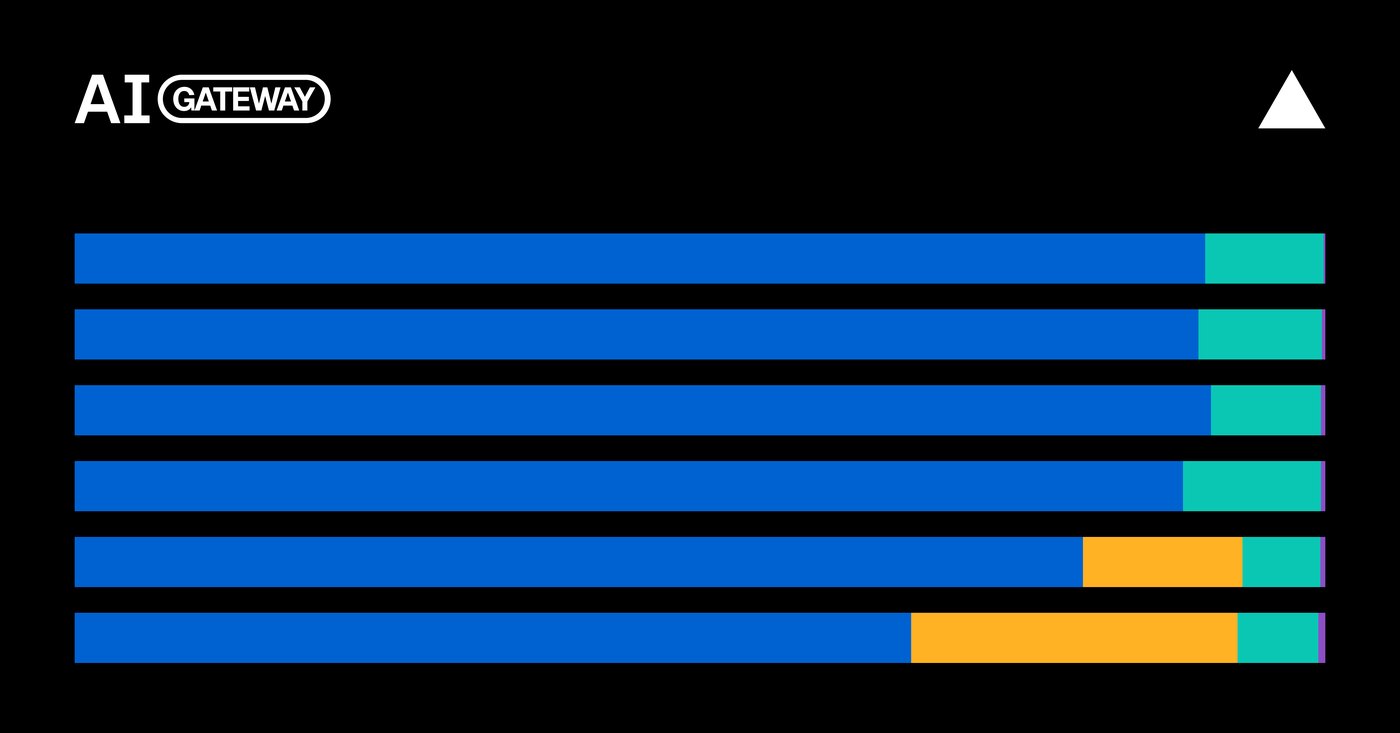
Most development teams assemble voice interactions by chaining specialized models together around a central text model rather than using single end-to-end systems. In July, about a quarter of voice teams used all-in-one models while one in six assembled separate components, but by October those proportions fully inverted. Speech-to-text model usage nearly tripled over the period, while text-to-speech volume more than tripled.
Engineering teams primarily use voice as an additional interface layer on top of their established applications and autonomous agents. The preferred language models remain anchored in the middle of the workflow, allowing developers to attach modular speech-to-text on the intake side, text-to-speech on the output side, or both simultaneously.
Advertisement
Tech Pulse Daily
Get tomorrow's pulse first
Join engineers who read Tech Pulse before stand-up. Free, weekday mornings.
03Anthropic captures onboarding volume while OpenAI expands spend
OpenAI and Anthropic reached parity in customer reach by October, with OpenAI deployed across 55 of every 100 paid teams and Anthropic deployed across 54. In December, OpenAI held a wide lead at 70 teams per 100 compared to Anthropic's 48. Anthropic grew its reach among longstanding accounts from roughly half to two-thirds, while OpenAI grew from three-quarters to four-fifths over the same span.
Anthropic drove most of its market share expansion by capturing new teams entering the gateway, winning new accounts by nearly two to one over OpenAI in October. Among the highest-spending tier, more than nine in ten accounts within the top 1 percent run both providers simultaneously. Competition at the enterprise scale has transitioned from account acquisition to securing total token workload.
OpenAI expanded its share of total gateway expenditures by two-thirds, rising from roughly 9 cents of every dollar in December to nearly 15 cents in October. Anthropic retained the larger expenditure footprint across the platform, though its overall share of gateway spending halved from about 64 cents to 32 cents across that ten-month window.
04Sixty-day replacement cycles accelerate across language models
Development teams now replace active language models at unprecedented speed, directing more than half of October's language-model requests to models less than 60 days old. Prior to September, models younger than two months had never accounted for more than 30 percent of total request volume. Within individual model families, providers release replacement versions every 61 days at the median.
Usage curves for individual models peak within four weeks of launch, followed by rapid traffic abandonment. One month after a typical model reaches its usage peak, 75 percent of the teams running it have migrated to different options, even when no successor has arrived within that specific family. These teams remain active on the gateway while routing traffic to alternate models and providers.
Among teams running at least 10 million tokens monthly, roughly half changed their primary model during October, with 80 percent moving to a newer release and 60 percent switching providers entirely. While 70 percent of these teams retained a model at least ten months old in their infrastructure, that legacy model handled less than 3 percent of their total token volume.
05Multi-modal expansion pushes Opus and specialized visual generators
Anthropic models secured four of the six most widely used slots across the gateway in October, led by Sonnet 5.5 at 26 percent of paid teams, Haiku 5.5 at 22 percent, Haiku 4.5 at 20 percent, and Opus 5.5 at 18 percent. The remaining two positions in the top six belonged to TypeSafe AI's Jev at 28 percent and OpenAI's GPT-6 Luna at 19 percent. Opus 5.5 ranked as the single largest model by spend during its first full month, capturing one in seven dollars platform-wide.
Visual generation reached record gateway utilization in October, with about a third of top 1 percent spenders deploying an image model, up from a quarter in July. Video model adoption in that top spending tier rose from one in ten teams to one in six. Enterprise accounts showed the fastest rate of media model integration.
OpenAI's GPT-Image-2.5 Sunburst led image generation spending during its initial full month, followed by Flare and GPT-Image-2. In the video tier, ByteDance's Seedance 2.5 held the top spending position for the third consecutive month, outpacing Google's Veo 3.1 and Kuaishou's Kling 3.0.
Decision models take 26% of requests FAQ
What is a decision model and how much does it cost compared to a language model?
Decision models classify, score, and select between options instead of generating text, costing roughly one seventieth as much per request as standard language models.
How fast do engineering teams migrate away from AI models after launch?
A typical model reaches its peak usage within one month of release, and four weeks later, 75 percent of the teams using it at peak have switched to other models.
Which AI models captured the highest team adoption and spend in October 2026?
TypeSafe AI's Jev reached 28 percent of paid teams while Anthropic's Sonnet 5.5 reached 26 percent, and Opus 5.5 led all models in total platform spend by capturing one in seven dollars.
What share of gateway requests do decision models handle?
Decision models handled 26 percent of all gateway requests in October 2026 while representing only 0.53 percent of total customer spend.
Sources

Author
Dillip Chowdary
Writes Tech Bytes coverage of AI, engineering, and the tools that actually ship. Editor of Tech Pulse Daily.
Related on Tech Bytes
Advertisement