Elephants Found to Be Increasingly Isolated Leading to Fractured Social
A 12-year UC San Diego study of 440 wild female elephants revealed that population turnover pushed herds past a tipping point into fractured social networks.
By Dillip Chowdary • Nov 15, 2026 • Source: today.ucsd.edu

Researchers at the University of California San Diego School of Biological Sciences published a 12-year field study on wild Asian elephants on the cover of the November 12 issue of Science. According to today.ucsd.edu's report, the team analyzed longitudinal data tracking more than 440 wild female Asian elephants in Sri Lanka and found that declining populations push animal societies across a structural tipping point into fragmented social networks.
This analysis breaks down the demographic shifts recorded across Udawalawe National Park, the network dynamics that dismantle communal cohesion, and how field biologists use social pattern analysis to track threatened species. It provides wildlife managers, computational ecologists, and conservation policymakers with a quantitative framework for identifying environmental degradation before population collapses become irreversible.
01Female Demographic Shifts in Udawalawe
The research team tracked more than 440 wild female Asian elephants over 12 continuous years inside Udawalawe National Park in Sri Lanka. Postdoctoral researcher Anastasia Madsen led the study from the laboratory of Associate Professor Shermin de Silva in the Department of Ecology, Behavior and Evolution. The scientists examined long-term population turnover to pinpoint how steady individual losses alter group structures.
The long-term census recorded accelerating departures and suspected deaths among mature females alongside a sustained drop in juvenile recruitment across the population. When older matriarchs and adult peers exited the park system, outside individuals failed to immigrate and fill the open roles. The continuous demographic deficit steadily removed central interaction partners throughout the entire sanctuary.
Turnover accumulated slowly across successive seasons before triggering sudden fractures across the broader community network. The researchers observed that while overall elephant counts declined gradually, the structural cohesion among survivors deteriorated abruptly. This divergence showed that routine demographic monitoring of gross headcounts can overlook severe disruptions occurring within animal social relationships.
02Structural Thresholds in Animal Social Networks
Mathematical modeling of the demographic data revealed that the population crossed a distinct social tipping point as regional density decreased. As female numbers dropped, surviving elephants transitioned from large, densely interconnected communities into smaller and disconnected clusters. The loss of community density altered how individual animals maintained contact across shared terrain.
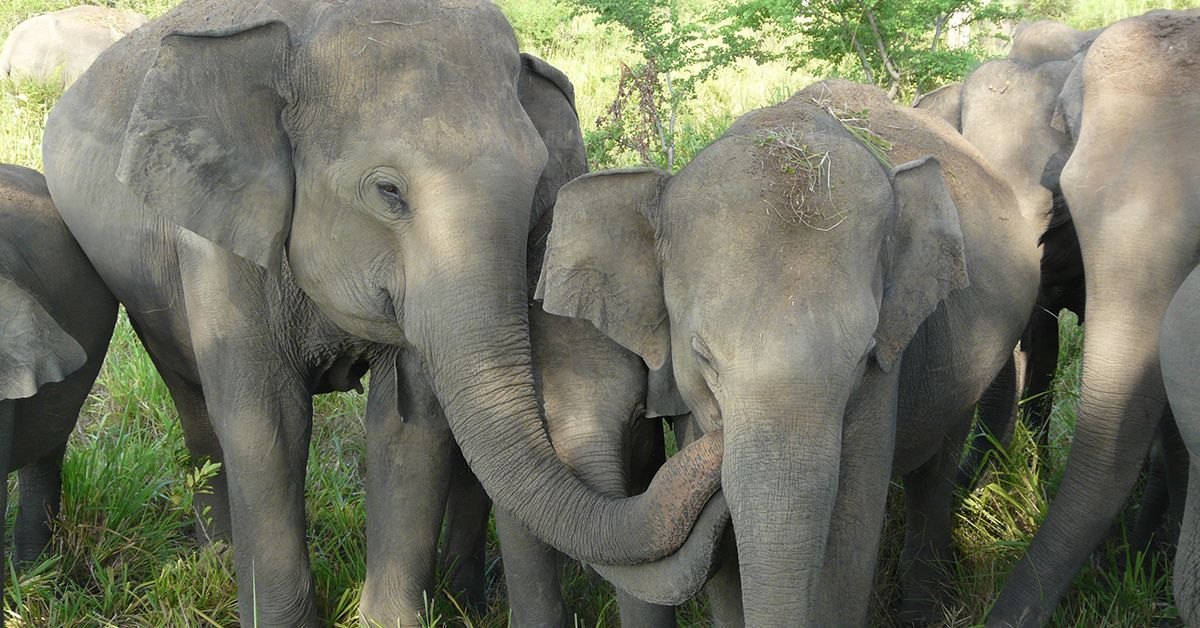
Madsen explained that survivors did not simply carry fewer relationships due to lower overall headcounts in the park. Instead, surviving individuals actively altered their behavioral patterns and reorganized their social networks into smaller, isolated units. This systemic rewiring produced a disjointed social environment where separate groups no longer maintained regular cross-group interactions.
Once a wild population crosses this systemic threshold, returning to historic social connectivity becomes exceptionally difficult. Madsen noted that gradual shifts can build quietly until an irreversible structural transition occurs. When community networks fragment beyond this threshold, surviving herds remain separated even if overall mortality rates temporarily stabilize.
Advertisement
Tech Pulse Daily
Get tomorrow's pulse first
Join engineers who read Tech Pulse before stand-up. Free, weekday mornings.
03Communal Foraging and Cooperative Calf Rearing
Female Asian elephants depend heavily on cooperative social bonds to locate food sources, share ecological knowledge, and protect calves. Shared social structures enable older females to transmit migration routes and foraging strategies to younger generations during severe droughts. Without large mutual networks, individual family groups face steep hurdles navigating resource variations across their native environments.
Calf survival rests directly on communal care provided by related adult females working within extended familial groups. As communities fracture into isolated pods, mothers lose vital allomothering support required to nurse, supervise, and guard calves from environmental hazards. These structural deficits reduce reproductive recruitment, reinforcing the demographic decline that initiated the network collapse.
Associate Professor Shermin de Silva, who also founded the conservation nonprofit Trunks and Leaves Inc., stressed that physical spatial proximity underpins animal resilience. De Silva observed that resilient communities require replacing lost interpersonal bonds across multiple generations. Without persistent shared space and reciprocal associations, wild populations lose the cooperative behaviors necessary to endure external pressures.
04Poaching Habitat Loss and Environmental Pressures
The elephant population faces persistent hazards from illegal poaching and fatal clashes with expanding human settlements around the park perimeter. Rapid agricultural development has encroached onto traditional elephant ranges across Sri Lanka, intensifying dangerous confrontations with rural farmers. These conflicts drive up mortality rates among mature adults while restricting herd mobility between protected corridors.
Ecological changes across the 119-square-mile national park have compounded pressure by diminishing local food and water supplies. Habitat fragmentation has cut off vital ecological corridors, preventing herds from migrating toward suitable seasonal vegetation. These compounded resource strains limit daily foraging success and force smaller family units to travel greater distances for subsistence.
Restricted physical connectivity directly limits the rate at which outside elephants can immigrate and replenish local kinship circles. When physical barriers block herd movements, natural demographic turnover cannot be balanced by incoming animals. Over time, these combined external stresses accelerate the loss of key matriarchs and undermine social stability across the entire sanctuary.
05Network Pattern Monitoring for Wildlife Conservation
The investigation was conducted by Anastasia E. Madsen, T.V.
Pushpakumara, U. Sameera Weerathunga, Devaka K.
Weerakoon, and Shermin de Silva. Their project received financial backing from the National Science Foundation under grant DBI-2305860 and the U.S.
Fish and Wildlife Asian Elephant Conservation Grants F11AP00258, F14AP00256, and F17AP00308. Additional resources came from the University of Pennsylvania, UC San Diego, and Trunks and Leaves Inc.
Madsen emphasized that analyzing social network metrics provides conservationists with an early warning system to identify hidden population distress. Traditional headcounts often miss the early stages of demographic decline because total numbers mask severed behavioral interactions. Network analysis detects organizational breakdowns well before absolute population counts collapse to critical levels.
These analytical methods will help conservationists model shifts across other social species confronting expanding human infrastructure and fragmented habitats. Identifying social tipping points allows environmental agencies to intervene through targeted habitat corridors before animal communities fragment permanently. Monitoring structural relationships gives wildlife managers practical tools to protect wild populations across shrinking natural reserves.
Elephants Found to Be Increasingly Isolated FAQ
What triggered the breakdown in elephant social networks at Udawalawe National Park?
A steady decline in elephant numbers caused by deaths, emigrations, and a lack of incoming individuals pushed the population across a critical demographic tipping point.
How many elephants were tracked in the UC San Diego study?
The researchers tracked more than 440 wild female Asian elephants over a 12-year period in Sri Lanka.
Why are social bonds critical for Asian elephant survival?
Female elephants rely on social network connections to navigate foraging grounds, share ecological knowledge, and cooperatively raise and protect their young.
What environmental factors contributed to the elephant population losses?
Poaching, human-elephant conflict, habitat fragmentation, and diminished food availability across the 119-square-mile park contributed to the decline.
Sources

Author
Dillip Chowdary
Writes Tech Bytes coverage of AI, engineering, and the tools that actually ship. Editor of Tech Pulse Daily.
Related on Tech Bytes
Advertisement