Exclusive details about Akai’s MPC Sample Key
Akai teased the 25-key MPC Sample Key with open-source software and CV outs, dropping the chop button in favor of melodic playback and an onboard looper.
By Dillip Chowdary • Oct 31, 2026 • Source: The Verge

Akai teased its upcoming MPC Sample Key on Instagram earlier this week, announcing plans to open-source the instrument software so the modding community can customize it freely. As revealed in The Verge's report, early images of the hardware showcase a standalone instrument focused on melodic sample playback. While Akai has not disclosed an official retail price or firm release date yet, the photos provide concrete details regarding its controls, connectivity, and performance capabilities.
This report examines the full feature set, hardware controls, and open-source software framework revealed for the MPC Sample Key. Electronic musicians, keyboardists, and sample-based producers preparing their studio setups will find key insights here into how the new keyboard departs from traditional pad-based grooveboxes. By analyzing the physical switches, internal audio components, and sound-shaping features shown in the images, this breakdown explains what melodic performers and modular synthesists can expect from Akai's portable keyboard.
What broke in Exclusive details about Akai’s MPC Sample Key
The leaked hardware photos reveal an abrupt departure from established groovebox conventions, most conspicuously through the total absence of the chop button. On the standard MPC Sample, slicing drum breaks represents a foundational function, yet Akai eliminated that dedicated control on the keyboard variant. In its place, the front panel incorporates buttons labeled chord and arp, dedicating interface space to harmonic voicings and melodic arpeggiation. This physical change confirms that Akai has discarded traditional breakbeat-chopping workflows in favor of pitched sample performance.
The onboard processing architecture also breaks away from the original instrument by dropping the Flex Beat effects suite in favor of an effect labeled Swarm. While Flex Beat provided rhythmic modulation on the earlier unit, the new Swarm engine introduces an uncharacterized processing mode directly to the panel. Furthermore, the unit replaces classic pad drumming ergonomics with a 25-key keyboard featuring dedicated pitch and modulation wheels plus octave buttons. These physical modifications shift the hardware away from rhythmic chopping toward melodic composition and pitch manipulation.
Who is exposed by Exclusive details about Akai’s MPC Sample Key
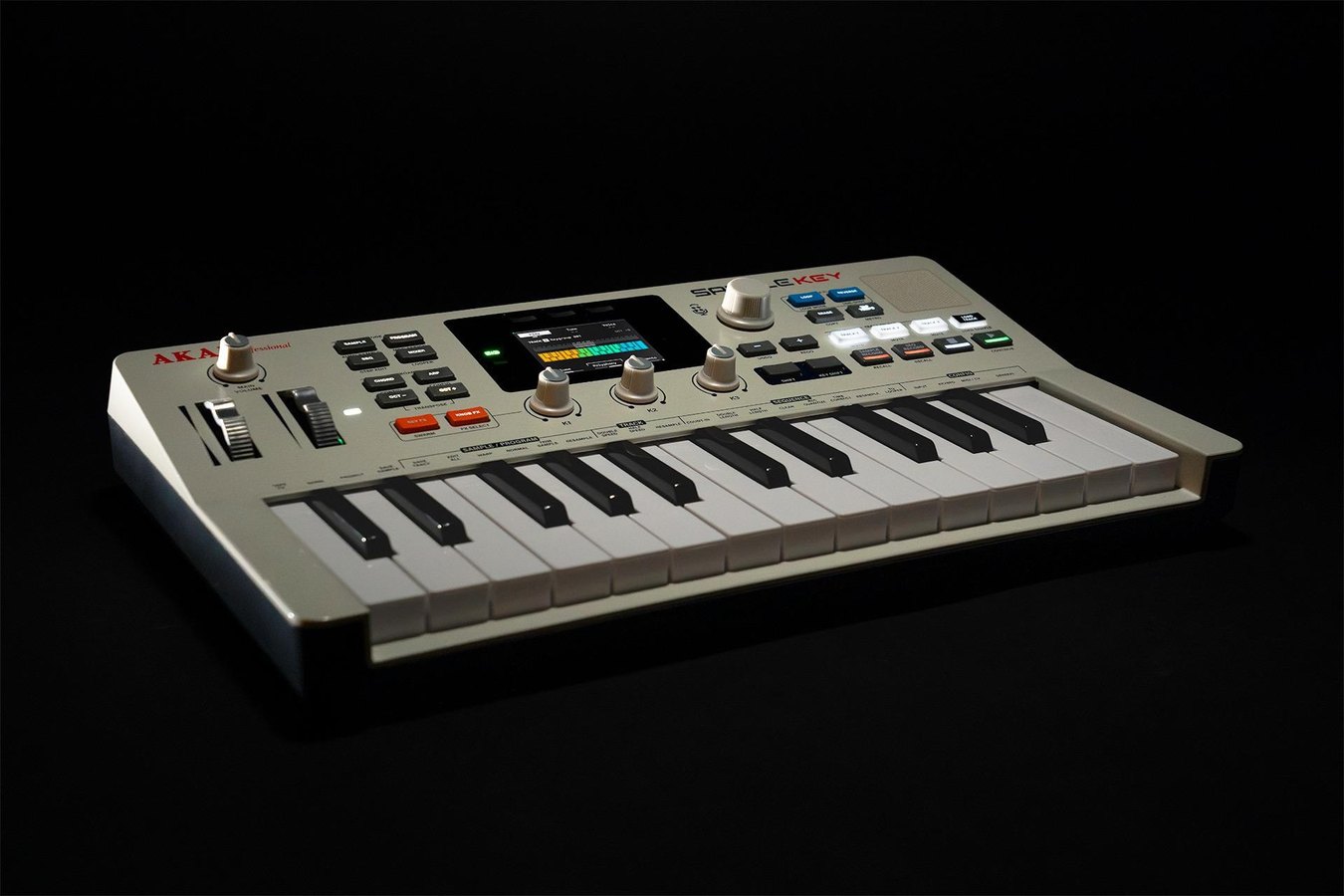
Producers and beatmakers who rely strictly on slicing vinyl samples and chopping acoustic drum breaks face clear limitations with this layout. The complete removal of the chop button means traditional sample-chopping workflows cannot be executed through dedicated hardware controls on this model. Musicians expecting a conventional drum machine will instead encounter a chord mode and arpeggiator tailored for pitched instruments. Because chord modes offer minimal utility for drum programming, beatmakers seeking rapid percussive slicing must retain their existing grooveboxes or adjust to keyboard-centric playback routines.
Hardware hackers, software modders, and modular synthesists are the primary groups positioned to benefit from these revealed details. Akai announced that the operating software will be open-sourced, giving independent developers direct opportunities to modify system code and craft custom functionality. Additionally, modular synth owners gain integration pathways, as front-panel configuration options suggest the instrument will provide CV outputs alongside standard MIDI connections. Keyboardists wanting portable sound design also gain access to a dedicated looper, built-in microphone, and onboard speaker for standalone production.
Advertisement
Tech Pulse Daily
Get tomorrow's pulse first
Join engineers who read Tech Pulse before stand-up. Free, weekday mornings.
What to do now about Exclusive details about Akai’s MPC Sample Key
Musicians should evaluate their technical requirements against confirmed hardware capabilities before modifying current equipment setups. If your production depends heavily on slicing drum kits across velocity pads, the original MPC Sample remains the more suitable choice because of its dedicated chop control. Conversely, artists who compose melodies, vocal hooks, or bass progressions can prepare for a portable keyboard workflow that integrates an internal microphone and monitor speaker. These onboard audio elements allow self-contained sampling without requiring external audio interfaces or monitoring cables.
Synthesists and developers should also outline performance and coding plans around the instrument's open-source architecture and physical controls. Modders can prepare to inspect Akai's software once published, exploring opportunities to implement custom firmware patches, specialized sequencing algorithms, or unique routing for the three context-sensitive encoders and large main encoder. Meanwhile, live performers can plan live-layering arrangements utilizing the dedicated looper. Those operating Eurorack or analog hardware rigs should prepare patch cables to integrate with the prospective CV connections alongside existing MIDI hardware.
How the Exclusive details about Akai’s MPC Sample Key issue works
The physical workflow functions through a 25-key keyboard designed for real-time chromatic playing rather than standard percussion sequencing. Pitch and modulation wheels mounted on the left deliver continuous expressive parameter adjustment during live performances, while dedicated octave buttons extend the pitch range of the keys. The chord button allows instantaneous multi-note voicings from individual key presses, while the arp button activates an arpeggiator engine. While arpeggiators can trigger percussive samples rhythmically, they function primarily to drive evolving melodic lines and pitched bass sequences.
Control navigation matches the earlier MPC Sample through three context-sensitive encoders and a large central encoder, maintaining consistent tactile menu navigation across both units. An integrated looper provides independent looping capabilities for layering musical takes directly on the hardware. Audio capture is handled through a built-in microphone, with an integrated speaker providing direct playback monitoring. For external communication, front-panel configuration options show that the device routes signals through MIDI and dedicated CV outs, transmitting pitch and gate control directly to analog synthesizers and modular systems.
What is still unknown about Exclusive details about Akai’s MPC Sample
Significant commercial and launch data points remain undisclosed by Akai following the initial Instagram teaser and photograph disclosures. The manufacturer has provided no pricing estimates, leaving prospective customers unable to compare its retail cost against competing keyboards or the standard MPC Sample. Furthermore, Akai has withheld a firm launch date, providing no shipping timeline for global retail distribution. The functional nature of the new Swarm effect also remains unexplained, with no published documentation clarifying how it alters incoming audio compared to Flex Beat.
Hardware specifications regarding the rear enclosure also remain completely unverified, as available imagery covers only the front panel controls. Without a clear view of the back panel, the physical arrangement of power inputs, audio jacks, and USB connections cannot yet be confirmed. Finally, the scope of Akai's open-source software release remains unspecified. It is currently unknown which firmware layers will be exposed, what development tools or licensing will apply, or how third-party modifications will be compiled and flashed onto the physical instrument.
Developer Action Items
- ☐ Diff the official changelog for Framework before you bump — APIs, defaults, and removed flags only.
- ☐ Install through the vendor's documented channel in staging; keep a one-command rollback and time-box the canary.
- ☐ Grep your repo for old flag names, lockfile pins, and plugin versions that the notes mark as breaking.
- ☐ Prefer the first patch cut over the day-zero tag unless you have a reason to be on the leading edge.
- ☐ If The Verge did not name a region, plan, or SKU, screenshot the official availability line before you promise it to users.
Exclusive details about Akai’s MPC Sample Key FAQ
When will the Akai MPC Sample Key launch and how much will it cost?
Akai has not yet announced an official release date or retail pricing for the MPC Sample Key.
How many keys does the Akai MPC Sample Key have?
The device features a 25-key keyboard equipped with dedicated octave range buttons, pitch and modulation wheels, and chord and arpeggiator controls.
Is the chop button present on the MPC Sample Key?
No, the dedicated chop button from the original MPC Sample has been completely removed in favor of pitched sample playback controls.
Does the MPC Sample Key support modular synthesizers and MIDI?
Front-panel configuration options suggest the instrument will provide CV outputs for modular synthesizer setups alongside standard MIDI connections.
What open-source software plans has Akai announced?
Akai announced on Instagram that it plans to open-source the instrument software so the modding community can customize and hack the device.
Sources

Author
Dillip Chowdary
Writes Tech Bytes coverage of AI, engineering, and the tools that actually ship. Editor of Tech Pulse Daily.
Related on Tech Bytes
Advertisement