Export-banned Nvidia chips are behind China’s most powerful AI models—uh
The presence of Blackwell fingerprints demonstrates that frontier Chinese labs bypassed these computational tiers entirely during foundation model training.
By Dillip Chowdary • Nov 14, 2026 • Source: TechCrunch
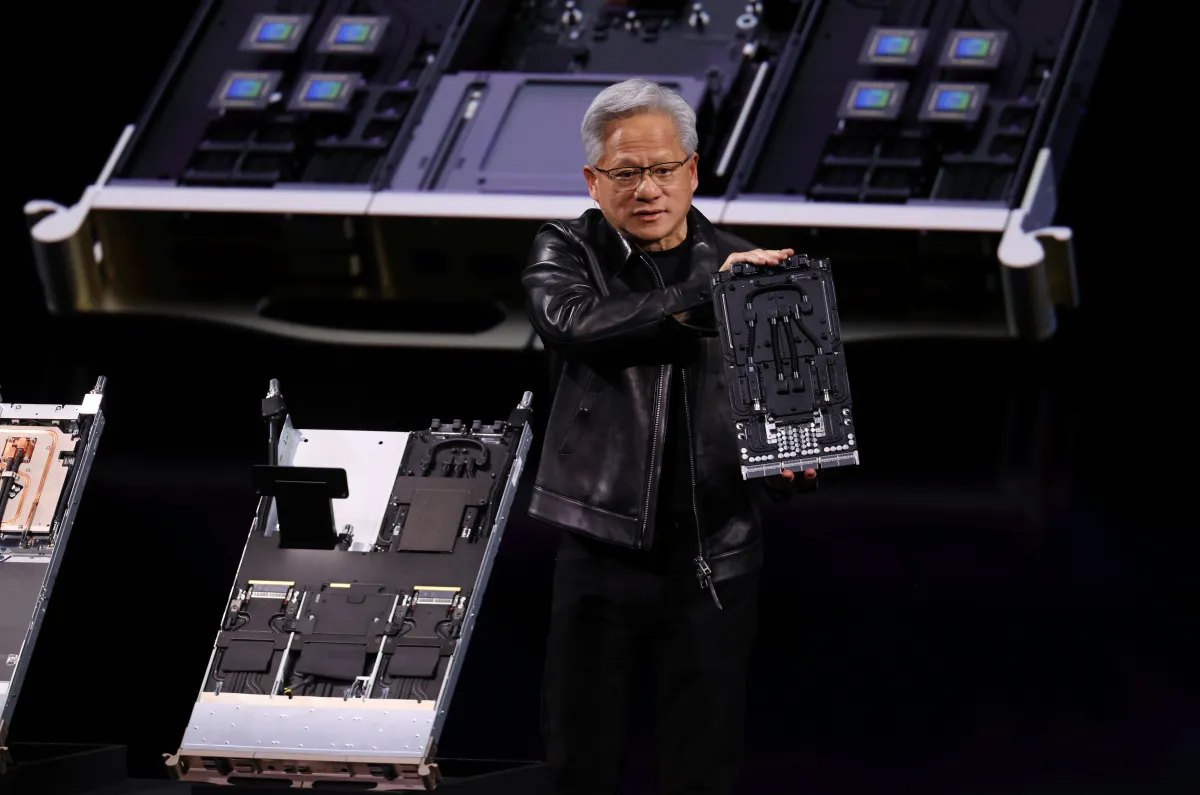
Frontier artificial intelligence labs across China trained their flagship open-weight models using restricted Nvidia Blackwell processors despite sweeping export controls, according to new technical findings detailed in TechCrunch's report. The disclosure lands alongside the abrupt departure of Nvidia chief executive Jensen Huang, who stepped down following admissions regarding personal relationships with Megaspeed executive Alice Huang and two internal employees. Potential corporate liability surrounding international chip smuggling and export enforcement contributed directly to the leadership upheaval at the semiconductor designer.
This breakdown examines how researchers identified hardware traces inside Chinese neural networks, the third-party logistics routes moving silicon across Southeast Asia, and the growing regulatory fallout in Washington. The analysis is structured for engineering leads, trade compliance officers, and enterprise strategists monitoring high-performance compute access and semiconductor export policy.
01Model weights expose Blackwell hardware fingerprints
Former OpenAI researcher Will DePue, who directs the nonprofit research organisation Unemployment Labs, uncovered structural signatures within open weights published by prominent Chinese AI developers. DePue analyzed releases from DeepSeek, Moonshot AI, MiniMax, and Ant Group to isolate hardware-level training artifacts preserved directly within the model parameters. The technical examination demonstrated that flagship releases, specifically Moonshot's Kimi K3 systems and DeepSeek's V4 models, carry clear operational indicators of Blackwell GPU clusters.
Those findings reinforce public statements from White House technology adviser Michael Kratsios, who previously confirmed that Moonshot leveraged export-prohibited Nvidia silicon based on U.S. intelligence reporting. The mathematical structure of modern neural network weights mirrors the underlying hardware configurations and communications fabrics used across distributed compute jobs. While Chinese developers release open model weights globally, the structural fingerprints confirm that developers ran training jobs on architectures that American regulations bar them from purchasing.
Blackwell accelerators remain under an outright export embargo prohibiting deliveries to mainland Chinese entities or Chinese-owned subsidiaries anywhere in the world. Under current Trump administration rules, Nvidia holds export permissions only for less capable H200 accelerators, and only when shipments navigate alternate logistical routes subject to a 25 percent tariff. The presence of Blackwell fingerprints demonstrates that frontier Chinese labs bypassed these computational tiers entirely during foundation model training.
02Offshore data centers and Southeast Asian routes
Evidence of Blackwell usage does not indicate that Chinese frontier laboratories maintain physical clusters inside mainland borders or that developers broke customs laws directly. Independent research group Epoch AI estimates that approximately two million advanced accelerators entered China throughout 2024 and 2025 via diversion schemes structured to conceal ultimate destinations. Many Chinese engineering teams instead rent remote compute hosted in third-party jurisdictions, establishing data center capacity outside mainland regulatory reach.
Southeast Asian facilities serve as the primary logistical conduit for Chinese cloud workloads requiring cutting-edge Western hardware. Epoch AI records indicate that import volumes into Malaysia reached roughly 275,000 Nvidia accelerators across 2024 and 2025, sparking rapid infrastructure growth across the region. Setting up overseas clusters enables remote access without requiring physical hardware delivery into Chinese territory.
Policy specialists note that offshore computing arrangements actively undermine the core objective of American export restrictions, which aim to restrict Chinese technological capabilities. Sam Bresnick, a researcher at the Georgetown Center for Security and Emerging Technology, stated that banning chips in mainland China while allowing unrestricted operations in Malaysia contradicts U.S. strategic objectives. Washington lawmakers have increasingly demanded usage-based restrictions that evaluate end-user nationality rather than physical server installation sites.
Advertisement
Tech Pulse Daily
Get tomorrow's pulse first
Join engineers who read Tech Pulse before stand-up. Free, weekday mornings.
03Megaspeed smuggling probes and executive departures
Megaspeed, led by Alice Huang, operates at the center of international distribution networks through its commercial subsidiary Speedmatrix. Both Singaporean authorities and American regulators initiated formal investigations into the company's regional distribution practices. Separate reporting from Bloomberg linked entities connected with Alice Huang to illicit chip shipments bound directly for a data center facility in Shanghai.
Jensen Huang maintained close personal and commercial relationships with Alice Huang while actively endorsing Megaspeed's data center legitimacy. Nvidia leadership publicly affirmed that company representatives conducted on-site facility visits to ensure operations complied with international standards. However, ongoing federal inquiries into alleged state intelligence connections and illicit hardware diversions created severe corporate exposure for Nvidia.
Short-selling firm Culper outlined these structural risks in a research dossier published in May, highlighting Nvidia's direct exposure to Chinese demand. Culper alleged that Chinese state-backed entities barred from Western technology funded companies tied to Alice Huang. The revelations transformed routine corporate compliance questions into a high-stakes federal inquiry that made Jensen Huang's executive position untenable.
04Hong Kong stockpiles and domestic chip investments
Culper's short position centered on Chinese industrial policy rather than potential regulatory crackdowns from American enforcement agencies. As access to foreign compute becomes precarious, Beijing has directed state resources and capital into domestic semiconductor manufacturing. If domestic Chinese chipmakers produce viable alternatives, billions of dollars in annual revenue flowing to American hardware vendors will evaporate.
Meanwhile, commercial channels remain congested with roughly 600,000 Nvidia H200 accelerators stockpiled in Hong Kong waiting for customs clearance into mainland China. Industry analysts offer differing explanations for why regional authorities have delayed clearing these inventories. Stanford technology policy researcher Graham Webster dismissed arguments that holding shipments drives domestic adoption, citing massive domestic computing deficits.
Alternative theories suggest Chinese authorities are withholding clearances to preserve leverage in broader bilateral trade negotiations. Other policy observers point to technical security concerns, including potential surveillance measures embedded within Western silicon. Regardless of the delay's root cause, massive stockpiles sitting on the border highlight the fragile trade balance governing enterprise hardware.
05Regulatory enforcement and Commerce Department fallout
Under current legal standards, American technology vendors carry limited responsibility for monitoring how international customers deploy high-performance computing hardware post-sale. That legal boundary narrows considerably if government investigators establish that Nvidia executives had prior knowledge of distribution loopholes or active diversion schemes. Jensen Huang's personal ties to Megaspeed executives place Nvidia's compliance record under intense scrutiny.
The scandal has extended into Washington regulatory agencies responsible for enforcing export controls. Secretary of Commerce Howard Lutnick faces mounting pressure and potential dismissal following reports that trade enforcement officials failed to flag suspicious semiconductor intermediaries. Congressional investigators argue that licensing bodies maintained excessively cozy ties with Nvidia representatives instead of auditing foreign shell companies.
As federal agencies tighten oversight, American hardware vendors face mandatory supply chain visibility extending across global distribution partners. China hawks continue to demand direct restrictions on remote compute access, aiming to close the loophole allowing offshore training clusters. The Blackwell findings confirm that physical hardware embargos cannot isolate frontier software development without comprehensive enforcement covering global infrastructure.
Export-banned Nvidia chips are behind China’s FAQ
Which Chinese AI models showed evidence of Blackwell training?
Technical parameter analysis conducted by Unemployment Labs identified Blackwell hardware signatures in Moonshot AI's Kimi K3 releases and DeepSeek's V4 models, alongside models from MiniMax and Ant Group.
How did Chinese companies access banned Nvidia Blackwell chips?
Chinese laboratories utilized offshore compute facilities in regions like Malaysia, while approximately two million advanced chips entered China through diversion networks designed to conceal final delivery destinations.
Why did Nvidia CEO Jensen Huang step down?
Jensen Huang resigned after admitting to relationships with Megaspeed executive Alice Huang and two Nvidia employees amid federal investigations into export violations and potential corporate liability.
What is the current status of Nvidia H200 shipments to China?
The Trump administration permits H200 exports through specific routes carrying a 25 percent tariff, though roughly 600,000 units remain stockpiled in Hong Kong awaiting import clearance.
Sources

Author
Dillip Chowdary
Writes Tech Bytes coverage of AI, engineering, and the tools that actually ship. Editor of Tech Pulse Daily.
Related on Tech Bytes
Advertisement