FBI investigating hacking group's claim of breach of agent info
. FBI investigating hacking group's claim of breach of agent info Why it matters for engineering teams What shipped and who is affected.
By Dillip Chowdary • Sep 24, 2026 • Source: HN AI Agents
ShinyHunters, a cyber-extortion group with members scattered around the globe, claimed on Wednesday that it breached FBIJobs.gov and used that initial access to move into other agency systems, stealing between 2 and 3 terabytes of files containing sensitive personal information on FBI agents and personnel. The FBI confirmed it is "actively and aggressively investigating" the incident, stating in an official statement that the point of breach remains undetermined — whether a third-party vendor or the FBI's own enterprise systems — and that it is working closely with third-party providers that support FBIJobs.gov to mitigate risk.
This article covers what the group took or claims to have taken, who is in danger because of it, what the FBI has confirmed versus what remains unverified, and what security practitioners should understand about ShinyHunters' tactics. It is written for security engineers, federal IT staff, threat intelligence analysts, and anyone who works alongside or supports law enforcement personnel.
What broke in FBI investigating hacking group's claim
ShinyHunters said it hacked into the FBI's jobs portal on a Monday and then used that foothold to access other agency programs. The FBIJobs.gov portal is currently inaccessible. The FBI's statement acknowledged awareness of "a cyber-criminal enterprise group claiming a compromise of the FBIJobs.gov portal and alleged impact to FBI employee personally identifiable information (PII)" but stopped short of confirming the scope of the breach, noting that the point of origin — whether a third-party system or the bureau's own enterprise infrastructure — has not been determined.
A ShinyHunters representative claimed the group exfiltrated between 2 and 3 terabytes of files. NBC News was not able to independently verify the full extent of that claim, but one former FBI agent did confirm the authenticity of a sample document ShinyHunters shared as evidence — a document containing sensitive personal information. That authentication of even a single sample document lends credibility to the claim that real data was obtained, even if the total volume remains disputed.
Who is exposed by FBI investigating hacking group's claim
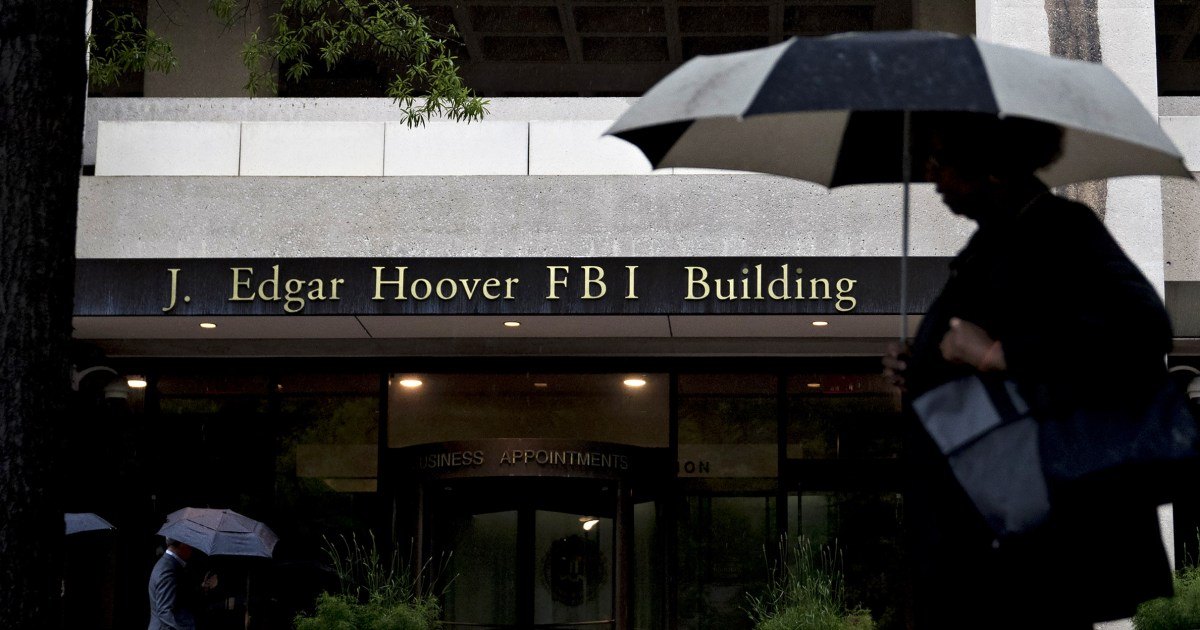
The primary population at risk is current and former FBI agents whose personal identifying information was stored in or accessible through the FBIJobs.gov portal and connected agency systems. Because FBI agents regularly sign their names to court documents used to prosecute criminals, their personal details — home addresses, the identities of spouses and family members, and other PII — carry a physical safety dimension that goes beyond a typical data breach. Cynthia Kaiser, the former deputy cyber director of the FBI and now a senior vice president at the cybersecurity company Halcyon, told NBC News that this type of information could be used by criminals to target or physically harm FBI agents, personnel, and their families.
Third-party vendors that support FBIJobs.gov are also implicated. The FBI's own statement names those providers as parties it is actively engaging to contain the incident, which suggests that at minimum one external system may sit in the breach chain. Security and identity data held by any vendor integrated into the jobs portal's authentication or data pipeline could also have been exposed, depending on what ShinyHunters accessed after establishing its initial foothold.
Advertisement
Tech Pulse Daily
Get tomorrow's pulse first
Join engineers who read Tech Pulse before stand-up. Free, weekday mornings.
What to do now about FBI investigating hacking group's claim
Federal security teams supporting FBIJobs.gov and connected agency platforms should treat any third-party integration as a potential pivot point until the FBI completes its root-cause investigation. The bureau's statement specifically names third-party providers as active participants in the containment effort, which signals that the attack likely involved at least one external vendor. Teams should audit identity federation, single sign-on tokens, and API credentials that touch the portal and revoke or rotate anything that cannot be verified clean.
For FBI agents and personnel who believe they may be affected, the immediate concern is physical safety, not just identity theft. Kaiser's comment — that the exposed data on addresses and family members could be used to physically target agents — means that the risk extends beyond credit monitoring. Personnel should notify supervisors and report any suspicious contact or surveillance, particularly given that ShinyHunters has stated it will publish the data within a week unless the FBI retracts a public service announcement it posted about the group in May.
How the FBI investigating hacking group's claim issue works
ShinyHunters is a loosely defined cyber-extortion outfit that routinely hacks companies and government targets to steal data and then threatens to publish it on the dark web if its demands are not met. In this case, the group framed the attack not as a financial shakedown but as retaliation: it said the FBI's May public service announcement about the group amounted to "disinformation" aimed at disrupting its operations, and it posted a demand that the PSA be retracted within a week or the stolen data would be released. A ShinyHunters spokesperson told NBC News the operation had been in planning since the FBI FLASH report on the group was released in May, describing it as "well planned and coordinated."
AI company Anthropic provided one window into ShinyHunters' operational methods in a threat intelligence report released earlier in September, disclosing that since December it had repeatedly disrupted clusters of ShinyHunters affiliates attempting to use Anthropic's AI in their hacking operations. Kaiser noted that ShinyHunters, like most cybercriminal extortionists, tends to exaggerate its claims — mixing truth and fabrication to maximize leverage — but said she would not expect the group to be "outright lying" about its access. The combination of an authenticated sample document and a 2-to-3-terabyte volume claim is consistent with the group's pattern of providing enough real evidence to pressure targets into compliance.
What is still unknown about FBI investigating hacking group's claim
The FBI has not confirmed whether the breach originated inside its own enterprise or through a third-party vendor. That distinction matters enormously for scoping the damage: a compromised vendor could mean the same access pathway was used against other government or private sector clients of that vendor, while a direct breach of FBI infrastructure would carry different remediation requirements and legal implications. The bureau's statement promises an ongoing investigation but provides no timeline for a determination.
The total volume and content of the allegedly stolen data also remain unverified. NBC News confirmed one authentic sample document, but whether the full 2 to 3 terabytes ShinyHunters claims actually exists — and what categories of records it contains beyond agent PII — is unknown. It is also unclear whether ShinyHunters has already shared or sold any portion of the data on dark web forums before issuing its public ultimatum, which would make any retraction of the FBI's PSA a moot remedy for affected agents.
Developer Action Items
- ☐ Inventory whether FBI investigating hacking group runs in prod, CI, staging, or on laptops before you debate severity.
- ☐ Confirm the vendor's fixed build for FBI investigating hacking group from HN AI Agents, then schedule the patch window.
- ☐ If you cannot patch today, isolate the service, rotate tokens that sat on the affected surface, and raise the logging floor.
- ☐ Record the decision and residual risk so the next on-call does not re-litigate whether you are exposed.
- ☐ Treat unexpected emails that mention FBI investigating hacking group (shipping, invoices, password resets) as phishing until verified.

Author
Dillip Chowdary
Writes Tech Bytes coverage of AI, engineering, and the tools that actually ship. Editor of Tech Pulse Daily.
Related on Tech Bytes
Gemini 4 is almost ready, says new Google DeepMind chief
Read →
Claude Opus 5.5 vs. GPT-6 Sol: Cost per correct task, not price per token
Read →
Critical WordPress Vulnerability Exploited Immediately After Disclosure
Read →
Let GPT-6 Astra code without using Codex Usage
Read →
Today's Tech Pulse briefing
Full briefing →
Advertisement