Floods Force Gaza to Choose Between Clean Water and Pumping Out Sewage
Gaza municipal teams were forced to divert scarce diesel from water wells to drainage pumps after November storms flooded over 70,000 displacement shelters.
By Dillip Chowdary • Nov 15, 2026 • Source: Wired
Municipal engineers in central Gaza have been forced to divert diesel away from drinking water wells to power emergency drainage pumps after winter rainstorms submerged displacement camps. According to Wired's report, the fuel trade-off leaves local infrastructure teams choosing between supplying potable water to residents and removing contaminated runoff from residential tents. The crisis follows extensive housing destruction across the enclave, where damaged wastewater lines and unpaved camp basins cannot handle seasonal downpours.
This report examines the operational trade-offs confronting municipal water authorities, the scope of physical damage to drainage infrastructure, and the direct health impacts on displaced families during the winter storm season. It is written for infrastructure analysts, humanitarian logisticians, municipal engineers, and public health monitors tracking urban utility collapses in conflict zones.
01Rainstorms Across Seventy Thousand Makeshift Shelters
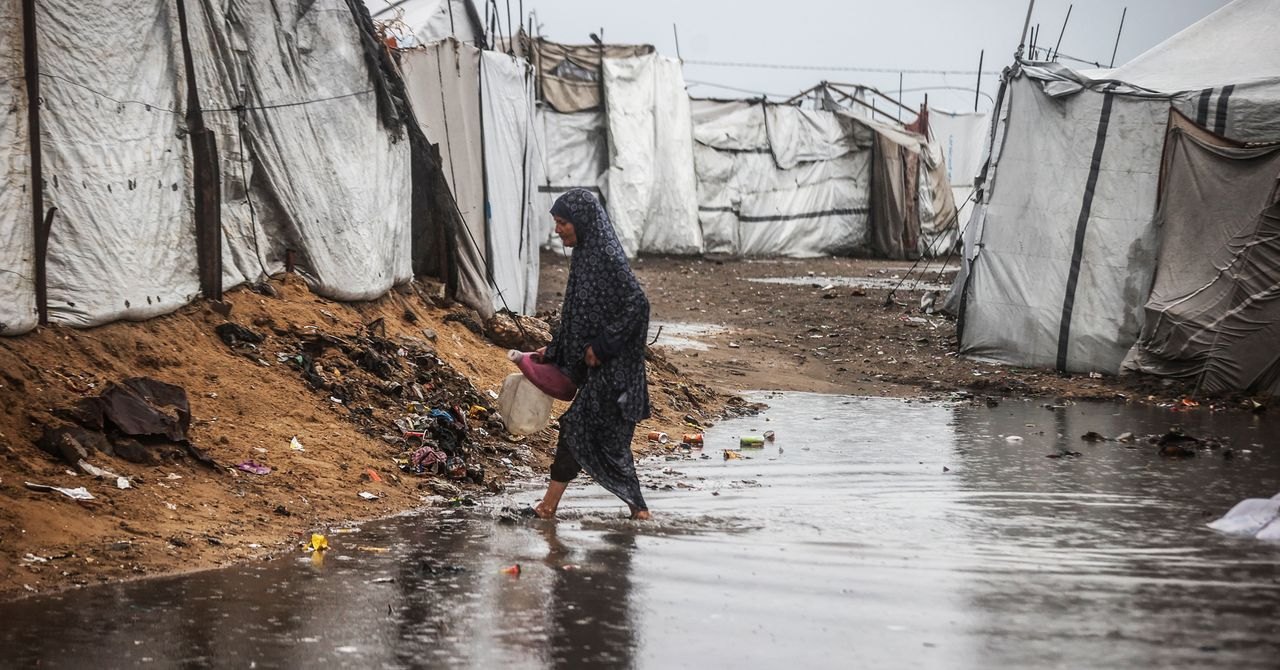
Severe rainstorms swept through the Gaza Strip over the weekend of November 7 and 8, submerging makeshift displacement shelters in water well over a foot deep. Gaza’s Government Media Office reported that at least 70,000 tents housing displaced Palestinians flooded within a single 12-hour window. On November 8, the official Israel account on X run by the Ministry of Foreign Affairs posted that Israel does not control the weather, without addressing the camp floods.
The flooding compounds an acute shelter crisis created by widespread urban destruction over the past year. An April assessment conducted by the European Union, the United Nations, and the World Bank documented damage or destruction to more than 371,888 housing units, leaving approximately 1.9 million people internally displaced. By November 8, the United Nations Office for the Coordination of Humanitarian Affairs estimated that 1.4 million individuals, or 65 percent of Gaza’s population, resided in tents or temporary shelters.
More than 26,000 households had submitted appeals to humanitarian organizations regarding damaged shelters and ruined belongings following the initial downpour. In the Al Maghazi refugee camp, 46-year-old Hanan Saied reported that runoff collapsed mud walls, soaked bedding, and ruined clothing shared with her seven children. The family spent the night bailing water with buckets while trying to keep her asthmatic daughter, Sara, warm without electricity or a medical nebulizer.
02Diesel Allocation Between Wells and Drainage Pumps
Municipal response teams in Al Maghazi must manage five designated displacement sites spread across the western and northern sections of the camp. Several of these settlements occupy low-lying basins that lack natural drainage outlets, causing storm runoff to pool heavily around residential tents. Crews have deployed mechanical pumps to siphon accumulated surface water out of the encampments, but running that machinery rapidly exhausts local fuel reserves.
The operation of those drainage units directly reduces the volume of clean drinking water delivered to camp residents. Imad Abdel Jawad, a municipal engineer working in Al Maghazi, explained that the diesel powering drainage pumps is pulled directly from the fuel quota reserved for running local water extraction wells. The municipal fuel allotment was already inadequate before the November storms arrived, forcing crews into zero-sum resource management.
Jawad noted that equipment operators cannot resolve the flooding without sacrificing baseline drinking supplies. Because local power grids remain offline, municipal wells depend entirely on diesel-powered generators to pump groundwater for camp inhabitants. Diverting fuel tankers to the emergency drainage pumps inevitably lowers well runtimes, decreasing the daily liters of potable water distributed per person.
Advertisement
Tech Pulse Daily
Get tomorrow's pulse first
Join engineers who read Tech Pulse before stand-up. Free, weekday mornings.
03Damaged Manholes and Overflowing Wastewater Networks
Surface flooding in Al Maghazi is exacerbated by physical damage extending beneath camp roads. Bombardment has fractured numerous cast-iron sewage manhole covers across the camp, while other covers have deteriorated over time or disappeared. The resulting open access points allow thousands of gallons of surface runoff to pour straight into subterranean pipes designed solely for domestic wastewater.
Because missing covers allow unmetered stormwater into the network, the camp’s underground pipelines rapidly exceed their physical carrying capacity. Jawad noted that the sewage lines cannot handle the combined volume of domestic wastewater and incoming storm runoff, forcing untreated effluent to reverse course and overflow into populated surface alleys. This backflow submerges walking paths and tent perimeters in raw sewage.
Replacement manhole covers cannot be purchased locally, and raw industrial materials required to weld or cast alternatives remain scarce and cost-prohibitive. Given severe budgetary shortfalls, the Al Maghazi municipality prioritizes funding well maintenance and generator repairs over fabricating replacement covers. Jawad confirmed that spending scarce funds on maintaining water well generators remains a higher operational priority than repairing damaged sewage manholes.
04Import Restrictions on Generators and Spare Parts
The equipment deficits paralyzing Al Maghazi reflect broader supply bottlenecks across the entire enclave. In an assessment published on November 5, the United Nations Office for the Coordination of Humanitarian Affairs highlighted that Israeli authorities continue to enforce strict entry restrictions on engine oil, industrial lubricants, spare machine parts, and replacement power generators. These missing maintenance supplies have caused regional wastewater and stormwater pumping installations to break down repeatedly.
Humanitarian agencies note that establishing sustainable municipal utility operations requires clearance from Israeli authorities to import photovoltaic solar arrays, reconnect high-voltage electrical grid lines, and supply fuel to restart Gaza’s central power plant. The Israel Defense Forces did not provide comment to inquiries regarding clearance restrictions on equipment required for flood mitigation and utility repairs. Without heavy machinery or replacement pumps, utility workers remain restricted to temporary measures.
Camp administrators also lack the transport and construction hardware needed to reinforce vulnerable low-lying ground. Jawad stated that municipal crews require dump trucks and earth-moving earthworks machinery to transport dry fill material into muddy tent settlements. Depositing compacted aggregate around shelters would elevate living areas above stagnant pools, but transport restrictions keep teams from altering the topography of the sites.
05Rising Respiratory and Gastrointestinal Clinic Cases
The mixture of standing stormwater, raw sewage backflow, and damp living quarters has triggered an immediate surge in clinical admissions. Dr.
Asma Saleh, a general practitioner stationed at the United Nations Relief and Works Agency clinic in Al Maghazi, reported rising caseloads of respiratory and digestive infections among displaced children as the rainy season began. The clinic currently diagnoses and treats roughly 120 pediatric patients each day.
Daily clinical intake includes approximately 22 pediatric patients exhibiting symptoms of influenza-like respiratory illnesses and 13 children presenting with acute gastroenteritis. Dr.
Saleh pointed out that compromised sanitation, raw wastewater flowing through residential walkways, structural shelter failures, and chronic shortages of therapeutic drugs have converged to overwhelm the local primary care system. Contaminated mud tracking into sleeping areas leaves infants directly exposed to fecal pathogens.
Mothers sheltering in damaged tents face escalating medical hazards without access to household power or basic clinical appliances. For residents like Saied, preventing hypothermia and managing chronic pediatric asthma without nebulizers or power connections remains an immediate crisis during every rainfall. With winter storms forecast to recur through the season, medical providers expect pediatric pulmonary infections and waterborne gastrointestinal admissions to rise further.
Floods Force Gaza to Choose Between Clean FAQ
Why are municipal teams in Gaza diverting fuel away from clean water wells?
Municipal teams in Al Maghazi must divert diesel from drinking water wells to run emergency pumps that remove stormwater and sewage from flooded tent camps.
How many displacement tents were flooded during the November storms?
Gaza’s Government Media Office reported that at least 70,000 displacement tents flooded within a 12-hour period during storms on November 7 and 8.
What equipment import restrictions are affecting flood and sewage management?
OCHA reported that Israeli authorities restrict the entry of engine oil, lubricants, spare parts, new generators, and heavy earth-moving machinery needed for repairs.
What health conditions are clinic doctors in Al Maghazi treating after the floods?
UNRWA clinic physician Dr. Asma Saleh treats roughly 120 children daily, including 22 with influenza-like illness and 13 with gastroenteritis linked to sewage exposure.
Sources

Author
Dillip Chowdary
Writes Tech Bytes coverage of AI, engineering, and the tools that actually ship. Editor of Tech Pulse Daily.
Related on Tech Bytes
Advertisement