From paper routes to fighter jets: Shield AI’s bet on Seattle is
Valued at $28.8 billion, the defense hardware and software firm plans to establish a regional manufacturing footprint centered on its uncrewed jet program.
By Dillip Chowdary • Nov 09, 2026 • Source: GeekWire Startups

Shield AI agreed to acquire Kirkland-based radar manufacturer Echodyne for up to $5.3 billion, anchoring a Pacific Northwest expansion that pairs autonomy software with advanced physical sensors, according to GeekWire Startups's report. Valued at $28.8 billion, the defense hardware and software firm plans to establish a regional manufacturing footprint centered on its uncrewed jet program. The acquisition follows plans announced in September to produce the autonomous X-BAT aircraft at a dedicated facility south of Seattle.
This analysis details the corporate acquisition structure, regional production targets, sensing integrations, and aerospace manufacturing milestones for defense contractors, software engineers, and aerospace leaders. It examines how venture capital, autonomous flight systems, and metamaterials-based radar production intersect across the Puget Sound corridor.
01Kirkland radar acquisition and company valuation
Shield AI structured the Echodyne purchase as an acquisition valued at up to $5.3 billion, financed through a mix of existing resources and a new $2.5 billion capital raise. That round includes $1 billion in fresh funding at a $28.8 billion valuation, more than doubling the valuation recorded in March. Madrona Venture Group, which backed Echodyne alongside Bill Gates in a 2014 founding round, joins other early investors in converting ownership into significant equity stakes in Shield.
Echodyne brings approximately 400 workers to the combination, following the July opening of its $40 million radar manufacturing plant in Woodinville. The transaction leaves Echodyne operating under its existing leadership, with co-founder and chief executive Eben Frankenberg reporting directly to Shield chief executive Gary Steele. The combined enterprise will count roughly 2,700 employees once the acquisition closes, with no workforce reductions planned by either company.
Closing remains scheduled for early 2027, subject to customary regulatory reviews and closing conditions. Shield plans to maintain independent sales operations for Echodyne during the first year, allowing the radar team to fulfill outside contracts for counter-drone hardware. The purchase price includes earnout provisions tied to performance milestones that could deliver an additional $500 million.
02Puget Sound workforce and footprint expansion
Shield projects that regional employment will expand to roughly 4,000 direct workers across the Seattle metropolitan area by the early 2030s. An economic analysis utilizing company estimates indicates that regional supply chains and direct operations could support 8,000 total aerospace jobs. Co-founder Brandon Tseng stated that regional facilities will grow well beyond one million square feet, building out from an initial 420,000-square-foot footprint in Des Moines, Washington.
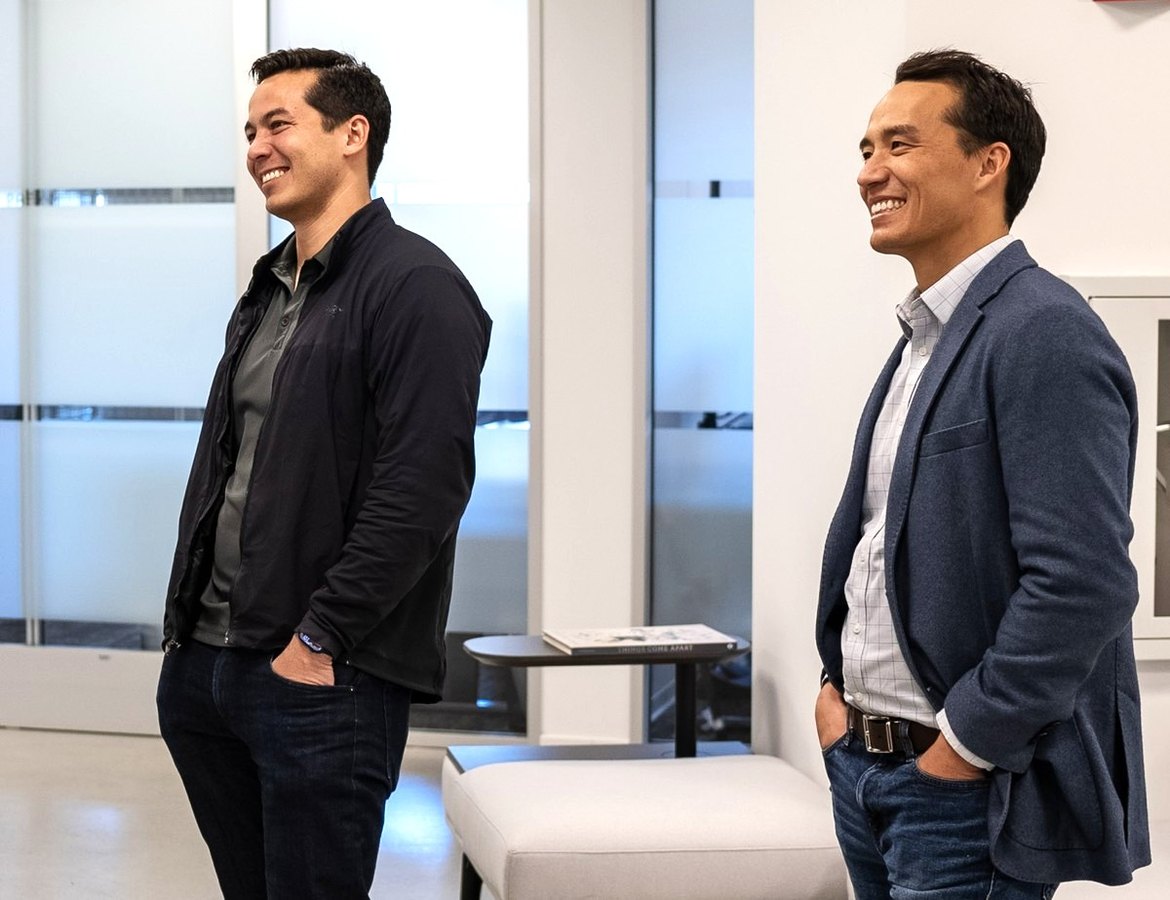
Executive leadership selected the Pacific Northwest for jet manufacturing due to concentrated engineering and industrial workforces tied to Boeing, Microsoft, and Amazon. Company leaders maintain personal ties to the area; co-founders Brandon and Ryan Tseng grew up on Mercer Island, where their father served as chief executive of Foss Maritime. Chief executive Gary Steele grew up in Yakima and graduated from Washington State University.
Company leaders anticipate rapid hiring velocity as facilities come online. Brandon Tseng cited the regional manufacturing talent density as the primary operational factor behind locating production lines near Puget Sound instead of traditional defense hubs.
Advertisement
Tech Pulse Daily
Get tomorrow's pulse first
Join engineers who read Tech Pulse before stand-up. Free, weekday mornings.
03Integration of autonomy software and radar
The acquisition completes a triad of autonomous capabilities that Shield describes as sensing, thinking, and acting. Shield deploys Hivemind autonomy software to process operational decisions, while the V-BAT uncrewed aerial vehicle and X-BAT aircraft carry out physical maneuvers. Echodyne provides radar hardware that serves as the foundation for the sensing subsystem across uncrewed airframes.
Shield initiated its sensor evaluation process after acquiring Australian optical specialist Sentient Vision Systems in 2024. That transaction led internal technical teams to search for compatible radar systems to support military missions. Shield and Echodyne first crossed paths in 2016 while participating in the Department of Homeland Security Silicon Valley Innovation Program.
Echodyne designs its flagship EchoShield electronically scanned array radar to protect forward-deployed military personnel against incoming uncrewed aerial threats. Deeper technical integrations between Hivemind software and Echodyne hardware will occur after the initial operational transition period. Echodyne will continue supplying third-party defense integrators with standalone radar units during the initial integration phase.
04Flight testing and jet production timelines
Shield unveiled its first full-scale X-BAT airframe prototype this month, transferring the aircraft to an airfield in Kansas to begin taxi and flight evaluations. Company flight test schedules target the initial uncrewed flight test before the end of the year. The Department of Defense and Shield have committed a combined $400 million toward X-BAT engineering and prototype development.
Production schedules set the start of low-rate initial manufacturing at the Des Moines plant for mid-2027, with the first production aircraft due for completion in early 2028. Engineering and manufacturing units assembled the full-scale flight prototype in approximately one year. Company executives note that rapid factory tooling remains critical to hitting the 2028 delivery window.
Leadership has not published firm production contract numbers from domestic military services. The program relies on proving production tooling speed and flight stability during ground and airborne evaluations throughout upcoming test blocks in Kansas.
05European sales campaigns and regional orders
Shield actively pursues international defense partnerships to secure initial production commitments for the X-BAT airframe. Speaking at the International Fighter Conference in Munich, co-founder Ryan Tseng confirmed the company expects to announce European orders and operational partnerships for the uncrewed fighter. Program director Andrew Hawkes noted that business development teams run several active sales campaigns across allied nations in Europe.
Prospective allied purchases would establish the baseline manufacturing run required for the Des Moines factory line ahead of domestic procurement awards. Company representatives have declined to disclose specific aircraft quantities or identify prospective national defense ministries reviewing procurement packages.
The push for overseas defense contracts proceeds alongside domestic sensor integration work. Continued expansion across King County hinges on converting active European evaluations into committed manufacturing lots before low-rate production starts in mid-2027.
From paper routes to fighter jets FAQ
How much is Shield AI paying to acquire Echodyne?
Shield AI agreed to acquire Echodyne for up to $5.3 billion, which includes performance targets that could add $500 million to the final purchase price.
Where will the X-BAT aircraft be manufactured?
Low-rate production of the X-BAT will take place at a 420,000-square-foot facility in Des Moines, Washington, with the first regional aircraft scheduled for completion in early 2028.
How is Shield AI funding the acquisition?
Shield is raising $2.5 billion to finance the transaction, including $1 billion in new venture capital funding at a $28.8 billion valuation.
When is the first flight of the X-BAT prototype scheduled?
Shield shipped its full-scale prototype to Kansas for testing, with the first flight targeted to occur before the end of the year.
Sources

Author
Dillip Chowdary
Writes Tech Bytes coverage of AI, engineering, and the tools that actually ship. Editor of Tech Pulse Daily.
Related on Tech Bytes
Advertisement