From smart contact lenses to smart bandages
This report examines both hardware platforms, their technical specifications, manufacturing targets, clinical use cases, and regulatory timelines.
By Dillip Chowdary • Nov 29, 2026 • Source: TechCrunch
At a glance
- Product
- Xpanceo smart lens
- Manufacturer
- Xpanceo
- Integrated prototype date
- Early 2027
- Series A funding
- $250 million
- Company valuation
- $1.35 billion
- Regulatory submission window
- 2029 to 2030
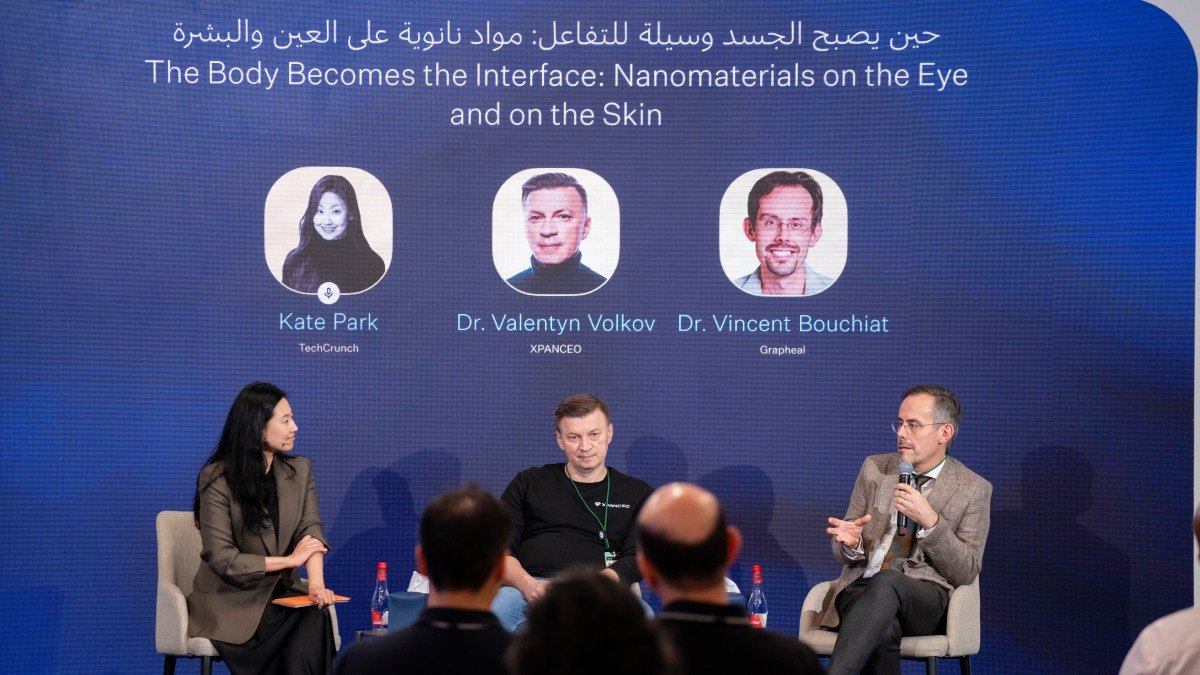
Xpanceo and Grapheal are developing wearable medical hardware that moves electronics directly onto the human eye and skin, presenting their technology roadmaps during a panel at Dubai Future Week as detailed in TechCrunch's report. Dubai-based Xpanceo is engineering smart contact lenses with integrated displays and health tracking, while French deep tech startup Grapheal is building graphene-based biosensing wound dressings.
This report examines both hardware platforms, their technical specifications, manufacturing targets, clinical use cases, and regulatory timelines. It is intended for biomedical engineers, clinical device developers, and enterprise healthcare teams assessing direct-to-body computing interfaces.
01Integrated prototype timeline and ocular architecture
Xpanceo plans to unveil its first fully integrated smart contact lens prototype in early 2027. Founder and chief technology officer Valentyn Volkov stated that the company's founders will wear the integrated lenses live on stage to demonstrate real-time functionality. The 2027 hardware will unite an on-eye image display, wireless power systems, connectivity, and continuous health monitoring.
The startup has previously built and demonstrated more than 28 working prototypes that validated individual components, including augmented reality displays, biosensors, and integrated power circuits. Xpanceo reached unicorn status in 2025 after securing $250 million in Series A funding at a $1.35 billion valuation, building on an earlier 2023 funding round.
The core engineering ambition is resolving the fragmented digital experience of juggling smartphones, smartwatches, and AR glasses. Volkov explained that current wearables force users to switch between separate screens, adding complexity and pulling attention from physical surroundings. Placing computing and sensing layers directly into a single ocular lens establishes a unified, hands-free interface.
02Biochemical sensing in diabetic wound care
Grenoble-based startup Grapheal, spun out of French academia in 2019, is deploying graphene-based biosensors inside flexible bandages. Chief executive officer and co-founder Vincent Bouchiat explained that placing materials in direct contact with tissue allows dressings to capture, digitize, and wirelessly transmit biochemical data that external wearables cannot reach.
The smart bandage is specifically engineered to treat diabetic ulcers and post-surgical wounds. Diabetic foot ulcers frequently take more than six months to heal and can lead to amputation in severe circumstances. Standard care requires nurses to replace wound dressings every two days without diagnostic data, which repeatedly disrupts fragile tissue repairs.
Grapheal designed an NFC-operated bandage that measures and logs wound conditions, including pH levels, local temperature, and biochemical signs of early infection onset. The bandage transmits these telemetry readings directly to a nurse's or patient's smartphone without requiring removal of the dressing.
Advertisement
Tech Pulse Daily
Get tomorrow's pulse first
Join engineers who read Tech Pulse before stand-up. Free, weekday mornings.
03Commercial markets across clinical and athletic sectors
Beyond surgical and diabetic care, Grapheal is evaluating consumer and athletic deployments for its graphene patch. Planned applications include digital skin assessments in retail cosmetics environments, along with continuous sweat analysis to track exertion and hydration in runners, fitness enthusiasts, and competitive athletes.
Xpanceo is targeting the global population of more than 140 million corrective and cosmetic contact lens wearers as its primary initial market. Planned capabilities include hands-free heads-up displays, biometric authentication for secure access control and digital payments, and real-time athletic telemetry tracking heart rate, fatigue, and hydration.
Non-invasive biomarker tracking through tear fluid represents Xpanceo's primary clinical avenue. The development team is refining tear-fluid analytics for continuous glucose monitoring, which aims to replace routine invasive blood testing for diabetic patients.
04Direct body interfaces and competitive alternatives
| Platform | Form factor | Primary sensing focus | Wireless standard |
|---|---|---|---|
| Xpanceo Lens | Smart contact lens | Tear biomarkers and glucose | Wireless power and data |
| Grapheal Bandage | Graphene dressing | pH, temperature, and infection markers | Near-field communication (NFC) |
| Smartwatches and rings | Wrist and finger wearables | Heart rate, pulse oximetry, and motion | Bluetooth and proprietary wireless |
| AR smart glasses | Head-mounted eyewear | Visual display and spatial audio | Wi-Fi and Bluetooth |
Multiple commercial ventures have previously attempted smart contact lens development, including Mojo Vision, InWith, Innovega, and Sensimed, alongside larger pharmaceutical and technology efforts from Johnson & Johnson Vision, Alcon, and Google's Verily. Xpanceo seeks to differentiate by combining full augmented reality projection with biochemical monitoring inside a single lens.
05Regional production and international regulatory roadmaps
Grapheal is preparing to expand production infrastructure into the Gulf region. Bouchiat noted that the company sources its graphene material directly from natural gas without using critical minerals, facilitating regional manufacturing facility development.
Note: Commercial availability remains subject to clinical validation and regulatory clearance across both device types.
Xpanceo expects to scale its manufacturing operations in late 2027 before initiating enterprise pilot deployments. The company plans to run B2B proof-of-concept trials across selected industry sectors in 2028, followed by final product design freezes and formal medical device submissions to the FDA and FCC between 2029 and 2030.
Frequently asked questions
What core features will Xpanceo combine in its 2027 prototype?
The early 2027 prototype will integrate an on-eye image display, wireless power, data connectivity, and biochemical health monitoring into a single contact lens.
How does Grapheal's smart bandage transmit wound health data?
The bandage uses built-in NFC technology to transmit real-time telemetry on wound pH, temperature, and infection indicators directly to a patient's or nurse's smartphone without removing the dressing.
What regulatory approvals is Xpanceo targeting?
Xpanceo is preparing to finalize its hardware design and submit the platform for FDA and FCC regulatory reviews between 2029 and 2030.
Sources

Author
Dillip Chowdary
Writes Tech Bytes coverage of AI, engineering, and the tools that actually ship. Editor of Tech Pulse Daily.
Related on Tech Bytes
Advertisement