Fusion startups are giving the government shares in exchange for awards
Government support for a startup used to mean nondilutive capital, money that does not shrink investors' ownership percentages while growing the war chest.
By Dillip Chowdary • Oct 27, 2026 • Source: TechCrunch
Helion and Commonwealth Fusion Systems received awards totaling $260 million from the Department of Commerce under the CHIPS and Science Act, the 2022 law that funds domestic semiconductor development. Helion landed $175 million and CFS $85 million to develop advanced semiconductors that help power and control their reactors, and both agreed to give the government nonvoting shares. As of last week, the government's on-again, off-again relationship with fusion power is back on, TechCrunch's report found.
This piece covers how the nonvoting stakes are priced, why the checks came from Commerce rather than the research budget the industry sought, and which companies have or have not given a stake. It is for fusion founders and investors weighing whether the bargain is worth it.
Fusion startups are giving the government: what actually changed
Government support for a startup used to mean nondilutive capital, money that does not shrink investors' ownership percentages while growing the war chest. Investors loved the deals because startups got more money without backers putting in more themselves. The government paid to boost American innovation and, in most cases, did not directly benefit when it picked a winner. The Trump administration has been pushing to change that calculus. Helion and CFS took nonvoting shares, though maybe not the sort the industry envisioned.
The sums pale beside private raises. CFS has raised about $4 billion, and Helion has $3.2 billion in committed capital. The awards matter more as a signal that, after years of cutting fusion funding and then trickling it out, the U.S. government is back in the game. The Fusion Industry Association's lobbying did not include conversations about equity stakes in exchange for awards, a person familiar with the matter said. Cash comes from Commerce, not the research budget that group sought.
Fusion startups are giving the government: how it works
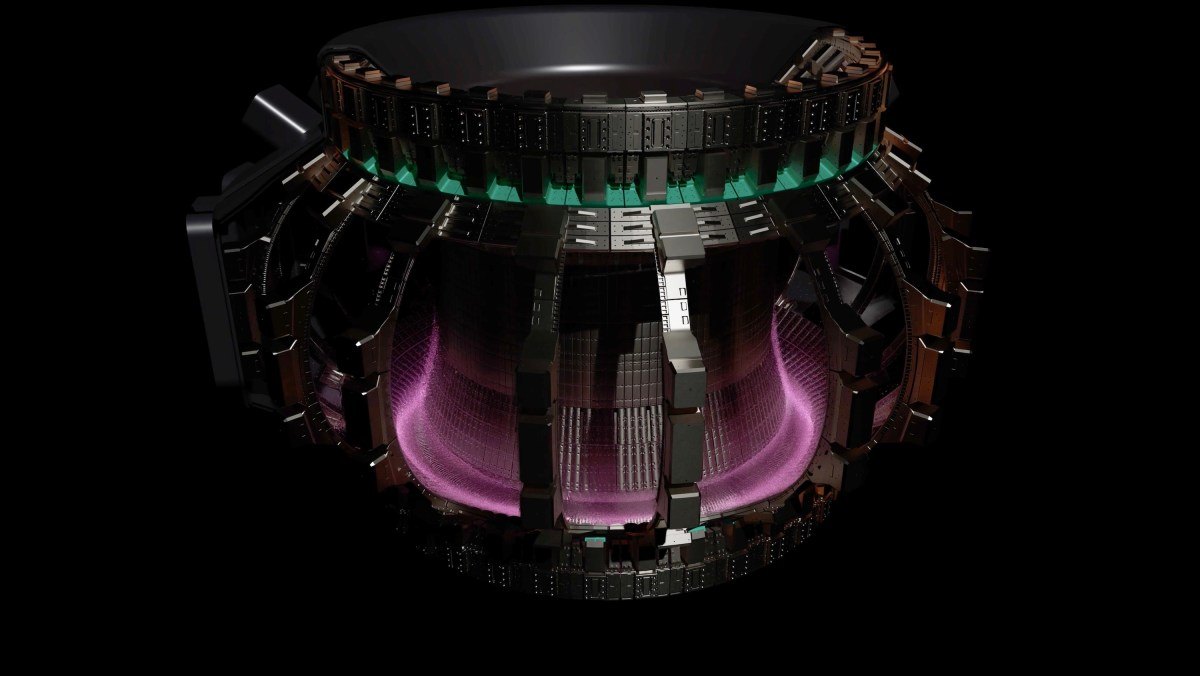
The awards fund advanced semiconductors used to help power and control the reactors. Fusion generates power by fusing atoms together as the sun does, requiring exotic materials, sophisticated computer modeling, and complex manufacturing. Over the last decade, private investors have bet more than $14 billion that one or more companies will put a power plant on the grid. Semiconductor funding covers one input. Shares change the deal for investors who treated a federal award as cash that did not dilute them.
Helion said the government will receive $175 million in nonvoting equity based on its Series G round, valuing the company at $15.5 billion, a stake of roughly 1%. "This type of structure has become more common in large U.S. government investments in recent years," said David Kirtley, Helion's co-founder and CEO. It "aligns the interests of Helion and the U.S. taxpayer around our commercial success." CFS has not shared its valuation, so the nonvoting stake's size is unknown. A CFS spokesperson said taxpayers will "participate in the upside of our commercial success" for research supporting an American commercial fusion industry.
Advertisement
Tech Pulse Daily
Get tomorrow's pulse first
Join engineers who read Tech Pulse before stand-up. Free, weekday mornings.
Fusion startups are giving the government: why it matters now
The Fusion Industry Association says private capital cannot yet beat other countries. Last year the trade group, with CFS as a member, sought a one-time $10 billion infusion, with $5.4 billion for fusion startups. A CFS spokesperson said other nations "are moving aggressively to accelerate their commercial fusion industries, pouring billions in state-backed efforts to win the race to fusion power." That ask would "build out the research infrastructure in the DOE's Fusion Roadmap" and help the U.S. industry compete with China.
Until recently, federal fusion dollars trickled out. The Biden administration introduced the Milestone-Based Fusion Development Program, a Department of Energy program that pays companies as they hit technical goals. Less than $50 million was distributed in the first couple of years. More recent awards were a little bigger but still well shy of what the trade group called for. The $260 million suggests the lobbying is starting to pay off, from Commerce rather than that research budget, with equity attached.
Fusion startups are giving the government: who is affected
Beyond fusion, last year MP Materials, a critical minerals supplier, gave the government a 15% stake for a $400 million investment, a $150 million loan, offtake agreements guaranteeing purchases of its output, and profit sharing. USA Rare Earth gave up a 10% stake for a $277 million award and a $1.3 billion loan. The Biden administration had awarded Intel $8.9 billion that had not been paid out, and last year the Trump administration turned it into a roughly 10% stake.
Germany-based Proxima Fusion confirmed that the German government and the European Union are on its cap table, plus equity from SPRIND, Germany's federal agency for disruptive innovation, and DCTF, Deutsche Climate Tech Fonds. Thea Energy and Avalanche Energy have federal awards and contracts, and Pacific Fusion has partnered with federal labs. All three confirmed they have not given the government a stake. Inertia Enterprises said it gave no equity and has a public-private partnership with Lawrence Livermore National Laboratory to commercialize fusion technology developed there.
Fusion startups are giving the government: what to watch
Only a handful of startups have agreed to government stakes in exchange for awards, and that handful could set the tone. Direct investment signals that the Trump administration treats fusion power as a strategic priority for the United States. Such backing could boost investor confidence or chill private investment, because venture firms must weigh whether dilution is worth the trade-off. In a pay-to-play round or a wind-down, the open question is who gets priority among shareholders already on the books.
Fusion companies have raised billions of dollars in recent years, and they will need billions more to deliver on their promises. Federal awards used to be no-brainers when it came time to scale up, because the cash did not shrink ownership. The bargains are more complicated now. Helion's piece is measurable at roughly 1% of the Series G. CFS has not published the valuation behind its nonvoting shares. Will these new bargains be worth it on the next raise?
Developer Action Items
- ☐ Map where Fusion startups giving government sits in your stack (SDK, API key, billing, data-processing addendum).
- ☐ Hold the $260 million figure to the primary report; do not brief a number that is not on the record.
- ☐ Hold non-urgent migrations until the integration or use-of-proceeds roadmap is public — day-one coverage is not a ship signal.
- ☐ If you are mid-contract or mid-POC, ask the vendor what changes for existing customers this quarter.
- ☐ Write the single decision this forces: stay, dual-source, or exit.
Fusion startups are giving the government FAQ
How much did Helion and Commonwealth Fusion Systems receive from the Department of Commerce?
The awards total $260 million under the CHIPS and Science Act, the 2022 semiconductor law. Helion received $175 million and Commonwealth Fusion Systems $85 million to develop advanced semiconductors that help power and control their reactors. Both agreed to give the government nonvoting shares.
What stake does the U.S. government get in Helion?
Helion said the government will receive $175 million in nonvoting equity based on its Series G round, which valued the company at $15.5 billion. That is a stake of roughly 1%, and the shares do not vote.
How large is the government's stake in Commonwealth Fusion Systems?
CFS agreed to a nonvoting stake based on its most recent valuation, which the company has not shared publicly, so the percentage is not known. CFS has raised about $4 billion, and Helion has $3.2 billion in committed capital.
What did the Fusion Industry Association ask Washington to spend?
Last year the trade group sought a one-time $10 billion infusion, with $5.4 billion for fusion startups, to build research infrastructure in the DOE's Fusion Roadmap and help the U.S. industry compete with China. The new $260 million came from Commerce, with equity attached, after the Milestone-Based Fusion Development Program distributed less than $50 million in its first couple of years.
Which fusion startups have not given the government equity?
Thea Energy and Avalanche Energy, which have federal awards and contracts, and Pacific Fusion, which has partnered with federal labs, confirmed they have not given the government a stake. Inertia Enterprises said it gave no equity and has a public-private partnership with Lawrence Livermore National Laboratory. Proxima Fusion, in Germany, does have the German government, the European Union, SPRIND, and DCTF on its cap table.
Sources

Author
Dillip Chowdary
Writes Tech Bytes coverage of AI, engineering, and the tools that actually ship. Editor of Tech Pulse Daily.
Related on Tech Bytes
Advertisement