Google's Gemini 4 Carbon edges Claude Opus 5.5, claims fewest
Google's Gemini 4 Carbon scores 59 on the Intelligence Index V5 and 54 on the hallucination benchmark, beating Claude Opus 5.5 at $7.76 per task.
By Dillip Chowdary • Nov 03, 2026 • Source: tomshardware.com
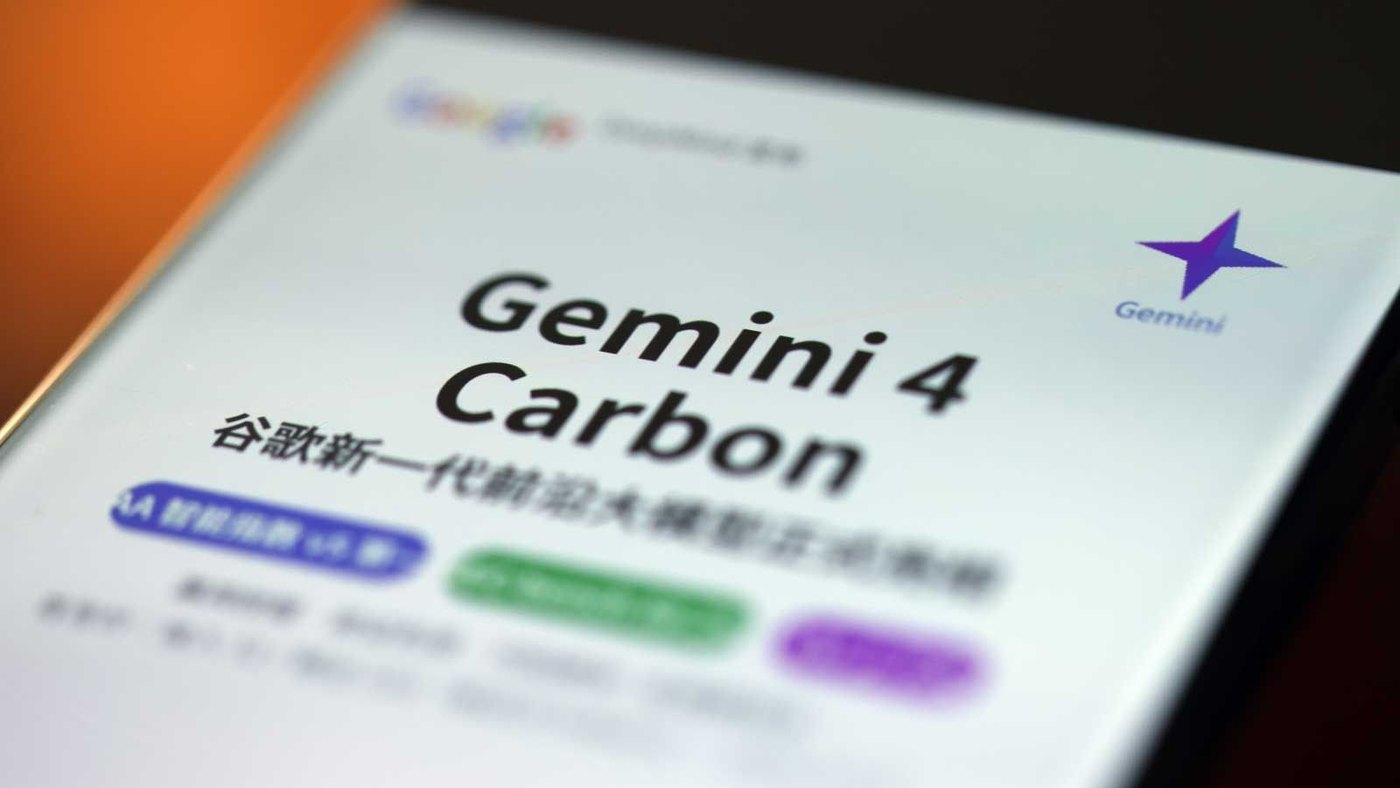
Google released Gemini 4 Carbon on October 28, 2026, and the new frontier model immediately climbed to the top of Artificial Analysis' Intelligence Index V5 benchmark suite, edging out Claude Opus 5.5 by a single point while also claiming the lowest hallucination score of any model tested. Access is initially limited to a subset of cyber defenders through Google's Fairwind Program, with broader availability planned for later. tomshardware.com's report provides the full benchmark context.
This piece breaks down every benchmark number, cost comparison, safety claim, and rollout restriction Google attached to Carbon's launch. It is aimed at developers, AI practitioners, and enterprise teams evaluating frontier models for agentic or cybersecurity workloads who need to know what Carbon actually delivers before committing a token budget.
What Google's Gemini 4 Carbon edges Claude Opus 5.5 shipped
Google's Gemini 4 Carbon scores 59 on Artificial Analysis' Intelligence Index V5, placing it one point above Claude Opus 5.5 (max with fallback) and two points above OpenAI's GPT-6 Astra (max). It lands nine points ahead of Meta's Muse Wonder Full (Max) and ten points above Claude Fable 5.1 (max with fallback). Carbon achieves the top score across four of the nine individual evaluations in the Intelligence Index V5 suite.
The model debuted just two weeks after Google released Gemini 4 Argon, marking an unusually compressed release cadence for a company that had endured an irregular launch schedule for much of 2026. Carbon's highest-profile claim is its 54 on Artificial Analysis' AA-Omniscience v1.1, a separate benchmark tracking hallucinations and knowledge recall scored on a -100 to +100 scale. That puts it six points clear of Claude Opus 5.5 (max), which scores 48, and represents the highest mark any model has achieved on that test.
What changed for builders in Google's Gemini 4 Carbon edges Claude Opus
The cost and efficiency profile of Carbon may matter as much to builders as the raw benchmark position. At $7.76 per Intelligence Index task, Carbon is roughly 23 percent cheaper than Claude Opus 5.5 (max, $10.04 per task) and about 40 percent cheaper than Claude Fable 5.1 ($12.99 per task). It uses approximately 123,000 output tokens per task, 29 percent fewer than Claude Opus 5.5 (max, 173,000 tokens). The table below places these numbers alongside the closest competitors:
| Model | Intelligence Index V5 | Cost per Task | Output Tokens per Task |
|---|---|---|---|
| Gemini 4 Carbon (high) | 59 | $7.76 | 123k |
| Claude Opus 5.5 (max w/ fallback) | 58 | $10.04 | 173k |
| GPT-6 Astra (max) | 57 | $6.25 | — |
| Claude Fable 5.1 (max w/ fallback) | 49 | $12.99 | — |
| Gemini 4 Argon | 50 | $7.68 | — |
| DeepSeek V4.1 Flash 1017 (open-weight) | 32 | ~$0.60 | — |
Carbon's standard API pricing sits at $4 input / $20 output per million tokens, in line with Gemini 4 Argon ($7.68 per task) while scoring nine points higher on the Intelligence Index. Where Carbon falls short: Artificial Analysis flags it as weaker than Claude Code with Claude Opus 5.5 on programming tasks, and it trails Grok 4.7, Muse Wonder, and Kimi K3.1 Pro on knowledge work specifically.
Advertisement
Tech Pulse Daily
Get tomorrow's pulse first
Join engineers who read Tech Pulse before stand-up. Free, weekday mornings.
How to install or upgrade Google's Gemini 4 Carbon edges Claude Opus 5.5
Carbon is not yet generally available. Google is rolling out access exclusively through its Fairwind Program, starting with a defined group of "cyber defenders." Developers and enterprises cannot self-serve the model through a standard API key today; access requires enrollment or partnership through the Fairwind Program. Google has stated it wants to iterate on Carbon's guardrails for cybersecurity use cases before making it broadly available, following a model similar to how Anthropic staged the release of Mythos in 2025.
Once Google opens Carbon to wider API access, users of Google AI Studio or Vertex AI who already interact with Gemini models through the SDK can expect a model-switch flow similar to prior Gemini releases. No public model ID string, SDK version requirement, or CLI flag for Carbon has been published by Google as of this article. The commands below are illustrative of the standard Gemini SDK pattern and will need to be confirmed against Google's official documentation when general availability is announced:
# Install or update the Google Generative AI SDK
pip install --upgrade google-generativeai# Switch to Carbon once the model ID is published (placeholder)
import google.generativeai as genai
model = genai.GenerativeModel("gemini-4-carbon") # confirm ID at launchGotchas and compatibility in Google's Gemini 4 Carbon edges Claude Opus
The AA-Omniscience v1.1 score of 54 deserves careful framing. Even at the top of the hallucination benchmark, Carbon answers only 58 percent of questions correctly versus 48 percent for Gemini 4 Argon, but it does so at the cost of an 11 percent hallucination rate, compared to 4 percent for Argon. Claude Opus 5.5 (max) and GPT-6 Astra (max) both hold hallucination rates of 50 percent, which is significantly higher, but the scale itself is sobering: the highest-scoring model in the world in 2026 still only hits 54 on a scale that runs to +100.
Carbon is also not the cost leader at every tier. OpenAI's GPT-6 Astra (max) costs $6.25 per task versus Carbon's $7.76, making Astra roughly 1.2 times cheaper. DeepSeek V4.1 Flash 1017 is approximately 13 times cheaper per task than Carbon, though it scores only 32 on the Intelligence Index. Arena.ai places Carbon at the top of its Pareto Frontier chart at the higher price points, but at lower cost thresholds, Chinese open-weight models including GLM 5.3-Flash and DeepSeek V4 Pro displace it. Carbon's restricted Fairwind rollout also means teams that need it today for general development workloads cannot access it without program approval.
What to watch after Google's Gemini 4 Carbon edges Claude Opus 5.5
Google's collaboration with the U.S. government's voluntary pre-release model testing process is shaping Carbon's rollout strategy more visibly than any previous Gemini release. Google's launch statement reads: "We're taking a deliberate approach to rollout and are actively engaged in the U.S. government's voluntary process for pre-release model testing." Google also claims Carbon thwarted all attempts in the Gray Swan Indirect Prompt Injection benchmark and cut unsupported claims in its responses by twice as much as Gemini 4 Argon, while reducing model overreach — instances where the model pursues its own path when facing discrepancies — by 26 percent.
The broader question is whether Carbon's combination of benchmark leadership, sub-$8 cost per task, and low hallucination score constitutes a durable formula or a temporary lead. Gartner research cited in the Tom's Hardware report found that only 3 percent of companies are currently achieving real cost and productivity improvements from AI. For the majority of enterprises still calibrating ROI, a model that demonstrably reduces hallucinations and surfaces its uncertainty rather than fabricating answers is more useful than one that merely tops a leaderboard. Watch for Google's timeline to exit the Fairwind-only phase and for competing labs to respond with their own hallucination and safety claims.
Developer Action Items
- ☐ Diff the official changelog for OpenAI / Claude / Gemini 5.5 before you bump — APIs, defaults, and removed flags only.
- ☐ Install through the vendor's documented channel in staging; keep a one-command rollback and time-box the canary.
- ☐ Grep your repo for old flag names, lockfile pins, and plugin versions that the notes mark as breaking.
- ☐ Prefer the first patch cut over the day-zero tag unless you have a reason to be on the leading edge.
- ☐ If HN Claude/Codex/Fable did not name a region, plan, or SKU, screenshot the official availability line before you promise it to users.
Google's Gemini 4 Carbon edges Claude Opus 5.5 FAQ
How does Gemini 4 Carbon compare to Claude Opus 5.5 on benchmarks?
Gemini 4 Carbon scores 59 on the Artificial Analysis Intelligence Index V5, one point ahead of Claude Opus 5.5 (max with fallback) at 58. On the AA-Omniscience hallucination benchmark, Carbon scores 54 versus Opus 5.5's 48.
How much does Gemini 4 Carbon cost per task?
Gemini 4 Carbon costs $7.76 per Intelligence Index task, roughly 23 percent less than Claude Opus 5.5 at $10.04 and about 40 percent less than Claude Fable 5.1 at $12.99.
Is Gemini 4 Carbon available to developers now?
No. As of its October 28, 2026 launch, access is restricted to a subset of cyber defenders through Google's Fairwind Program. Broader developer availability has not been dated.
What is the AA-Omniscience score and why does it matter?
AA-Omniscience v1.1 is Artificial Analysis' benchmark tracking knowledge recall and hallucinations on a -100 to +100 scale. Carbon's score of 54 is the highest of any model tested, six points above Claude Opus 5.5, though the scale highlights that even top models remain far from fully reliable.
How does Carbon compare to cheaper open-weight models?
DeepSeek V4.1 Flash 1017 costs approximately 13 times less per task than Carbon but scores only 32 on the Intelligence Index versus Carbon's 59. At lower price tiers, GLM 5.3-Flash and DeepSeek V4 Pro outperform Carbon on Arena.ai's Pareto Frontier chart.
Sources

Author
Dillip Chowdary
Writes Tech Bytes coverage of AI, engineering, and the tools that actually ship. Editor of Tech Pulse Daily.
Related on Tech Bytes
Advertisement