Google’s Pixel Tag tracker is now available
Google launched its Pixel Tag tracker today for $29.99 featuring ultra-wideband precision and Bluetooth 6.0 Channel Sounding inside the Find Hub app.
By Dillip Chowdary • Nov 10, 2026 • Source: The Verge
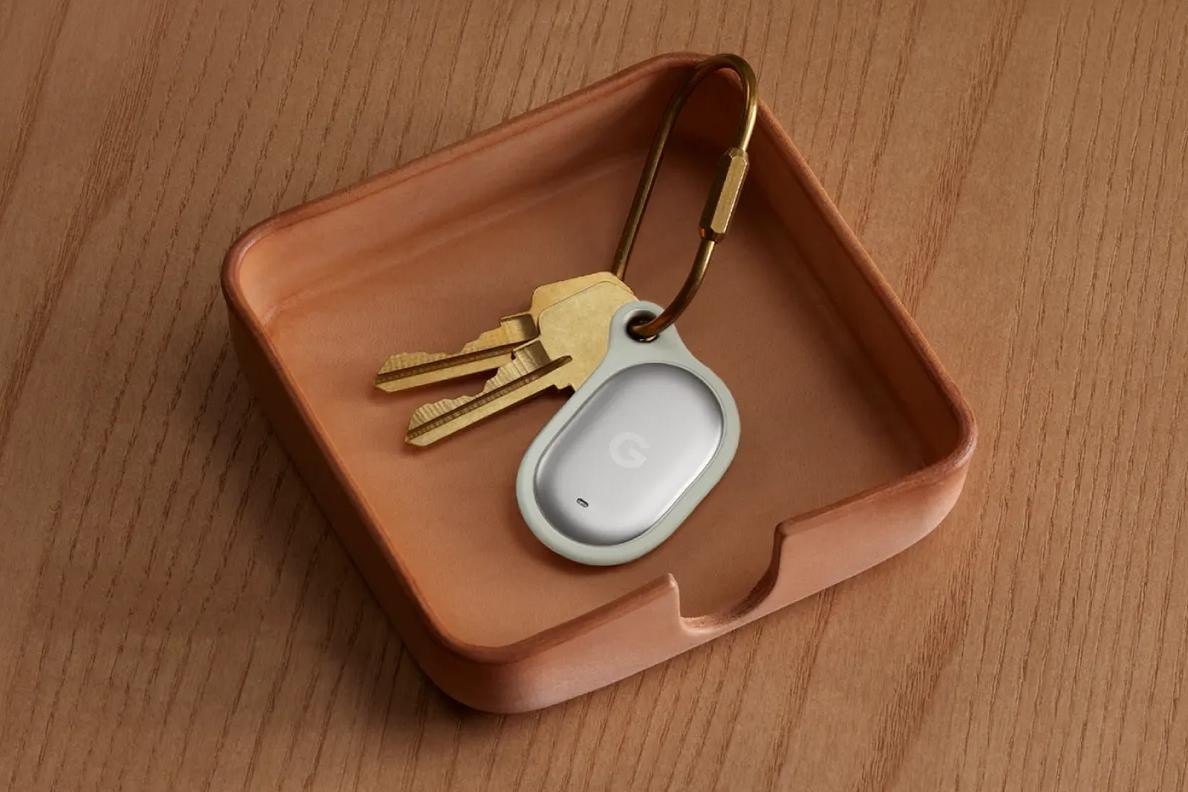
Google launched the Pixel Tag tracker, making the first-party locator available for purchase following its initial August announcement. The device arrives after years of third-party Android trackers from Samsung, Motorola, and Pebblebee, as detailed in The Verge's report. Google priced the tracker at $29.99 for a single unit and $99.99 for a four-pack, integrating directly into the rebranded Find Hub network.
This breakdown covers hardware specifications, dual-radio spatial tracking, pricing tiers, and platform requirements for Android smartphone owners. Readers seeking native item tracking will find an analysis comparing Google's offering with Apple's AirTag 2 and earlier Android alternatives. The guide explains how Find Hub software leverages ultra wideband and Bluetooth 6.0 Channel Sounding.
01What shipped in Google’s Pixel Tag tracker
Google's tracker features an oblong footprint that is slightly longer than Apple's circular AirTag 2 while maintaining a thinner profile across its casing. Weighing 0.4 ounces, the Pixel Tag is marginally lighter than Apple's competing tracker. The lightweight construction ensures it remains unobtrusive when placed inside pockets or luggage compartments.
Unlike certain rival trackers, the Pixel Tag does not include an integrated keyring hole on its chassis for direct tethering. Securing the device to luggage handles, pet collars, or keychain rings requires pairing the hardware with dedicated accessory holders. Compatible accessories provide the necessary loops to fasten the oblong locator to personal belongings.
The internal enclosure houses a user-replaceable CR2032 coin battery designed to provide over a year of operational life. An integrated physical button resides on the tag surface, establishing a two-way finding mechanism. Pressing this onboard button commands a misplaced companion smartphone to emit an audible chime.
02What improved in Google’s Pixel Tag tracker
Direct phone alerting represents a functional hardware upgrade over Apple's AirTag 2, which omits an external paging button entirely. Rather than requiring users to search for their missing phone through separate web portals, the Pixel Tag initiates an acoustic ring from the hardware button. This two-way communication streamlines locating personal items when handsets slip under furniture.
| Feature | Pixel Tag | AirTag 2 |
|---|---|---|
| Unit Price | $29.99 | $29.99 class |
| Four-Pack | $99.99 | Multi-pack tier |
| Weight | 0.4 ounces | Over 0.4 ounces |
| Shape | Oblong and thinner | Circular |
| Phone Button | Built-in button | No physical button |
| Battery | CR2032 (>1 year) | CR2032 coin cell |
| Water Rating | IP67 dust/water | Water resistant |
| Ranging Radios | UWB, Bluetooth 6.0 | Ultra wideband |
Environmental durability is backed by an IP67 rating, guaranteeing complete ingress protection against airborne dust and accidental water exposure. The sealed design allows the tracker to endure shallow immersion without suffering liquid damage. This protection matches modern mobile accessories while maintaining a lightweight 0.4-ounce profile.
Advertisement
Tech Pulse Daily
Get tomorrow's pulse first
Join engineers who read Tech Pulse before stand-up. Free, weekday mornings.
03What you gain from Google’s Pixel Tag tracker
Users pairing the device with a compatible handset gain real-time precision tracking within Google's unified Find Hub application. When approaching a tagged item, the Find Hub interface displays an accurate distance readout alongside directional visual indicators pointing directly toward the tag. This spatial guidance eliminates guesswork when retrieving keys tucked behind household objects.
Handsets lacking ultra wideband radios but equipped with Bluetooth 6.0 hardware provide precise distance estimation through Channel Sounding technology. While Bluetooth Channel Sounding lacks directional guidance arrows, the system precisely calculates the distance separating the phone and tracker. This tiered ranging capability gives users verifiable proximity feedback across varied hardware.
Beyond close-range locating, the Pixel Tag operates natively across Google's global Find Hub crowdsourced network. Participating Android devices securely relay encrypted signals to help locate items left behind at public transit stations or coffee shops. The unified network removes reliance on fragmented OEM tracking services, ensuring consistent tracking coverage.
04How to get Google’s Pixel Tag tracker
Prospective buyers can purchase the Pixel Tag immediately through the official Google Store website. Google sells single trackers for $29.99 each and provides a multi-unit bundle containing four trackers for $99.99, reducing the average unit cost to roughly $25. Both retail options ship directly to consumers seeking out-of-the-box integration.
Setting up the locator requires a smartphone operating Android 9 or later with the Find Hub app installed. After unboxing, holding the tracker near an active Android handset triggers automatic pairing prompts, linking the hardware to the user's Google Account. The setup process registers the device on the Find Hub network without manual bluetooth menus.
Taking full advantage of advanced directional location features requires hardware equipped with a dedicated ultra wideband transceiver or Bluetooth 6.0 support. Devices operating Android 9 without these specific radios still locate tags via acoustic ringing and crowdsourced network updates. Checking device specifications ensures buyers match their smartphone hardware to the tag's spatial capabilities.
05What to watch after Google’s Pixel Tag tracker
The absence of an integrated attachment hole creates an immediate market for third-party protective cases, adhesive mounts, and keyring accessories. Accessory makers will introduce silicone sleeves and rugged luggage loops to adapt the smooth oblong shell to backpacks and key rings. Early adopters should evaluate whether bundled accessory purchases alter the total setup expense.
Industry observers should monitor the adoption rate of ultra wideband silicon and Bluetooth 6.0 chips across mainstream mid-range Android smartphones. Because directional guidance and precise distance calculations depend strictly on these modern wireless controllers, widespread carrier adoption will determine user satisfaction. Expanding these radios beyond flagship phones remains essential for mass-market tracking.
Google's direct entry into personal tracking reshapes internal dynamics within the broader Android ecosystem, creating friendly competition with existing partners like Samsung, Motorola, and Pebblebee. As Google promotes its first-party tag on the Google Store, third-party developers will likely update their own hardware specifications to match Bluetooth 6.0 standards. This competition should accelerate feature parity across devices.
Google’s Pixel Tag tracker FAQ
How much does the Google Pixel Tag cost?
A single Pixel Tag costs $29.99 on the Google Store, and a four-pack bundle is available for $99.99.
What battery powers the Pixel Tag and how long does it last?
The tracker uses a replaceable CR2032 coin battery that runs for over a year of typical operation.
Can the Pixel Tag locate a lost Android phone?
Yes, pressing the integrated physical button on the Pixel Tag triggers an audible chime on a paired smartphone.
Does the Pixel Tag require a phone with an ultra wideband chip?
The tag functions with any smartphone running Android 9 or later, but displaying exact directional arrows requires a handset with a UWB chip, while Bluetooth 6.0 provides distance data.
Is the Pixel Tag waterproof and dustproof?
Yes, the Pixel Tag carries an IP67 rating, meaning it is dustproof and can withstand shallow water immersion.
Sources

Author
Dillip Chowdary
Writes Tech Bytes coverage of AI, engineering, and the tools that actually ship. Editor of Tech Pulse Daily.
Related on Tech Bytes
Advertisement