Hacking group ShinyHunters claims it breached the FBI, stole agents’
The theft of agents' personal information could present a major counterintelligence threat, where agents and their families are extorted into cooperating.
By Dillip Chowdary • Oct 03, 2026 • Source: TechCrunch
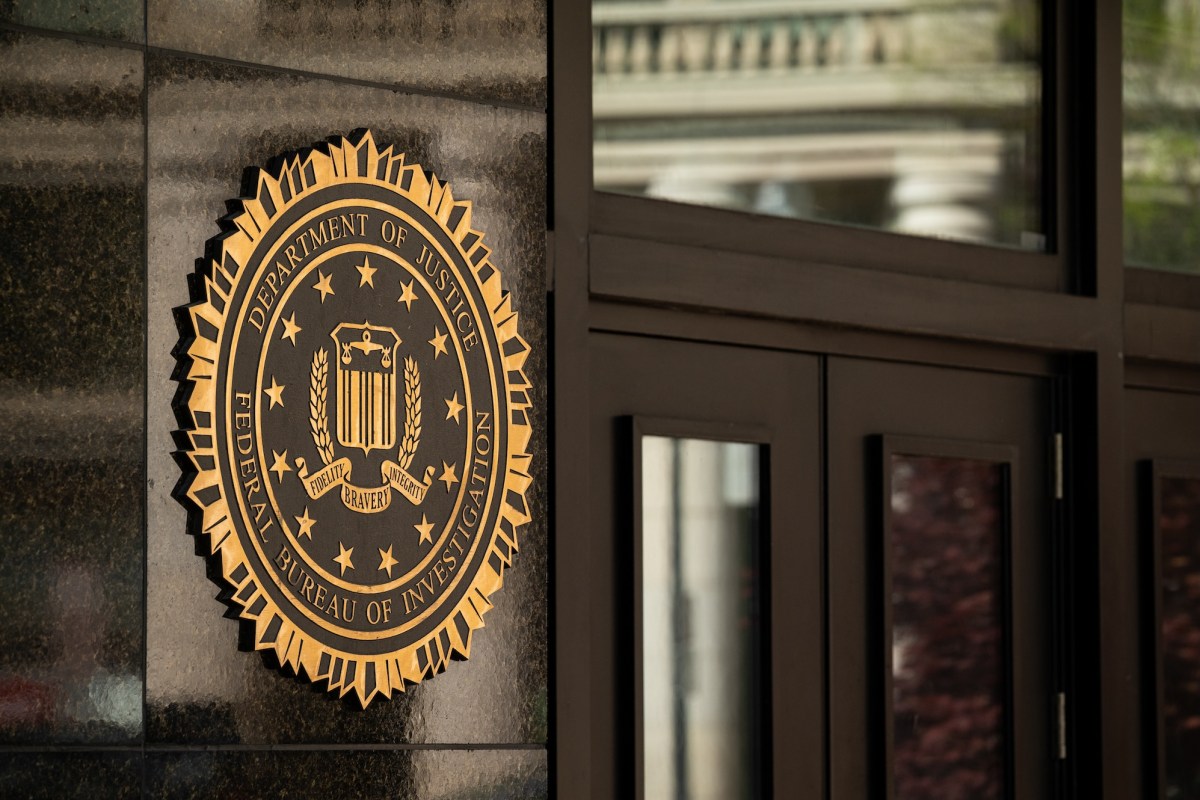
The hacking group ShinyHunters has claimed responsibility for a breach of FBI systems, alleging it obtained personal data belonging to federal agents and job applicants. The group, which has a documented history of large-scale data theft against corporate and government targets, says the stolen records include sensitive identifying information that could be used to target law enforcement personnel and their families.
This article breaks down what ShinyHunters says it took, how a breach of this kind typically unfolds, and why the exposure of agent-level identity data carries counterintelligence implications that go well beyond a standard credential leak. It is written for security practitioners, federal contractors, and anyone tracking threat actors operating at the intersection of cybercrime and national security.
Hacking group ShinyHunters claims it breached: what actually changed
ShinyHunters is claiming to have accessed FBI systems and exfiltrated records on agents and applicants. The group has not yet provided independently verified proof of the full dataset, but the allegation alone is significant given ShinyHunters' track record — the group was linked to dozens of high-profile breaches including AT&T, Ticketmaster, and Santander in recent years. If the claim holds, it would represent one of the more serious intrusions into U.S. federal law enforcement infrastructure in recent memory.
What would be new here is not simply that government data was targeted — that happens routinely — but that the alleged scope includes active field agents' personal information. Prior known breaches of government personnel records, including the 2015 Office of Personnel Management incident, demonstrated how damaging that class of data can be when it ends up in adversarial hands. ShinyHunters' claim raises the same kind of alarm, regardless of whether it is monetarily motivated or serves a different purpose.
Hacking group ShinyHunters claims it breached: how it works
ShinyHunters has historically relied on a combination of credential stuffing, third-party vendor exploitation, and cloud storage misconfigurations to gain initial access to target environments. Once inside, the group typically stages large volumes of records — often CSV exports or database dumps — before moving them to external infrastructure. The group has previously listed stolen data on dark web forums, sometimes demanding ransom, sometimes selling to the highest bidder.
In a government context, the attack surface often includes contractor portals, recruiting platforms, and background-check intake systems that sit adjacent to core agency infrastructure. Applicants who submitted personal information during the FBI hiring process would have had their data processed through systems that may or may not share the same security posture as classified networks. If ShinyHunters accessed a recruitment or HR-adjacent system rather than operational databases, that vector would be consistent with how the group has operated against large enterprise targets previously.
Advertisement
Tech Pulse Daily
Get tomorrow's pulse first
Join engineers who read Tech Pulse before stand-up. Free, weekday mornings.
Hacking group ShinyHunters claims it breached: why it matters now
The counterintelligence risk here is qualitatively different from a standard data breach. When agent identities, home addresses, and family relationships are exposed, the resulting leverage can be used not just for fraud or identity theft, but for coercion. A foreign intelligence service in possession of that data could approach an agent or a family member and use the information to recruit, extort, or compromise ongoing operations without ever touching FBI systems directly.
That threat model is not hypothetical. The OPM breach, which exposed background investigation files on millions of federal employees and contractors, was widely assessed as a strategic intelligence collection effort by a nation-state. A ShinyHunters-style breach could produce a similar dataset and then be sold or transferred to a state actor, even if the initial theft was financially motivated. The window between criminal breach and state exploitation has historically been short.
Hacking group ShinyHunters claims it breached: who is affected
The people most directly at risk are current and former FBI agents whose personal identifiers — names, contact information, and potentially employment records — may be in the stolen dataset. Job applicants who went through the FBI's screening or hiring pipeline are also potentially exposed, as recruitment systems collect detailed biographical, financial, and family information as part of the background investigation process.
Secondary exposure extends to family members whose information may have appeared in agent-submitted forms. Background investigation files routinely include spouse details, residential histories, foreign contacts, and financial disclosures. If any of that material was accessible through the compromised system, the blast radius extends well beyond the agents themselves to anyone named in those filings.
Hacking group ShinyHunters claims it breached: what to watch
The FBI has not publicly confirmed the breach as of this reporting, and ShinyHunters' claims carry no independent verification yet. The next significant signal will be whether the group publishes a sample dataset, which threat researchers and journalists could then cross-reference against known agent or applicant records to assess authenticity. That kind of release would shift the story from allegation to confirmed incident.
Security teams at federal agencies and their contractors should treat this period as a heightened-risk window and audit access logs on any recruiting, HR, or identity-management systems that interface with FBI processes. Separately, the broader question of whether ShinyHunters is operating independently or in coordination with a foreign buyer is one that intelligence agencies will be working in parallel. Past ShinyHunters data sales have surfaced on criminal forums within days of a claimed breach — if a dataset appears, attribution of its downstream use will matter as much as the breach itself.
Developer Action Items
- ☐ Inventory whether Hacking group ShinyHunters claims runs in prod, CI, staging, or on laptops before you debate severity.
- ☐ Confirm the vendor's fixed build for Hacking group ShinyHunters claims from TechCrunch, then schedule the patch window.
- ☐ If you cannot patch today, isolate the service, rotate tokens that sat on the affected surface, and raise the logging floor.
- ☐ Record the decision and residual risk so the next on-call does not re-litigate whether you are exposed.
- ☐ Treat unexpected emails that mention Hacking group ShinyHunters claims (shipping, invoices, password resets) as phishing until verified.

Author
Dillip Chowdary
Writes Tech Bytes coverage of AI, engineering, and the tools that actually ship. Editor of Tech Pulse Daily.
Related on Tech Bytes
A16z is challenging Silicon Valley’s love for drop-outs by launching a school
Read →
Right-size generative AI endpoints with concurrency sweeps on Amazon SageMaker AI
Read →
Apple Wallet driver’s licenses coming to three new states soon
Read →
AI Models Built From Rat Brains Just Got Closer to Reality
Read →
Today's Tech Pulse briefing
Full briefing →
Advertisement