Hawaii DOT: All West Coast flights halted by SpaceX debris after FAA
Federal regulators lifted a nationwide air traffic control ground stop and a secondary SpaceX launch debris halt that froze West Coast flights on Friday.
By Dillip Chowdary • Nov 15, 2026 • Source: hawaiinewsnow.com

The Federal Aviation Administration lifted a nationwide ground stop on Friday afternoon after resolving a major communications issue that crippled domestic air traffic control centers across the United States. Operations were further complicated when falling space debris from a private rocket launch triggered an emergency travel halt for commercial flights crossing the Pacific, as detailed in hawaiinewsnow.com's report. State officials confirmed that all airspace restrictions and debris pauses cleared around 3:20 p.m., allowing airlines to begin the complex process of clearing stranded passengers.
This breakdown covers the full timeline of the dual flight stoppages, the ground congestion management plans across island facilities, and the operational response from commercial carriers. It is written for travelers, airline operational staff, and logistics planners navigating the resulting schedule recovery. The analysis outlines the precise sequence of federal orders, carrier flexibility rules, and the rare circumstances that triggered nationwide air traffic intervention.
01Air traffic control communication center failure
Federal authorities issued the initial ground stop on Friday morning after technical malfunctions disrupted communications across regional air traffic control centers. The outage forced controllers to halt departing domestic flights connecting the continental United States and regional destinations. Flight restrictions remained volatile throughout the morning hours as regional centers worked to restore reliable data links and stabilize traffic corridors.
State transportation authorities received formal notice of the domestic restriction at roughly 10:50 a.m. local time. Hawaiʻi Department of Transportation Director Ed Sniffen stated that the ground stop targeted domestic flights bound to and from the mainland while local interisland transit operated without interruption. The dynamic conditions forced safety planners to manage fluid entry criteria as central dispatchers evaluated communication channel reliability across continental sectors.
International routing rules shifted several times as controllers attempted to isolate unaffected flight corridors. Officials initially allowed transpacific international flights to arrive and depart without administrative limits before encountering route conflicts that required immediate travel adjustments. Sniffen emphasized that operational parameters shifted repeatedly throughout the morning as federal authorities worked to resolve technical conflicts across overlapping control networks.
02Airport tarmac adjustments and runway parking plans
Transportation personnel made minor progress around 12:30 p.m. when dispatchers cleared an initial wave of commercial flights to leave island airports for the American West Coast. The brief clearance window gave ground controllers an opportunity to reposition stranded aircraft and ease congestion at passenger terminal gates. Despite the limited release, incoming mainland flights remained delayed, leaving gate space severely constrained across regional airports.
Facility managers responded to the bottleneck by staging contingency parking plans to keep runways clear and prevent gridlock on active ramps. Sniffen confirmed that airport crews prepared to park aircraft on designated taxiways and unused runways to reserve sufficient gate room for incoming planes. Ground handling teams repositioned empty airframes across airfield perimeters to maintain clear taxi paths for newly authorized movements.
Airlines and station dispatchers coordinated gate allocations to prevent inbound international arrivals from sitting indefinitely on active airport surfaces. Field supervisors reallocated ground power equipment and luggage transit pathways to support parked aircraft holding outside gate areas. These physical reconfigurations ensured that local airports retained structural capacity to receive delayed cross-ocean flights without shutting down daily interisland operations.
Advertisement
Tech Pulse Daily
Get tomorrow's pulse first
Join engineers who read Tech Pulse before stand-up. Free, weekday mornings.
03SpaceX Starship launch and booster abort
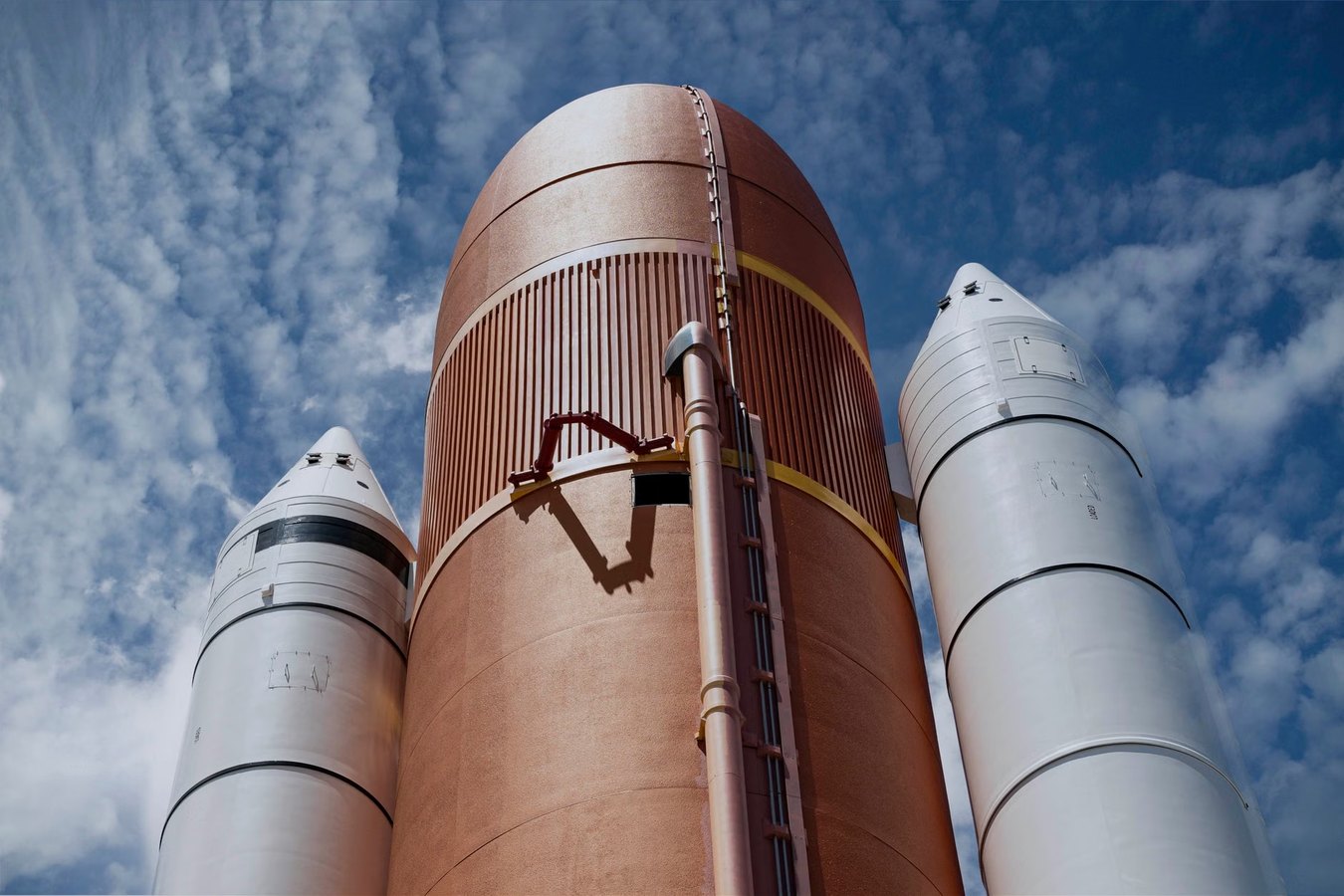
Commercial aerospace contractor SpaceX launched its heavy Starship rocket on Friday from its primary launch facility in southern Texas. While the mission was planned to send the upper spacecraft on an orbital test trajectory, the initial ascent encountered serious mechanical trouble shortly after liftoff. The booster stage experienced an unexpected inflight malfunction that prevented the vehicle from executing its planned recovery profile.
According to reporting from The Associated Press, an automatic abort sequence triggered during the climb, causing the first-stage booster to separate and crash into the Gulf. The upper Starship spacecraft managed to continue its powered flight toward orbit despite the loss of the primary booster assembly. The offshore abort sent vehicle components into marine drop zones, requiring monitoring teams to track descending material.
The maritime crash prompted immediate safety alerts regarding potential trajectory variations and secondary fragmentation risks over high-altitude airspace corridors. Federal tracking teams assessed whether debris fields from the failed booster or orbital vehicle posed hazards to commercial flight paths. Space operations personnel relayed vector data to aviation monitoring systems to establish buffer zones around affected transpacific flight lanes.
04Space debris halt on West Coast routes
Air traffic regulators halted transpacific movements again at 1:55 p.m. when the Hawaiʻi Department of Transportation confirmed all West Coast flights were suspended due to launch debris. The unexpected secondary order arrived just as regional airports were clearing backlogged departures, instantly halting aircraft on terminal aprons and taxiways. Transportation officials instructed passengers to coordinate with airline representatives rather than traveling directly to airport terminals.
Sniffen urged travelers to monitor carrier announcements closely, noting that airspace determinations were shifting rapidly in response to active aerospace safety evaluations. The department published social media notices warning that mainland departures were frozen until military and civil tracking assets verified clean oceanic routes. Ground operations ground to a standstill along the Pacific coast while federal controllers reviewed orbital trajectory parameters.
The dual interruption concluded at approximately 3:20 p.m. when transportation authorities announced that both the communications ground stop and the space debris hold were officially lifted. Regulators authorized controllers to resume standard departure sequencing, though officials cautioned that residual schedule displacement would persist for hours. Airport facilities worked to reorder stacked departure queues and release aircraft held in tarmac holding areas.
05Airline ticket policies and historical ground stops
Hawaiian Airlines and Alaska Airlines instituted flexible travel policies to help affected passengers alter existing itineraries without traditional rebooking penalties. Both carriers issued operational advisories stating that returning flight networks to published schedules would require extended time even after federal airspace restrictions cleared. Gate teams assisted displaced ticket holders with lodging and alternate routing as aircraft arrived out of their planned rotation slots.
Nationwide ground orders issued by civil aviation regulators remain exceptionally uncommon in United States history. A widespread pilot notification system failure triggered a similar nationwide halt in January 2023, grounding domestic airline departures for several hours. Prior to that technical failure, the last comparable complete stoppage occurred following the terrorist attacks on September 11, 2001.
Airlines spent the remainder of Friday repositioning displaced crews, servicing diverted jetliners, and accommodating travelers who missed connecting domestic flights. Local transportation leaders maintained close communication with air traffic management units to prevent terminal overcrowding as delayed evening flights resumed transpacific crossings. Aviation networks gradually stabilized as long-haul airframes completed delayed transit runs into West Coast destination hubs.
All West Coast flights halted by SpaceX FAQ
What caused the initial nationwide FAA ground stop on Friday?
The FAA issued the ground stop due to a communications failure that affected air traffic control centers handling domestic flight traffic.
Why were West Coast flights halted a second time in the afternoon?
West Coast flights were suspended at 1:55 p.m. because of space debris hazards following the malfunction of a SpaceX Starship first-stage booster.
Did the federal ground stop affect local interisland flights in Hawaiʻi?
No, interisland flights continued operating normally while the restrictions applied only to domestic flights to and from the continental United States.
How did regional airlines respond to passengers affected by the delays?
Hawaiian Airlines and Alaska Airlines instituted flexible travel policies allowing guests to adjust their travel plans as flight operations returned to schedule.
Sources

Author
Dillip Chowdary
Writes Tech Bytes coverage of AI, engineering, and the tools that actually ship. Editor of Tech Pulse Daily.
Related on Tech Bytes
Advertisement