Hawaii flights halted due to debris from SpaceX launch amidst FAA's ground
The FAA and Hawaii transportation officials lifted an hourslong nationwide ground stop and Pacific airspace pause caused by router failures and SpaceX debris.
By Dillip Chowdary • Nov 14, 2026 • Source: kitv.com
Federal regulators lifted an hourslong nationwide ground stop and cleared Hawaii airspace after two separate aviation disruptions halted domestic flights across the country on Friday. Flights connecting Hawaii to the West Coast were initially halted following a temporary pause triggered by debris from a SpaceX rocket launch, as detailed in kitv.com's report. At the same time, the Federal Aviation Administration issued a broader order grounding all domestic departures nationwide until further notice due to what the agency termed extraordinary circumstances and reasons of safety.
This breakdown covers the technical causes of the cascading aviation failure, the scope of the SpaceX launch debris pause, and the airline responses across domestic networks. The reporting details how network hardware issues in air traffic control centers combined with oceanic launch safety protocols to stall West Coast and transpacific travel for airline passengers and dispatchers.
01Network router failure triggers nationwide pause
The primary nationwide ground stop originated from a severe telecommunications outage inside Federal Aviation Administration infrastructure rather than an aircraft mechanical issue. An agency spokesperson confirmed that a communications failure crippled Air Route Traffic Control Centers, the facilities responsible for coordinating and monitoring high-altitude flights across the country. Technical evaluations determined that a core problem with network routers cascaded through air traffic control systems, cutting essential links between centers.
Because air traffic controllers rely on these communication networks to manage routing and flight spacing safely, federal officials ordered an immediate halt to all departing domestic flights. Flights already airborne when the directive took effect were permitted to continue along their routes toward their scheduled destinations. Grounded aircraft were held at departure gates across the country until telecommunications engineers restored network connectivity and router operations.
02SpaceX launch debris restricts West Coast corridors
Simultaneously, a localized aerospace hazard added another disruption for flights navigating the Pacific corridor. The Hawaii Department of Transportation reported just before 2 p.m. on Friday, Nov. 13, that falling debris from a SpaceX launch forced a temporary halt on all flights heading between Hawaii and the West Coast. Federal aviation protocols require immediate airspace closures whenever launch trajectories or re-entering launch hardware threaten civil flight corridors.
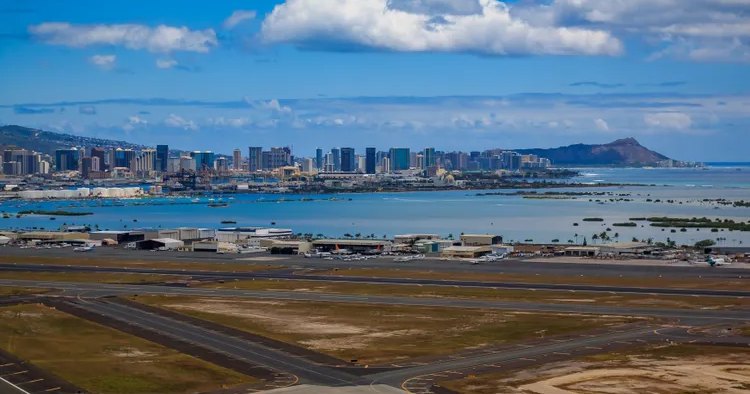
The space launch pause compounded the effects of the nationwide FAA ground stop for travelers flying out of Honolulu and neighboring island airports. The Hawaii Department of Transportation confirmed later in the afternoon that the temporary pause for SpaceX debris had cleared and was no longer affecting flight routes. Both federal regulators and state transportation officials coordinated the reopening of transpacific flight paths once orbital hardware cleared the Pacific ocean zone.
Advertisement
Tech Pulse Daily
Get tomorrow's pulse first
Join engineers who read Tech Pulse before stand-up. Free, weekday mornings.
03Major carriers invoke flexible travel waivers
Airlines responded to the dual disruptions by halting departures while maintaining airborne flights under FAA instructions. Delta Airlines announced that no Delta aircraft were departing during the FAA-mandated ground stop, though airborne flights continued to their destinations. Delta instituted a travel waiver allowing customers with flexible plans to adjust their reservations without paying extra fees while urging travelers to monitor status updates in the Delta app.
Alaska Airlines and Hawaiian Airlines issued a joint update acknowledging that the FAA ground stop impacted specific routes across their systems. The carriers maintained Neighbor Island operations within the state of Hawaii, international arrivals and departures through Honolulu, and select West Coast routes where clearances permitted. Both airlines activated flexible travel policies to help impacted customers reschedule, cautioning that returning operations to normal schedules would require additional time.
Southwest Airlines engaged directly with FAA officials to implement operational adjustments across its flight network in compliance with the federal groundstop. The airline stated that its operations teams worked to minimize travel impacts while prioritizing passenger and employee safety. Like the other major carriers, Southwest instructed passengers to track flight updates through digital channels as operational changes took effect.
04Departure clearances resume after network recovery
Federal officials allowed domestic flights across the United States to resume departures on Friday afternoon once telecommunications engineers resolved the underlying router malfunctions. The FAA confirmed that communications channels between Air Route Traffic Control Centers were restored, allowing controllers to resume sequencing gate departures. The lift order applied to mainland airports as well as transpacific hubs handling long-haul routes.
Despite the lifting of both the nationwide ground stop and the SpaceX debris pause, state transportation authorities warned of lingering schedule knock-on effects. The Hawaii Department of Transportation noted that ongoing delays would persist throughout the evening as airlines accommodated stranded passengers from earlier grounded flights. Ground crews, gate agents, and flight dispatch teams faced backlogs of repositioned aircraft and displaced flight crews at major hubs.
05Airline recovery and traveler advisory steps
State and airline officials advised all ticketed passengers to check directly with their individual airlines before traveling to airport terminals. Because aircraft and flight crews were held out of position during the hourslong grounding, rolling flight cancellations and delayed departures continued after system clearances were granted. The Hawaii Department of Transportation emphasized that airport wait times could remain elevated while ticket counters processed rebooked itineraries.
Airlines maintained their travel waivers into the evening to encourage passengers to rebook onto subsequent flights without penalty. Passengers flying between the Hawaiian islands, the continental West Coast, and international destinations were urged to track carrier mobile apps and websites for real-time departure times. Operations teams across all major carriers worked through the evening to reposition equipment and safely restore published flight schedules.
Hawaii flights halted due to debris FAQ
What caused the nationwide FAA ground stop on Friday?
The ground stop was caused by a telecommunications outage stemming from network router problems that cascaded across Air Route Traffic Control Centers nationwide.
Why were Hawaii flights to the West Coast halted separately?
Flights between Hawaii and the West Coast were temporarily halted just before 2 p.m. on Nov. 13 due to falling debris from a SpaceX launch over the flight path.
Did airlines offer fee waivers for impacted travelers?
Yes, major carriers including Delta Airlines, Alaska Airlines, and Hawaiian Airlines implemented flexible travel policies and waivers allowing passengers to change their flights at no extra cost.
Sources

Author
Dillip Chowdary
Writes Tech Bytes coverage of AI, engineering, and the tools that actually ship. Editor of Tech Pulse Daily.
Related on Tech Bytes
Advertisement