Here’s what’s coming for the MacBook Pro next year, per report
Apple plans to launch an M7 MacBook Pro with a thinner chassis and second-generation touch models next year after skipping the M6 Pro and M6 Max chips.
By Dillip Chowdary • Nov 02, 2026 • Source: 9to5Mac

Apple introduced a hardware revision to its premium laptop family by unveiling the MacBook Pro with PROLED XDR Display alongside touch capabilities, establishing a new tier above its traditional notebook designs. According to 9to5Mac's report, reporting from Bloomberg details Apple's roadmap for multiple upcoming notebook revisions planned for next year. The company currently divides its catalog across the base M6 MacBook Pro, the standard M5 Pro and M5 Max models, and the premium touch-enabled M5 Pro and M5 Max configurations featuring the PROLED XDR panel.
This breakdown covers the planned silicon transition, physical chassis modifications, and anticipated product line convergence across Apple's professional portable computers scheduled across the coming year. It serves software engineers, creative specialists, enterprise workstation buyers, and hardware fleet managers evaluating whether to purchase existing portable systems or prepare upgrade budgets for upcoming silicon cycles. Readers can track planned updates across entry-level chassis enclosures, second-generation touch systems, and Apple's projected hardware portfolio consolidation based strictly on documented product details.
Here’s what’s coming for the MacBook Pro next: the announcement
Apple is preparing to release an updated version of its base MacBook Pro driven by the M7 processor next year, according to reporting from Mark Gurman in his Power On newsletter. The forthcoming entry model will abandon its earlier enclosure styling in favor of the thinner, lighter chassis with slimmer screen borders that Apple introduced on its high-end professional laptops. This move brings exterior consistency to the entry tier while shifting the baseline configuration onto next-generation silicon.
The company also plans to introduce a second-generation touchscreen MacBook Pro next year equipped with higher-performance M7 Pro and M7 Max processors. Rather than issuing incremental updates through M6 Pro and M6 Max components, Apple is skipping that interim step entirely to launch the M7 series as early as the first half of next year. Gurman noted that the entire M7 family was created around substantial enhancements specifically intended for on-device artificial intelligence execution.
What actually changed with Here’s what’s coming for the MacBook Pro next
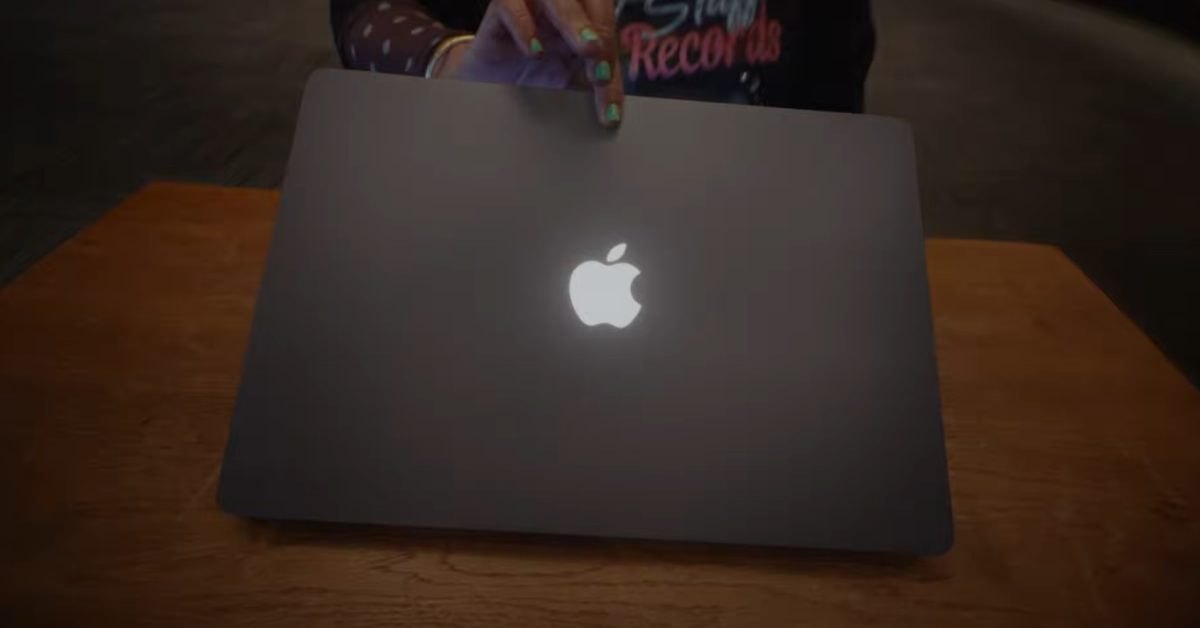
The fundamental structural shift centers on the complete omission of M6 Pro and M6 Max processor options within the notebook lineup. Apple chose to bypass an intermediate pro silicon tier, advancing from its current M5 Pro and M5 Max options directly into the M7 architecture during the first half of next year. Alongside this accelerated processor schedule, the base M7 unit adopts the physical form factor of the premium models, shedding thickness and mass while narrowing the border area around the screen.
The flagship branch of the portable family will simultaneously move from first-generation hardware into a second-generation touchscreen architecture. Currently, Apple assesses a four-hundred-dollar upgrade fee on top of standard configurations to incorporate touch interaction, the PROLED XDR panel, and the Dynamic Island interface. The subsequent hardware iteration pairs those tactile display capabilities directly with M7 Pro and M7 Max silicon, continuing the technical divergence from legacy non-touch systems that still rely on older platform standards.
Advertisement
Tech Pulse Daily
Get tomorrow's pulse first
Join engineers who read Tech Pulse before stand-up. Free, weekday mornings.
Who should care about Here’s what’s coming for the MacBook Pro next
Developers building local artificial intelligence workflows, machine learning models, and complex client-side applications have the most direct stake in this hardware timeline. Because the incoming M7 silicon architecture emphasizes on-device artificial intelligence processing, technical professionals running intensive computational tasks locally can anticipate dedicated silicon resources. Teams considering deployments of portable workstations must balance the current M5 Pro and M5 Max offerings against the silicon performance gains arriving during the initial six months of next year.
IT purchasing directors and commercial workstation managers managing large corporate laptop deployments should monitor these changes to avoid premature fleet refresh investments. The entry-level professional tier will soon deliver modernized industrial design with thinner construction, reduced total weight, and trimmed screen bezels alongside baseline M7 computing power. Enterprise buyers evaluating touch functionality must also account for the current four-hundred-dollar price delta against the operational implications of an incoming second-generation touch model arriving with updated pro silicon next year.
How to try Here’s what’s coming for the MacBook Pro next
Prospective users seeking immediate access to these hardware advances must currently choose among Apple's existing store configurations. The current catalog provides entry-level performance through the M6 MacBook Pro, standard high-performance workloads through the non-touch M5 Pro and M5 Max editions, and advanced display capabilities via the M5 Pro and M5 Max systems featuring the PROLED XDR Display with touch. Those who require touch input, the Dynamic Island, and OLED visual fidelity must select that specific premium tier today.
Those who wish to test the upcoming base M7 unit or the second-generation touch platforms with M7 Pro and M7 Max chips must wait until Apple launches them next year. Early procurement windows for the M7 series are projected to begin as early as the first half of the year. Until shipments commence, testing the thinner chassis geometry, slim bezels, and touch interface requires examining the high-end machines that Apple placed on sale last week.
What to watch after Here’s what’s coming for the MacBook Pro next
The primary development to observe following these releases is whether Apple consolidates its high-performance notebook catalog into a single unified touchscreen line. Gurman reported that while non-touch M5 Pro and M5 Max notebooks remain in production, maintaining two separate parallel tracks of high-end laptops creates mounting complications across company engineering, marketing, and manufacturing divisions. Because the price gap is relatively narrow, continuing non-touch variants over multiple hardware generations would impose redundant production overhead on the organization, making long-term lineup convergence a logical outcome.
Industry observers should monitor the pricing structure of future touch models to see if the current four-hundred-dollar premium decreases as component manufacturing scales up. If touch functionality, OLED panels, and the Dynamic Island interface become standard across all professional machines, the separate non-touch tier will phase out naturally. Tracking exact release dates across the first half of next year will confirm whether Apple meets its timeline for shipping base M7 machines and second-generation touch configurations to commercial and consumer markets.
Developer Action Items
- ☐ Verify the claim on the official Apple page (or 9to5Mac), not from this recap alone.
- ☐ Name the surface that moved — API, policy, model, hardware, or commercial terms — before you Slack the thread.
- ☐ Assign one owner a day to read the primary material and decide: this-sprint, this-quarter, or noise.
- ☐ Do not change production on day-one coverage. Watch the vendor changelog and one independent write-up first.
Here’s what’s coming for the MacBook Pro next FAQ
When will Apple release MacBook Pro models with M7 chips?
Apple is expected to introduce the base M7 MacBook Pro and second-generation touch models powered by M7 Pro and M7 Max chips as early as the first half of next year.
Did Apple skip the M6 Pro and M6 Max processors?
Yes, Apple plans to skip the M6 Pro and M6 Max generations entirely, jumping directly from M5 Pro and M5 Max to the M7 family.
How much does Apple charge for the touchscreen MacBook Pro upgrade?
Apple currently charges a $400 premium to add touch support, the PROLED XDR Display, and the Dynamic Island interface to the MacBook Pro.
What design changes are planned for the base MacBook Pro?
The upcoming base M7 MacBook Pro will adopt the design of the high-end models introduced last week, featuring a thinner and lighter body with slimmer screen bezels.
Sources

Author
Dillip Chowdary
Writes Tech Bytes coverage of AI, engineering, and the tools that actually ship. Editor of Tech Pulse Daily.
Related on Tech Bytes
Advertisement