How Anthropic's Dynamic Workflows Coordinate Claude Agents
Anthropic showed dynamic workflows on Oct 12, 2026 at AI Engineer New York, letting Claude plan and launch its own multi-agent topology in Claude Console.
By Dillip Chowdary • Oct 16, 2026 • Source: latent.space
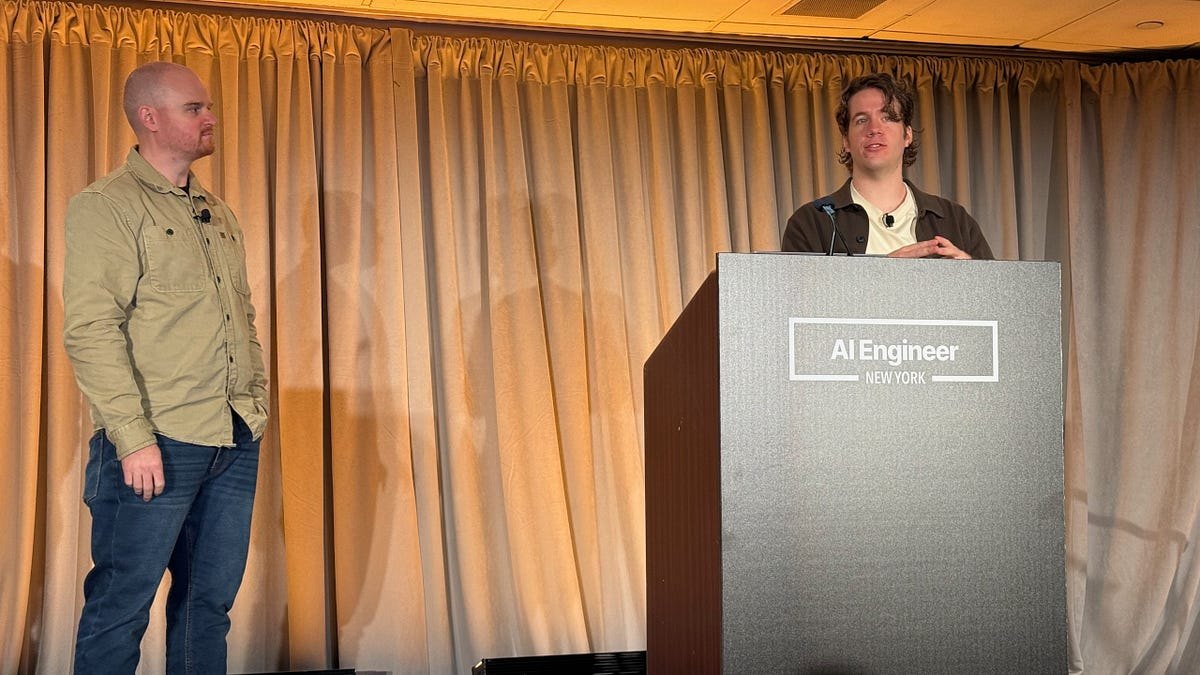
At AI Engineer New York 2026, Anthropic presented dynamic workflows, announced on Friday and called flows by the presenters. latent.space's report quotes the definition: "a new type of multiagent orchestration, built for your most ambitious workloads." CJ Avilla and Harrison Stall, Members of Technical Staff at Anthropic, led the Claude Managed Agents workshop as the conference opened with morning workshops at AI Engineer NYC. Richard MacManus dated the account Oct 12, 2026.
This piece is for developers who call Claude through the API in Claude Console. It covers the move off a fixed coordinator and subagent roster, the orchestration program a lead agent writes, and the stock watchlist scanner demo. It also tracks agent count, session budgets, dreaming, graph inspection, filesystem sharing, cost, and scientific workloads.
Anthropic's Dynamic Workflows Coordinate: what actually changed
Avilla and Stall invoked Ken Thompson's original Unix operating system, then Linux moving from one person, Linus Torvalds, to layers of trusted maintainers. The lesson: agents need that organization for the ambitious projects Anthropic envisions for dynamic workflows. Avilla said people managing many agents "might start to feel this feeling of being the bottleneck and being the breaking point" amid "tons and tons of PRs," while "sitting there in our GitHub trying to approve PRs and make sure that everything works as expected."
Flows began in Claude Code as the "a harness for every task" concept and can run longer than a single agent or a roster. Claude chooses the organization of agents. Stall called them "essentially the next version of multi-agent orchestration," where "you can let Claude fully orchestrate the entirety of its own multi-agent topology." Claude now determines how to divide and orchestrate the work, instead of a required coordinator and subagent roster. The agent config can "pass in pre-configured sub-agents," Avilla said. This is available in Claude Console.
Anthropic's Dynamic Workflows Coordinate: how it works
The lead agent creates a plan for how it wants to accomplish tasks. Claude then writes an orchestration program, which launches agents, collects results, and manages information flow. Stall said that across phases it accomplishes "discrete, verifiable units of work" without the developer managing "any of the interconnections between these things." The stock watchlist scanner was far removed from the ambitious projects Anthropic is encouraging. A scan phase distributed individual tickers to agents with isolated contexts, and a review phase examined the findings before producing a report.
Managed Agents is located in Claude Console, alongside the watchlist scanner, a brain/hands conceptual overview of Managed Agents, and an image via Anthropic. The agents share a filesystem and can use it to exchange information, but developers cannot directly instruct one workflow subagent to message another through the API. Avilla said this is visible through graphing inside Claude Console. "You can tell, what did the lead agent actually pass to the sub-agent? You can look at that payload here to deeply understand what is actually happening for every transition in this entire graph."
Advertisement
Tech Pulse Daily
Get tomorrow's pulse first
Join engineers who read Tech Pulse before stand-up. Free, weekday mornings.
Anthropic's Dynamic Workflows Coordinate: why it matters now
Anthropic used lessons from Unix and Linux to explain how agents can tackle bigger projects without overwhelming developers. The strain is a person in GitHub approving agent pull requests and checking that the work behaves. Flows suit workloads past a single agent or a roster, with Claude choosing the topology. In the watchlist-scanner comparison, Avilla said flows cost "much more" than a single-agent approach and were "much more effective at finding all of the details." Beside that comparison: "Setting a budget is key!"
An audience member asked whether dynamic workflows can power large scientific research projects, citing OpenAI's recently announced proof on the Navier–Stokes Millennium Prize problem. Stall would not be drawn on specifics about how Anthropic computes those problems, but said the goal is for general users to tackle them too. "Flows are basically a way to throw test-time compute at hard problems and get more capability faster out of the models," he said. Especially as an API service, he called unlocking the power of this the first step toward making these types of discoveries, or scientific progress, broadly doable by the general public.
Anthropic's Dynamic Workflows Coordinate: who is affected
The developers affected use Claude Managed Agents in Claude Console, the API interface and the whole point of that product. They used to configure a coordinator and a roster of subagents. Claude now determines how the work is divided, and the agent config can still pass in pre-configured sub-agents. A watchlist run gives each ticker an isolated context in the scan phase, then a review phase produces a report. The heavier case is the GitHub reviewer Avilla called the breaking point.
One person asked how Claude decides how many agents a task needs, and whether a simple ticker scan could trigger hundreds of sub-agents. Stall replied, "The answer really is evals and lower defaults," and said ambitious tasks generally require explicitly encouraging greater parallelization. Asked whether the lead agent knows how much money it has available, he said the model does not know its budget while running. Developers can set a session budget. Informing models of their budgets could make the agents "a little bit anxious," which drew chuckles.
Anthropic's Dynamic Workflows Coordinate: what to watch
Developers also asked how to make repeated flows cheaper and more efficient over time. Outside of asking Claude to examine the costs incurred, Avilla pointed to dreaming, a relatively new research preview in the documentation. A dream "reads an existing memory store alongside past session transcripts, then produces a new, reorganized memory store," merging duplicates, replacing "stale or contradicted entries," and surfacing "new insights." In a flow, he said, dreaming can "crystallize and basically improve the memory store that is related to those sessions."
Could the watchlist flow recognize an inadequate scanning model and change the next scheduled run? Stall said this was not built in. He and Avilla suggested hill-climbing and dreaming could be used to improve the loop. Sponsor Union.ai, at AI Engineer New York booth #48, described a sovereign AI factory where engineering teams own data, compute, infrastructure, and a durable runtime on their cloud. Workflows adapt, right-size infra resources, and recover from failures without re-running completed work, free for 30 days through AWS Marketplace.
Developer Action Items
- ☐ Diff the official changelog for Anthropic / Claude / GitHub before you bump — APIs, defaults, and removed flags only.
- ☐ Install through the vendor's documented channel in staging; keep a one-command rollback and time-box the canary.
- ☐ Grep your repo for old flag names, lockfile pins, and plugin versions that the notes mark as breaking.
- ☐ Prefer the first patch cut over the day-zero tag unless you have a reason to be on the leading edge.
- ☐ If HN Claude/Codex/Fable did not name a region, plan, or SKU, screenshot the official availability line before you promise it to users.
Anthropic's Dynamic Workflows Coordinate FAQ
What are Anthropic dynamic workflows?
Anthropic defines dynamic workflows, also called flows, as "a new type of multiagent orchestration, built for your most ambitious workloads." Announced on Friday, they were presented on Oct 12, 2026 at AI Engineer New York by CJ Avilla and Harrison Stall, Members of Technical Staff. Claude can orchestrate its own multi-agent topology, and the agent config can still pass in pre-configured sub-agents.
Where are Claude flows available?
Flows are available in Claude Console, the interface for developers accessing Claude through the API and the home of Claude Managed Agents. They began in Claude Code as the "a harness for every task" concept and can run longer than a single agent or a roster. Pre-configured sub-agents can still be passed in through the agent config.
How does a Claude dynamic workflow divide a task?
The lead agent creates a plan, then Claude writes an orchestration program that launches agents, collects results, and manages information flow. In the stock watchlist scanner, a scan phase sent individual tickers to agents with isolated contexts, and a review phase examined the findings before producing a report. Stall said agent count comes from evals and lower defaults, with greater parallelization explicitly encouraged for ambitious tasks.
Can flow subagents see a budget or message each other?
The model does not know its budget while running, but developers can set a session budget, and Stall said informing models of their budgets could make the agents "a little bit anxious." Avilla said flows cost "much more" than a single agent and were "much more effective at finding all of the details." Subagents share a filesystem to exchange information, and developers cannot instruct one workflow subagent to message another through the API.
What is dreaming in Anthropic's agent documentation?
Dreaming is a research preview that reads an existing memory store alongside past session transcripts and produces a reorganized memory store, merging duplicates, replacing stale or contradicted entries, and surfacing new insights. Avilla said it can crystallize and improve the memory store related to those flow sessions. A watchlist flow that changes its own next scheduled run is not built in, and Stall and Avilla suggested hill-climbing and dreaming to improve that loop.
Sources

Author
Dillip Chowdary
Writes Tech Bytes coverage of AI, engineering, and the tools that actually ship. Editor of Tech Pulse Daily.
Related on Tech Bytes
Advertisement