How well do current Claude/GPT models play multiplayer Magic the Gathering?
Dusk's Brewhaven harness ran 80 high-reasoning bot-only games of multiplayer Magic: The Gathering, and Sonnet 5.5 won 65% after a deck-strength adjustment.
By Dillip Chowdary • Nov 09, 2026 • Source: twitter.com
The source is one short post, so I’m keeping every name and figure and checking that each paragraph stays inside the length limit.Dusk (@duskqho) built Brewhaven, a harness that lets AI agents play card games against each other and against humans, to see how well today's frontier language models play multiplayer Magic: The Gathering. Dusk's report on twitter.com, posted at 8:30 p.m. on November 9, 2026, describes 80 bot-only games with every model set to high reasoning. After adjusting for deck strength, Sonnet 5.5 had a 65% win rate, while Haiku 5.5 and GPT-6 Luna could only win 5% of their matches.
This piece is for multiplayer Magic: The Gathering players and for anyone comparing frontier language models on planning, bluffing, and threat judgment. It covers what Brewhaven asks of an agent, how the 80 high-reasoning games separated the named models, and how Dusk scored in matches against them. It also records the roughly $8 cost of three Sonnet 5.5 opponents and the video filmed after Claude API credits ran out.
01Planning, bluffing, and real threats
Dusk built Brewhaven so AI agents can play card games against each other and against humans. The question tied to the harness is how well today's frontier language models play card games, and multiplayer Magic: The Gathering in particular. Agents enter those matches through Brewhaven, against other models and against human players.
Brewhaven also tests more than game mechanics. Agents have to plan, scheme, bluff, anticipate outcomes, negotiate, persuade, and judge who the real threat is. Those jobs apply when agents play each other and when they play a human, in card games generally and in multiplayer Magic: The Gathering in particular.
02Eighty high-reasoning bot games
A full benchmark where different AI models compete against one another would, Dusk wrote, "blow a giant hole in my wallet." Dusk ran a much more limited version: 80 bot-only games inside Brewhaven, the harness built for these card games. Every model in those 80 games was set to high reasoning, the setting used for Haiku 5.5, GPT-6 Luna, and Sonnet 5.5.
Dusk adjusted the 80 bot-only games for deck strength before comparing the models. The weakest deck had a 17.5% win rate, against 40% for the strongest deck. After that adjustment, the models clearly separated by class, and all of them had been set to high reasoning.
Even Haiku 5.5 and GPT-6 Luna could only win 5% of their matches. The strongest model Dusk ran, Sonnet 5.5, had a 65% win rate. The 5% and 65% results are the class split from that limited sample once the weakest deck's 17.5% win rate and the strongest deck's 40% win rate had been adjusted for.
Advertisement
Tech Pulse Daily
Get tomorrow's pulse first
Join engineers who read Tech Pulse before stand-up. Free, weekday mornings.
03Dusk's 55 percent match record
The 80 bot-only games are the all-agent sample, and every model in them was set to high reasoning. In separate matches against the models, Dusk won roughly 55% of the games played. The baseline Dusk sets beside that result is 25%, and Dusk's conclusion from the roughly 55% win rate is that the models are not superhuman yet.
Sonnet 5.5's 65% win rate comes from the bot-only games, where it was the strongest model Dusk ran, with every model on high reasoning. Haiku 5.5 and GPT-6 Luna could only win 5% of their matches in that adjusted sample. Against Dusk, the reported human win rate is roughly 55%, placed beside the same 25% baseline.
04Sonnet diplomacy and threat reads
Dusk says Sonnet 5.5's diplomacy and dialogue is stellar, "sounding very natural and engaging." Dusk also says the model is fast and that it makes good threat assessment. The description fits the strongest model Dusk ran, Sonnet 5.5, which posted a 65% win rate after deck strength was adjusted across the 80 bot-only games.
Poor threat assessment showed up in the play itself. Dusk wrote, "I didn't realize how poor threat assessment would annoy me and degrade the game experience, but basically I could feel the difference in the model just by their actions." Sonnet 5.5 is the model Dusk credits with good threat assessment, next to that description of weaker play.
Judging who the real threat is belongs on the Brewhaven list with planning, scheming, bluffing, anticipating outcomes, negotiating, and persuading. Dusk singles out Sonnet 5.5 for dialogue that sounds natural and engaging, for speed, and for good threat assessment. Poorer threat assessment is what Dusk says annoyed and degraded the game experience, a difference felt from the models' actions.
05Eight dollars and a Luna clip
With three Sonnet 5.5 opponents, Dusk says a game costs roughly $8. Dusk calls that price "not economically viable at the moment to play a high quality MTG game against AI." Sonnet 5.5 remains the strongest model Dusk ran, at a 65% win rate, with diplomacy and dialogue called stellar and with good threat assessment.
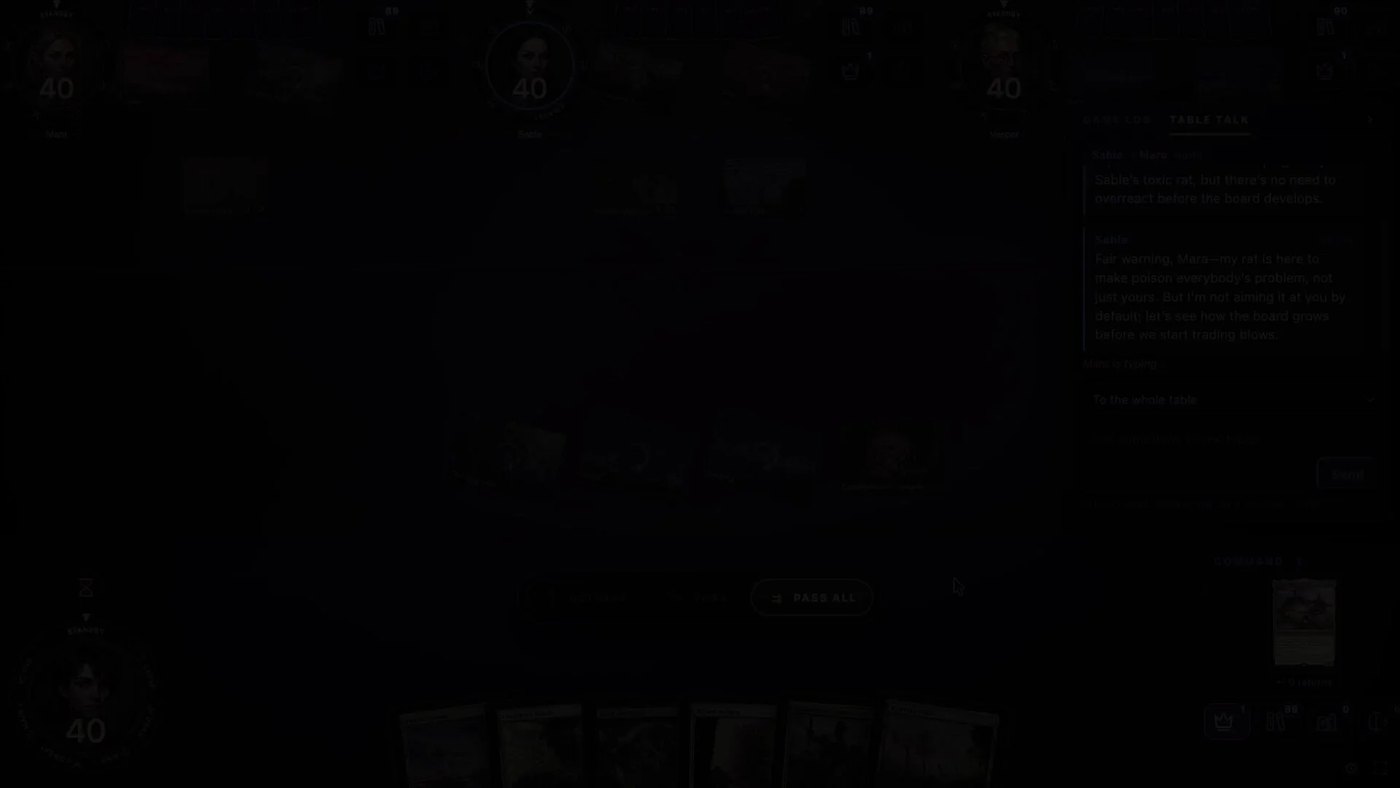
The video on the November 9 post shows Dusk playing against Luna. Claude API credits ran out before Dusk could film the video, which is why the posted clip is that Luna game. GPT-6 Luna could only win 5% of its matches in the high-reasoning bot sample, the same rate Dusk gives Haiku 5.5, while three Sonnet 5.5 opponents are the lineup priced at roughly $8.
Well do current Claude/GPT models play FAQ
What is Brewhaven?
Brewhaven is a harness Dusk (@duskqho) built so AI agents can play card games against each other and against humans. It tests more than Magic: The Gathering mechanics. Agents have to plan, scheme, bluff, anticipate outcomes, negotiate, persuade, and judge who the real threat is.
How many games did Dusk run, and at what setting?
Dusk ran 80 bot-only games with all models set to high reasoning. A full benchmark where different AI models compete against one another would, Dusk wrote, "blow a giant hole in my wallet," so the published test is that more limited version. The weakest deck had a 17.5% win rate and the strongest deck had a 40% win rate, and Dusk adjusted for that gap.
Which model won the most Brewhaven matches?
Sonnet 5.5 was the strongest model Dusk ran, with a 65% win rate after the deck-strength adjustment. Haiku 5.5 and GPT-6 Luna could only win 5% of their matches. Dusk says the models clearly separated by class on that high-reasoning sample.
Did a human beat these models at multiplayer Magic?
Dusk won roughly 55% of the matches played against the models. The baseline Dusk cites is 25%. Dusk's conclusion is that the models are not superhuman yet.
How much does a Sonnet 5.5 Magic game cost, and who is in the video?
A game with three Sonnet 5.5 opponents costs roughly $8, which Dusk says is not economically viable at the moment for a high quality MTG game against AI. Claude API credits ran out before the video could be filmed, so the clip shows Dusk playing against Luna. Dusk calls Sonnet 5.5 fast, with stellar diplomacy and dialogue and with good threat assessment.
Sources

Author
Dillip Chowdary
Writes Tech Bytes coverage of AI, engineering, and the tools that actually ship. Editor of Tech Pulse Daily.
Related on Tech Bytes
Advertisement