Hugging Face CEO vows to keep fighting for open-source AI after Jensen
Hugging Face CEO Clément Delangue pledged to keep fighting for open-source AI after Jensen Huang stepped down from Nvidia during its pending $12.9B buyout.
By Dillip Chowdary • Nov 14, 2026 • Source: TechCrunch
Hugging Face chief executive Clément Delangue pledged to sustain his company's push for open-source artificial intelligence following the departure of Nvidia chief executive Jensen Huang, as highlighted in TechCrunch's report. Delangue addressed the executive exit on Thursday, November 12, 2026, amid community scrutiny surrounding Nvidia's pending twelve point nine billion dollar acquisition of the machine learning repository.
This report details the corporate transactions, antitrust evaluations, and policy campaigns that define open-weight model distribution in the wake of executive leadership changes. It provides enterprise developers, research institutions, and software engineers with a comprehensive factual breakdown of regulatory timelines, startup capital allocations, and foundation model releases.
01Executive departure and the acquisition agreement
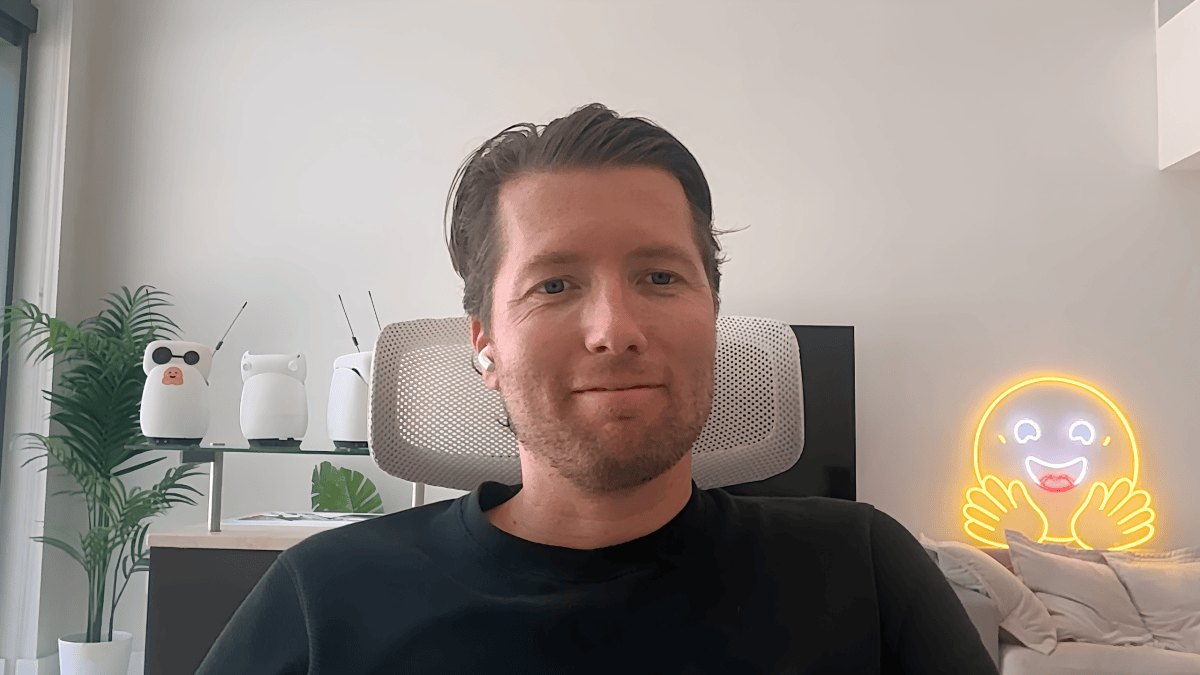
Delangue addressed Huang's abrupt resignation on social platform X, characterizing the executive exit as an unwelcome turn of events for community model developers. He publicly called the development a really sad day, noting that while he wished the entire situation had not occurred, Hugging Face intends to fight harder than ever for open-source AI.
The executive reassurances follow Nvidia's formal September agreement to acquire the open-source model platform for twelve point nine billion dollars. The transaction represents the second-largest corporate buyout in Nvidia's history, trailing only the company's twenty billion dollar purchase of chipmaker Groq's assets in December 2025.
Huang had established himself as a prominent corporate champion for accessible models and community software repositories during his multi-decade tenure. Delangue issued his public remarks to alleviate developer anxiety about whether Nvidia will maintain that collaborative stance once new leadership guides the semiconductor company.
02Federal antitrust scrutiny and closing timeline
The proposed merger attracted immediate federal regulatory attention after Nvidia confirmed its intent to absorb the community software repository. In October, the United States Department of Justice began preliminary inquiries to evaluate whether owning the model hub would harm competition across the broader commercial artificial intelligence market.
Although Nvidia pledged that Hugging Face would maintain open community support, the buyout places an essential model distribution channel under the control of the dominant chipmaker. Industry observers raised concerns that ownership of the repository could grant Nvidia excessive leverage over competing model creators and independent software developers.
The twelve point nine billion dollar transaction remains officially scheduled to close during the first half of 2027. Hugging Face representatives did not return requests for comment regarding the current status of regulatory filings or whether Delangue has spoken with Nvidia's interim chief executive Colette Kress.
Advertisement
Tech Pulse Daily
Get tomorrow's pulse first
Join engineers who read Tech Pulse before stand-up. Free, weekday mornings.
03Multi-company policy coalition and regulatory petition
Huang consistently championed the legal standing of open-weight artificial intelligence through high-profile public initiatives throughout the year. In July, the executive published an open policy letter as his first post on X, urging the federal government not to over-restrict open-weight software architectures.
The policy petition assembled endorsements from twenty-five prominent technology companies seeking common regulatory standards across the machine learning sector. Signatories on the joint statement included Microsoft, Meta, Hugging Face, IBM, and Palantir, uniting enterprise cloud providers and software startups behind unrestricted model distribution.
The coalition defined open-weight releases as systems that any developer can download, inspect, modify, and run on their own computational infrastructure. The signatories argued that accessible architectures make artificial intelligence widely available, highly adaptable, and economically accessible to independent organizations lacking massive supercomputing facilities.
04Model distribution principles and sovereignty claims
Huang maintained that open-weight distributions provide critical market safeguards that prevent enterprises from being locked into a single commercial platform. He argued that open model availability broadens access to the modern computing economy while fostering competition against closed corporate development environments.
The former chief executive also framed model accessibility as a pillar of national infrastructure and international software resilience. Huang stated that open models strengthen software safety, enhance digital cybersecurity, accelerate the diffusion of innovation, and enable countries to build sovereign technological capabilities.
Huang delivered a similar public message during his keynote address at the Consumer Electronics Show in Las Vegas in January. Speaking before international technology executives, the chief executive emphasized that community-developed open-source foundation models have fundamentally revolutionized artificial intelligence by democratizing algorithmic experimentation across global research laboratories.
05Capital allocations and enterprise weight releases
Nvidia paired executive rhetoric with substantial capital commitments designed to strengthen domestic open-source ecosystems against foreign rivals. In August, the company completed a six billion dollar agreement with coding startup Poolside to establish an open computational network capable of rivaling Chinese technology firms.
The funding agreement specifically targeted international competition from Chinese machine learning developers, including DeepSeek and Kimi K3. Nvidia structured the partnership to ensure that American developers maintain access to robust open-source software tools tailored for complex programming and automated engineering tasks.
Nvidia complemented external investments by expanding its proprietary Nemotron collection of open-weight foundation models. The company launched a one-hundred-and-twenty-billion-parameter model tailored for enterprise agent workflows, alongside two lightweight Bolt models engineered specifically to execute locally on consumer personal computers without external cloud connectivity.
Hugging Face CEO vows to keep fighting FAQ
What did Clément Delangue say about Jensen Huang leaving Nvidia?
Delangue called Huang's departure a really sad day and stated that Hugging Face will keep fighting for open-source AI harder than ever. He emphasized that the open-source movement is too important to slow down despite executive changes.
How much did Nvidia agree to pay for Hugging Face?
Nvidia announced plans in September to acquire Hugging Face for $12.9 billion in cash and stock, representing its second-largest acquisition after buying Groq's assets for $20 billion in December 2025. The transaction is slated to close in the first half of 2027.
Why is the Department of Justice reviewing the Hugging Face acquisition?
The Justice Department opened inquiries in October to evaluate whether Nvidia's ownership of Hugging Face would harm competition by placing a primary model distribution channel under the control of the leading AI chipmaker.
What open-weight AI models did Nvidia recently release?
Nvidia expanded its Nemotron line with an open-weight 120-billion-parameter model designed for enterprise software agents, alongside two lightweight Bolt models that execute locally on personal computers.
Sources

Author
Dillip Chowdary
Writes Tech Bytes coverage of AI, engineering, and the tools that actually ship. Editor of Tech Pulse Daily.
Related on Tech Bytes
Advertisement