IBM CEO says open weight models are now good and cheap on-prem
IBM CEO Arvind Krishna reported open-weight AI models deliver 90 percent of frontier performance at 10 percent of token costs within two to three server racks.
By Dillip Chowdary • Oct 26, 2026 • Source: theregister.com
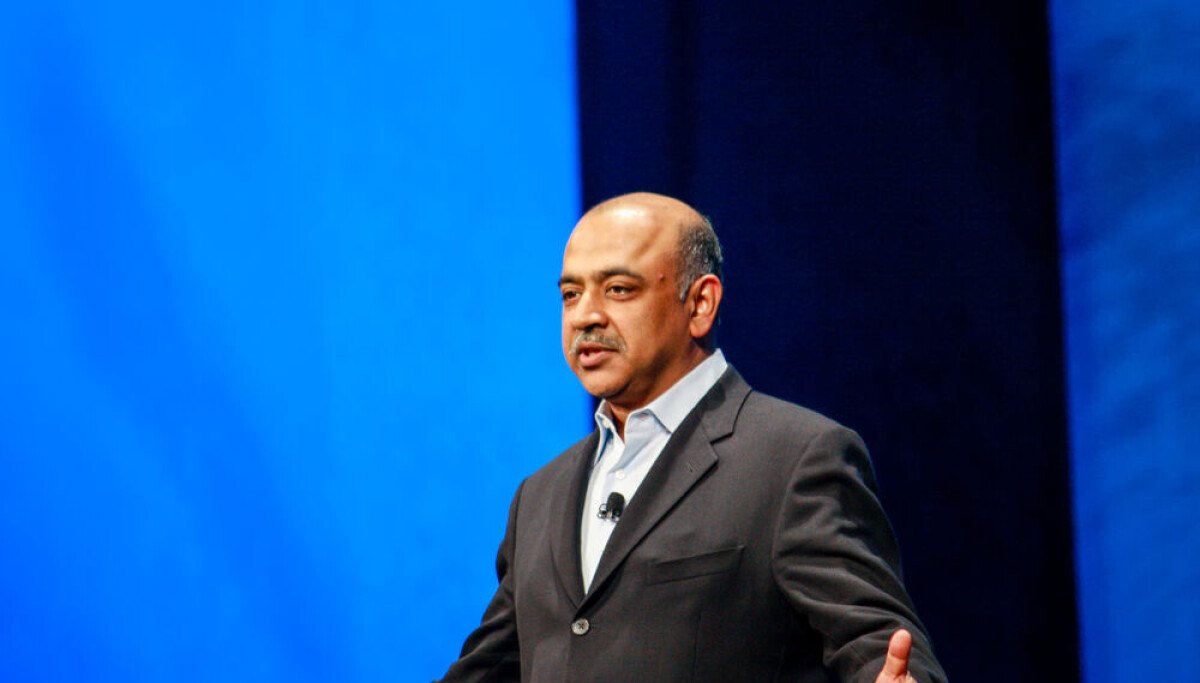
IBM CEO Arvind Krishna reported during the company’s third-quarter earnings call that open-weight artificial intelligence models have become compelling alternatives to proprietary frontier systems for on-premises enterprise environments. As detailed in theregister.com's report, Krishna noted that open models now reach approximately 90 percent of the performance of top proprietary systems while reducing operational token expenses down to 10 to 25 percent of frontier pricing. The shift has altered the economics of enterprise IT, driving demand for private data center infrastructure capable of operating within two to three server racks.
This report examines IBM’s assessment of open-weight artificial intelligence architectures, enterprise deployment barriers, and corresponding hardware and software segment financial results. It is aimed at enterprise architects, chief information officers, and infrastructure engineers evaluating whether to process corporate workloads on private servers or continue routing tasks through external commercial cloud APIs.
IBM CEO: what actually changed
The benchmark performance gap between proprietary frontier artificial intelligence and open-weight alternatives closed significantly between 2024 and late 2026. In 2024, broad-based evaluations regularly showed top proprietary models scoring around 70 points while open competitors scored only 20 or 30 points on identical benchmarks. By late 2025, that disparity narrowed to roughly 70 versus 50, and current evaluations place open-weight architectures at 90 percent of frontier model effectiveness.
This closing performance split has drastically altered token economics for corporate buyers. Krishna stated that open models currently operate at 10 to 25 percent of the token costs associated with proprietary frontier equivalents. Because typical high-volume operational tasks such as drafting emails, summarizing messages, reviewing contracts, and handling inbound customer calls do not require extreme frontier margins, IBM projects that enterprises will increasingly decline to pay tenfold price premiums for marginal benchmark advantages.
IBM CEO: how it works
Running open-weight architectures on premises requires configuring private compute, networking, and storage stacks within two or three standard data center racks. Organizations host open weights on local server clusters, avoiding external API calls to public cloud platforms. To facilitate these on-premises deployments, IBM is positioning specialized hardware such as its Spyre mainframe accelerator cards, designed to handle model execution directly alongside core enterprise transaction systems.
However, operating these private environments demands specialized infrastructure skills that many enterprise IT departments lack. Systems teams must employ kernel engineers, optimize low-latency network fabrics, cluster GPUs in close network proximity, and deploy caching layers to ensure low query latency. Krishna acknowledged that many businesses will struggle with the operational friction of assembling these components, prompting IBM to prepare enterprise software packages designed to automate model clustering and deployment.
Advertisement
Tech Pulse Daily
Get tomorrow's pulse first
Join engineers who read Tech Pulse before stand-up. Free, weekday mornings.
IBM CEO: why it matters now
The economic convergence of open-weight software arrives as enterprise hardware refresh cycles diverge across legacy and modern workloads. IBM reported total quarterly revenue of $17.1 billion, representing a five percent year-over-year increase, while infrastructure segment revenue rose five percent to $3.7 billion. While IBM’s infrastructure expansion trailed hardware peers Lenovo, Dell, and HPE, mainframe systems experienced shifting cycles; current z17 mainframe hardware has generated $1 billion more cumulative revenue than any predecessor line, even as quarterly mainframe revenue declined 20 percent eighteen months into its release cycle.
At the same time, software demand continues to outpace server hardware expansion across Big Blue’s divisions. IBM software revenue rose nine percent year over year to reach $7.8 billion for the quarter, led by an eleven percent gain at Red Hat, which increased its annual recurring revenue by 30 percent. Red Hat virtualization software alone secured $800 million in closed customer contracts alongside an active pipeline of $750 million, benefiting directly from enterprise migrations away from VMware platforms.
IBM CEO: who is affected
IT leaders, infrastructure administrators, and enterprise operations teams managing on-premises data centers are directly impacted by the shifting model economics. Companies handling sensitive customer records, confidential legal contracts, and regulated financial transactions now have a viable method to deploy local automation without sending internal corporate data across third-party cloud boundaries. Organizations using IBM Z platforms can also expand into local model processing by outfitting rackable midrange units with Spyre accelerator cards.
Conversely, corporate infrastructure groups face acute staffing bottlenecks when attempting to run local compute clusters. Enterprises lacking in-house kernel programmers, network fabric specialists, and GPU clustering engineers face implementation hurdles when configuring low-latency caching and network topographies. Meanwhile, public cloud hosting providers and closed frontier model developers face pricing pressure as enterprise buyers move routine text summarization, contract review, and customer support queries to lower-cost local infrastructure.
IBM CEO: what to watch
Industry attention now shifts to the delivery timeline for IBM’s planned deployment software, intended to simplify the technical hurdles of clustering enterprise GPUs and configuring local network caches. Observers will also track customer adoption rates for IBM’s Spyre accelerator cards across mainframe environments, alongside hardware sales for Big Blue’s rackable midrange systems, which the company described as the strongest midrange launch in IBM Z history over nearly two decades.
Simultaneously, enterprise customers are monitoring stability across IBM’s cloud services following a severity-one operational disruption in October 2026. The incident involved emergency maintenance that blocked new resource and virtual private cloud provisioning for 90 minutes across the company’s modern cloud, while extending resource management downtime across the acquired Classic Cloud SoftLayer environment for more than 16 hours. Analysts are watching whether emergency maintenance linked to critical PHP vulnerabilities will trigger further infrastructure migrations toward private on-premises racks.
Developer Action Items
- ☐ Verify the claim on the official IBM page (or Hacker News Best), not from this recap alone.
- ☐ Name the surface that moved — API, policy, model, hardware, or commercial terms — before you Slack the thread.
- ☐ Assign one owner a day to read the primary material and decide: this-sprint, this-quarter, or noise.
- ☐ Do not change production on day-one coverage. Watch the vendor changelog and one independent write-up first.
IBM CEO FAQ
How close are open weight AI models to closed frontier systems?
IBM reported that open-weight models now deliver roughly 90 percent of the effectiveness of proprietary frontier models on broad-based evaluations.
How much cheaper are open weight models according to IBM?
Open-weight models operate at approximately 10 to 25 percent of the token costs required by proprietary frontier models.
What hardware is required to run open weight models on-premises?
IBM estimates that most enterprise workloads can run in two or three server racks, supported by specialized components like Spyre accelerator cards.
What operational challenges do enterprises face when deploying on-prem AI?
Organizations frequently struggle to find kernel engineers, cluster GPUs in close network proximity, optimize underlying networks, and implement proper response caching.
Sources

Author
Dillip Chowdary
Writes Tech Bytes coverage of AI, engineering, and the tools that actually ship. Editor of Tech Pulse Daily.
Related on Tech Bytes
Advertisement